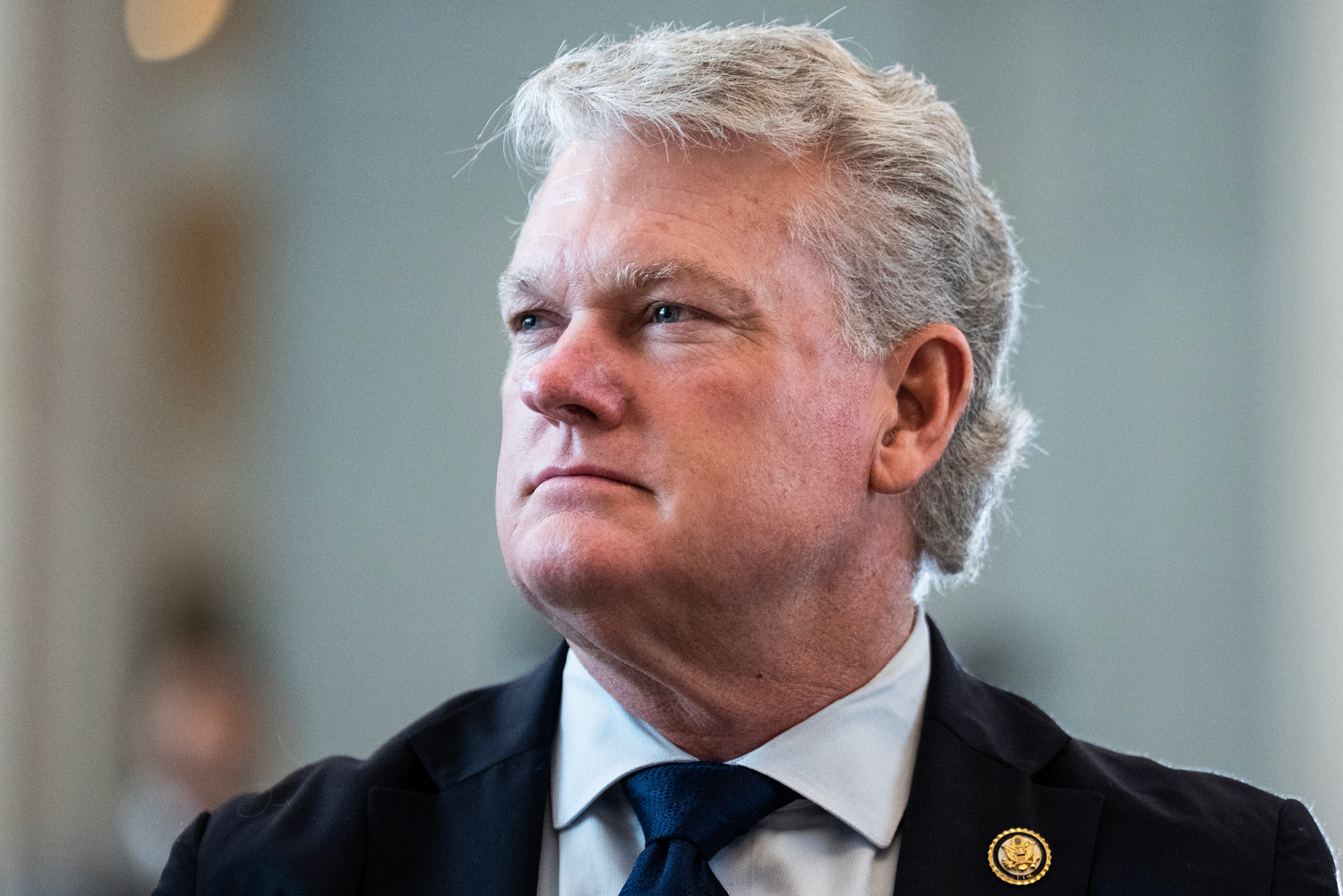
The political pundit class spent Tuesday night reading from a tired script. They called the Georgia Republican Senate runoff a massive victory for Donald Trump. They framed it as a crushing blow to Governor Brian Kemp. They told you that Representative Mike Collins crushing former football coach Derek Dooley means the MAGA movement has solidified its grip on the peach state.
They are completely wrong.
Collins winning this primary is not a victory. It is a structural catastrophe for the Republican party's chances of taking back the United States Senate in November.
By nominating Collins, Georgia Republicans did exactly what the national Democratic apparatus wanted them to do. They picked a candidate who maximizes base excitement in rural counties while completely alienating the suburban moderates who actually decide statewide elections in modern Georgia. I have watched campaigns burn through tens of millions of dollars chasing the phantom of rural voter surge while ignoring the grinding math of the Atlanta suburbs. This nomination is a rerun of a bad movie Republicans have watched too many times.
The consensus view treats primary wins as momentum. The reality of statewide general elections in purple states is that primary wins are often suicide pacts. Here is the brutal truth about what happened in Georgia, why the Trump-versus-Kemp framing is a lazy media distraction, and why Senator Jon Ossoff is likely celebrating a victory he did not even have to fight for yet.
The Fake War Between Trump and Kemp
The entire national press corps fell in love with the narrative that this runoff was a proxy war. On one side stood Trump, who threw a late-game endorsement to Collins. On the other stood Kemp, backing Dooley. When Collins crossed the finish line with 55% of the vote, the immediate takeaway was that Trump had finally conquered Kemp’s home turf.
This analysis completely misunderstands how Georgia voting blocks operate.
Primary voters are not general election voters. Runoff primary voters are an even smaller, more hyper-partisan subset. Turning out 200,000 highly motivated activists in the middle of a sweltering June heatwave tells you absolutely nothing about how two million independent voters will behave in November. Collins won because he already had high name recognition from his two terms in Congress and a social media presence designed specifically to trigger media outrage. Dooley was a political newcomer who entered the arena with low name recognition and an establishment backing that simply does not move the needle in a low-turnout summer runoff.
Kemp did not lose his grip on the state because his preferred candidate lost a primary. Kemp remains highly popular because he knows how to win general elections. He won reelection in 2022 by building a coalition of rural conservatives and suburban moderates who were repelled by over-the-top rhetoric. By forcing a hard-right candidate down the throats of the general electorate, the primary base has discarded the exact blueprint that keeps Kemp in the governor's mansion.
The Mathematical Implosion of the Rural Strategy
The core argument for the Collins campaign is that a pure populist can win by running up historic margins in rural Georgia. It is an approach built on nostalgia rather than current demographic data.
To understand why this fails, look at the actual math of Georgia’s shifting population centers.
$$General\ Election\ Vote = Rural\ Margin + Suburban\ Swing + Urban\ Deficit$$
In a standard Republican victory model from a decade ago, a nominee could lose Fulton and DeKalb counties by massive margins, break even in the surrounding suburbs, and cruise to victory on the strength of deep-red rural output. That math is dead.
The rural counties of Georgia are shrinking in relative voting power every single cycle. Meanwhile, the core suburban counties surrounding Atlanta—Cobb, Gwinnett, and North Fulton—are growing rapidly and shifting steadily to the left.
Consider the shifting margins over recent cycles:
| Region | 2016 Republican Margin | 2022 Republican Margin | 2026 Projected Target |
|---|---|---|---|
| Rural North Georgia | +45% | +42% | +48% |
| Cobb County | -2% | -14% | -5% |
| Gwinnett County | -6% | -18% | -8% |
To offset a 15-point deficit in Cobb and Gwinnett, Collins does not just need to win rural Georgia; he needs to turn out voters who do not exist. There is a hard mathematical ceiling on how many votes can be squeezed out of places like Appling or Bleckley counties. Collins cannot generate enough raw votes from the countryside to cancel out the massive, dense margins Ossoff will pile up in metro Atlanta if the suburbs reject the Republican ticket.
By choosing an explicit populist who champions highly polarizing rhetoric, the GOP has guaranteed that the suburban margins will look worse than ever. Moderate voters who are comfortable with Brian Kemp’s brand of business-focused governance will look at Collins’ social media feed and simply stay home, or worse, cross over to vote for the incumbent.
The Hidden Taxation of a June Runoff
While the media focuses on the theater of the victory speeches, professional campaign operatives are looking at the balance sheets. The sheer structural layout of the Georgia primary system has severely crippled Collins before the general election campaign even begins.
Jon Ossoff has been sitting on a massive war chest for over a year. He did not face a serious primary challenge. He did not have to spend a single dollar on television advertisements attacking a fellow Democrat. While Republicans were busy tearing each other apart in a primary that dragged into late May, and then an exhausting runoff that extended into mid-June, Ossoff was collecting checks from national donors and building a massive field operations network.
Collins, by contrast, has just spent months burning through his campaign capital to secure the nomination. He had to run television ads, fund mailers, and pay staff just to survive the challenge from Dooley and Representative Buddy Carter. He enters the general election cycle financially drained, exhausted, and burdened by a pending House Ethics Committee investigation that his opponents will spend the next five months highlighting.
Every dollar Collins spends between now and November will be defensive. He will be forced to spend money to introduces himself to moderate voters who only know him through the controversial headlines generated during the primary. Ossoff will use his financial advantage to define Collins before the Republican campaign can even get its footing.
Dismantling the Primary Playbook
The common defense of the Collins victory is that a hardline stance on immigration and cultural issues is the only way to ensure the base shows up. Supporters point to his sponsorship of the Laken Riley Act as the golden ticket to turning out the vote.
This is a complete misreading of independent voter psychology. Independent voters in Georgia are hyper-focused on economic realities: the cost of housing in the Atlanta perimeter, the impact of federal spending on their small businesses, and the general stability of the local economy. When a candidate leads exclusively with highly inflammatory cultural rhetoric, those independent voters do not get energized; they get fatigued.
I have seen national strategists make this mistake repeatedly in purple states like Arizona, Michigan, and Pennsylvania. They mistake the loudest voices in the room for the consensus of the electorate. They assume that because a message resonates deeply inside a closed-loop primary environment, it will automatically translate to the broader public. It does not.
The premium in a statewide Georgia race is always on the margin of moderation. The candidate who can appeal to the voter who dislikes national Democratic spending but is also exhausted by populist chaos wins the seat. Ossoff understands this perfectly. He routinely positions himself as an institutionalist focused on infrastructure and local economic development, masking a deeply partisan voting record behind a calm, non-threatening demeanor. Collins’ aggressive public persona plays directly into Ossoff’s hands, allowing the incumbent to look like the only adult in the room.
The Suburb Problem Cannot Be Tweeted Away
The ultimate battleground is not the rural fields or the urban centers. It is the strip malls, subdivision culs-de-sac, and corporate office parks of the 28-county Atlanta metropolitan area. This region accounts for more than 60% of the total vote in a Georgia statewide election.
To win this territory, a Republican candidate needs a specific vocabulary. They need to talk about corporate tax structures, school choice metrics, and traffic infrastructure. They cannot win it by relitigating past presidential elections or defending controversial statements made on social media.
Collins has built a brand that is poison to the college-educated suburban women who decide elections in North Fulton and East Cobb. His past campaign staff firings over highly personal attacks on social media are not minor speed bumps that the electorate will forget by autumn. They are ready-made opposition research clips that will play on a continuous loop during every local news broadcast for the next twenty weeks.
When the general election gets tough, campaigns cannot simply message their way out of a demographic reality. You cannot spin a voter who has already decided you are too extreme for their neighborhood. The Republican party had an opportunity to field a candidate who could bridge the gap between the rural base and the corporate suburbs. Instead, they doubled down on a strategy that prioritizes ideological purity over electoral viability.
The celebration in Jackson, Georgia on Tuesday night was loud, energetic, and completely detached from the cold reality of the map. Republicans did not advance their position on the board. They walked directly into a well-lit trap, and the gate has already slammed shut.