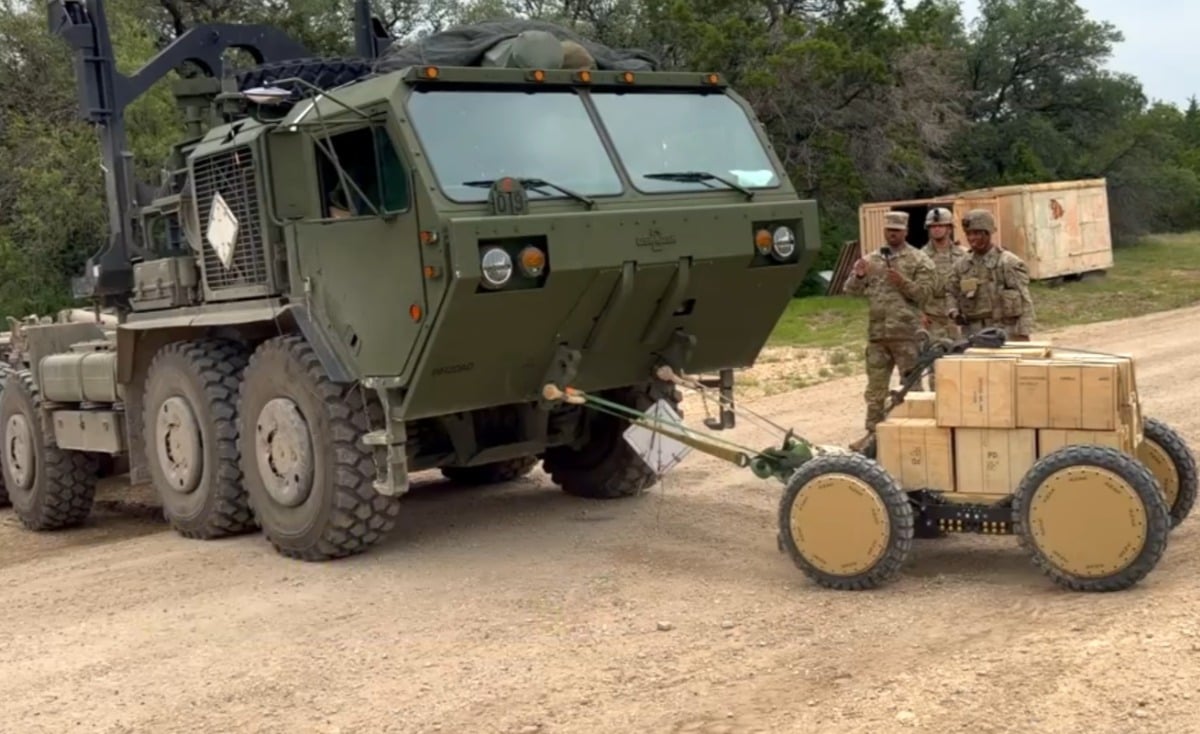
The Turkish-engineered AZAK micro-robot recently made headlines by dragging a military truck weighing 100 times its own mass. It is a stunning physics demonstration. But the viral video coverage misses the critical defense reality because a machine that can pull a stationary vehicle on flat concrete is still light-years away from surviving a modern combat zone. In military logistics, raw towing ratios are a vanity metric. The real challenge is endurance, thermal management, and friction mechanics under fire.
Defense contractors have spent decades chasing the promise of micro-robotics. The appeal is obvious. Smaller machines mean smaller logistical footprints, cheaper manufacturing, and the ability to swarm areas where human soldiers cannot go. Yet, the history of defense tech is littered with miniature marvels that excelled in the laboratory but failed entirely in the mud. If you enjoyed this piece, you should look at: this related article.
To understand why the AZAK haul is a brilliant piece of mechanical engineering but a flawed proof of concept for actual warfare, we must look past the spectacle and examine the brutal physics of the battlefield.
The Friction Illusion and the Pure Physics of the Haul
When a tiny robot pulls a massive truck, the immediate reaction is disbelief. How can something weighing just a few kilograms move a multi-ton military vehicle? The answer lies not in miraculous sci-fi power, but in basic high-torque gearing and rolling resistance. For another angle on this development, check out the recent update from The Verge.
Once a wheeled vehicle is stationary on a flat, smooth surface, the force required to keep it moving is remarkably low. The robot does not need to lift the truck. It only needs to overcome the static friction of the tires and the internal resistance of the bearings. By utilizing extreme gear reduction ratios, a tiny electric motor can output immense torque at very low speeds.
It is a slow crawl. The robot trades speed entirely for force.
Required Pulling Force = Vehicle Weight x Rolling Resistance Coefficient
On a pristine hangar floor, that coefficient is minimal. This is where the laboratory demonstration succeeds, and where the operational reality begins to fracture.
The Grip Problem
A robot can have infinite internal torque, but it cannot pull more than its own weight allows if its tracks or wheels lose traction. To haul a truck 100 times its weight, the AZAK requires an incredibly high coefficient of friction between its own treads and the ground.
In a controlled environment, engineers can use specialized rubber compounds on clean concrete. In a combat zone, the ground is covered in:
- Loose gravel and displaced topsoil
- Slick mud and standing water
- Debris, shattered glass, and wet vegetation
The moment those tracks hit a patch of wet mud, the coefficient of friction plummets. The tiny robot will simply spin its treads in place, digging its own miniature grave while the military truck remains completely motionless.
The Thermal Deadline
Another critical factor omitted from the viral hype is the issue of heat. Running a miniature electric motor at maximum torque capacity generates massive amounts of internal thermal energy.
Large vehicles have room for dedicated liquid cooling loops, radiators, and expansive airflow channels. Micro-robots do not. They rely almost entirely on passive heat sinking through their chassis.
During a short, filmed demonstration, the robot can survive a burst of extreme exertion. But military operations do not happen in thirty-second bursts. If a micro-robot is tasked with hauling supplies or clearing obstacles over a sustained period, the internal coils of its motors will rapidly overheat. Without a massive breakthrough in solid-state cooling or high-efficiency motor materials, these tiny machines face a hard thermal deadline that cuts their operational runtime to minutes.
The False Promise of the Swarm
Many defense analysts look at prototypes like the AZAK and immediately envision a swarm. They imagine hundreds of tiny robots working in unison to drag heavy equipment, clear minefields, or repair runways.
The math behind swarming is incredibly complex, and it rarely scales linearly in the physical world.
The Efficiency Loss of Collective Work
When ten robots pull a single object, they do not provide ten times the effective pulling power unless their vectors are perfectly aligned. In real-world terrain, robots will pull at slightly different angles, bounce over different bumps, and lose traction at different intervals.
Instead of a coordinated effort, you get a chaotic web of conflicting forces. The robots end up fighting each other as much as they fight the weight of the cargo.
The Communication Bottleneck
To work effectively as a collective, micro-robots must communicate with ultra-low latency. They need to constantly recalculate who is pulling harder, who has lost traction, and how to distribute the load.
In a modern electronic warfare environment, this is a massive vulnerability. High-intensity jamming can instantly sever the local network connecting the swarm. Deprived of their collective intelligence, the tiny robots become independent, uncoordinated units pulling in random directions, rendering the entire system useless.
Where Micro-Robotics Actually Fits into Modern Warfare
The critique of the AZAK haul does not mean micro-robotics has no place in defense. It simply means we are looking at the wrong metrics. Pulling heavy trucks is a marketing stunt. The real value of these platforms lies in areas where low mass is an asset, not a limitation.
Inside the Reconnaissance Blind Spot
Instead of acting as miniature mules, micro-robots excel as stealthy, expendable eyes and ears. A tiny robot can infiltrate collapsed structures, navigate drainage pipes, or scout trenches ahead of an infantry assault. In these scenarios, success is measured by silence, battery longevity, and sensor quality, not by how many tons the chassis can drag.
Electronic Warfare Decoys
A cluster of tiny, mobile platforms can be equipped with small radio transmitters to mimic the electronic signature of a much larger unit. By moving across the landscape, they can draw enemy radar focus and artillery fire away from actual troop concentrations. For this application, the inability to haul a truck is completely irrelevant.
The Logistics Chain Always Wins
Every piece of equipment deployed to the field carries a logistical burden. If a micro-robot requires a dedicated technician, specialized charging stations, custom spare tracks, and pristine operating conditions, it becomes a net negative for a combat commander.
A squad leader in a high-stress environment does not want to baby a delicate piece of high-torque machinery that might fail because a pebble lodged itself into the drive sprocket. They need tools that work every time, in the worst possible conditions.
The AZAK proves that modern engineering can squeeze astonishing power out of tiny packages. It challenges our assumptions about scale and mechanical advantage. But until these platforms can solve the fundamental laws of friction, heat dissipation, and ruggedization, the sight of a tiny robot pulling a massive military truck will remain confined to the relative safety of the test track.