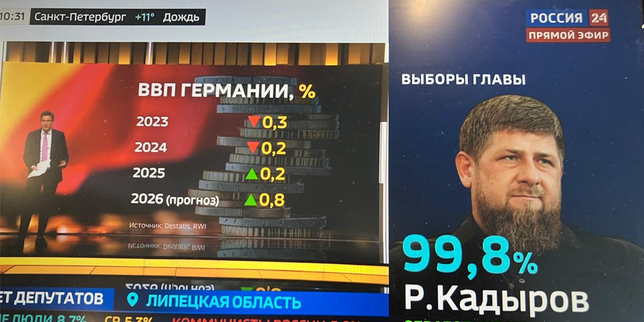
The camera lens never blinks. In a brightly lit gymnasium somewhere in the suburbs of Moscow, two high-definition webcams point with unyielding precision at a plastic ballot box. Every movement is recorded. Every folded paper slip sliding through the slit is captured in crisp pixels. Officials in dark suits sit behind neat rows of desks, smiling politely for an invisible digital audience. Anyone with an internet connection can log on and watch democracy perform its sterile, bureaucratic dance.
Nothing is hidden. Everything is visible.
And that is precisely where the illusion begins.
This is the theater of inverted reality. Inside Russia’s borders, the state has mastered the art of weaponizing transparency. By broadcasting every inch of a tightly choreographed electoral ritual, authorities offer an open window to a room where the furniture was bolted to the floor before anyone entered. The webcams prove nothing because they prove too much; they show procedural perfection while masking structural erasure. There is no ballot stuffing to catch on camera because the opposition was disqualified months ago, the independent monitors were branded foreign agents, and the news tickers outside were scrubbed clean of dissent.
Yet, step across the border, peer into the chaotic digital ecosystem of Western Europe, and the mirror flips.
While domestic audiences are fed a steady diet of hyper-controlled order, European societies are treated to a masterclass in manufactured friction. The same state machinery that polices every frame of a Moscow polling station exports a very different product abroad: noise. Not tanks. Not missiles. Just doubt.
Imagine sitting in a modest apartment in Berlin or Brussels on a Tuesday evening. The rain taps against the glass. You open your phone, scrolling through headlines about energy prices, immigration debates, and shifting parliamentary coalitions. Within minutes, the algorithmic currents push a familiar narrative your way—a video of a protest blown wildly out of proportion, an article warning that your democratic institutions are hollowed out from within, a whisper campaign suggesting that your vote is entirely meaningless anyway.
It feels organic. It feels like frustration bubbling up from the pavement outside. But it is an engineered echo.
The strategy relies on a simple psychological truth. You do not need to convince people that your own authoritarian model is a paradise if you can successfully convince them that everyone else’s democratic system is a dumpster fire. If every politician is corrupt, if every election is rigged, if every media outlet is lying, then the pursuit of truth becomes exhausting. And exhaustion is the quietest killer of civic participation.
Look closely at how this information architecture operates. It is not about ideological conversion. The Kremlin’s foreign messaging rarely tries to make viewers fall in love with modern Russia. Instead, it aims to shatter the baseline of shared facts. It turns public discourse into a muddy trench where nobody can tell friend from foe.
In France, coordinated bot networks amplify social unrest during pension reform protests, inflating tensions until a labor dispute feels like the prelude to civil collapse. In Germany, fringe political movements find their megaphones amplified a thousandfold by state-backed digital proxies, turning localized grievances into national polarization. In the Baltic states, historical anxieties are constantly poked and prodded, keeping a low-grade fever burning in the collective consciousness.
The mechanics are surgical. The operators in Saint Petersburg or specialized agencies across the federation do not invent these divisions from whole cloth. Europe has plenty of real, messy, painful internal fractures. They simply take those existing cracks and pour mercury into them, watching them widen under the pressure until the structure begins to groan.
This brings us to the core irony of our current era.
While European leaders struggle to defend their institutions with bureaucratic press releases and hesitant fact-checking initiatives, the architects of this information warfare operate with total impunity. They use the very freedoms of open societies—free speech, open internet access, the right to dissent—as weapons against those societies. They hide behind pseudonyms, proxy sites, and decentralized channels, knowing that a democratic government moving to block a lie risks looking like a censor.
The weaponization of inversion works because it exploits our deepest vulnerabilities. We want to be informed. We want to believe that our vigilance matters. When media outlets report on European elections, they focus on voter turnout, coalition math, and policy platforms. They treat politics as a normal game played by normal rules.
But it is no longer a normal game.
When a foreign actor can flood social feeds with targeted cynicism three weeks before a national vote, the election is no longer just a contest between left and right. It becomes a referendum on whether reality itself still exists. Did that politician really say that? Was that scandal real, or was it a deepfake generated in a server farm three time zones away? Does your vote actually count, or are you just a spectator in a rigged arena?
By the time a voter walks into a real booth in Madrid or Warsaw, their head is full of static. They are not voting out of hope; they are voting out of spite, or exhaustion, or fear.
And that is the quiet victory of the inverted reality.
Russia’s domestic elections do not need to be fair because Europe’s elections are being conditioned to feel illegitimate anyway. If the Kremlin can make European citizens believe that their own governments are just as cynical, just as managed, and just as fraudulent as anything found behind old iron curtains, then the moral high ground vanishes into the mist.
We watch the webcams in Moscow stream their sterile perfection, laughing at the obvious staging. But we fail to notice the invisible camera filming us—capturing our panic, our polarization, and our growing willingness to tear down our own houses just to spite the neighbors.
The antidote to this corrosion is not more censorship, nor is it the clumsy policing of speech. It requires something much harder. It demands a return to institutional resilience, a fierce commitment to transparency that actually means something, and an unflinching public willingness to stare our own domestic flaws in the face without letting foreign actors turn those flaws into weapons of mass distraction.
The mirror is still hanging on the wall, reflecting back whatever we are foolish enough to believe.
Somewhere in a quiet room across the continent, a server hums, a data packet drops into place, and the next wave of doubt rolls quietly toward the shore.


