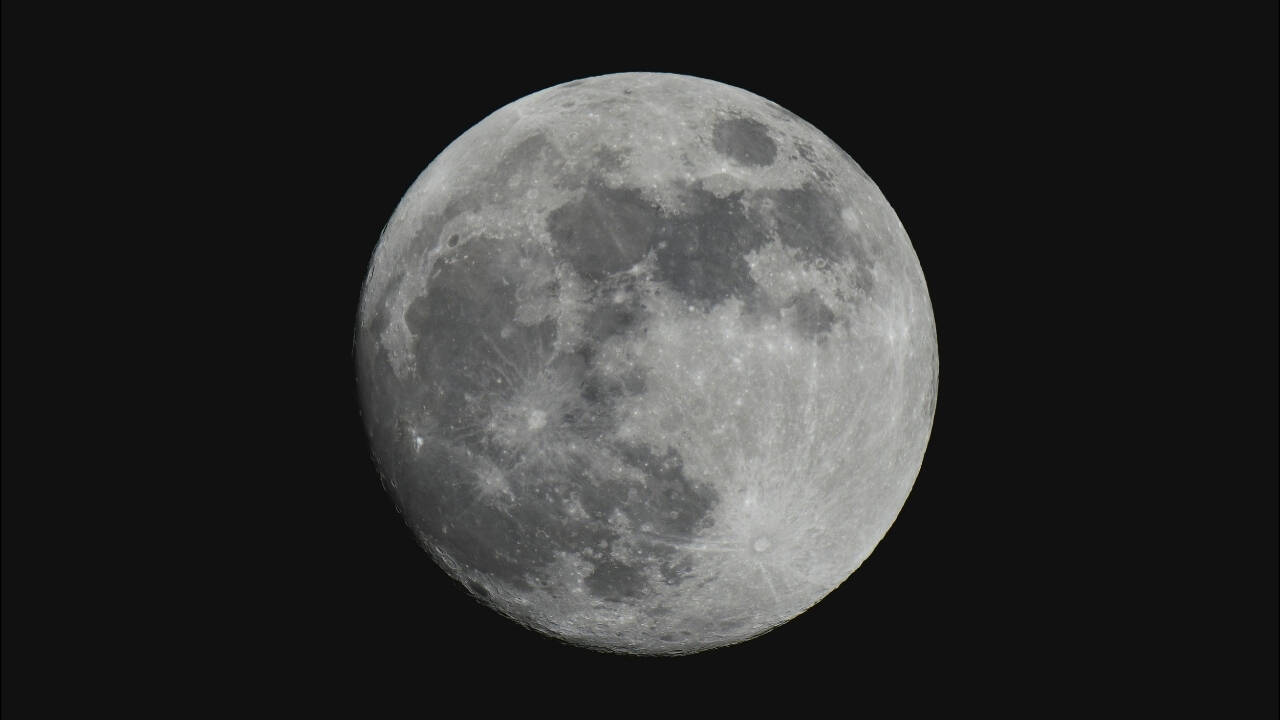
For decades, the public has swallowed a romanticized fiction about the Apollo 15 mission. Astronauts Dave Scott and Jim Irwin scooped up some volcanic green glass beads from the Hadley-Apennine region, and decades later, scientists cracked them open to find trapped water. The mainstream narrative erupted: the Moon is a hidden oasis, a hydration station for future Martian colonists, and a planetary gas station waiting to be tapped.
It is a comforting bedtime story. It is also completely backwards.
Every aerospace pitch deck, government grant proposal, and breathless space-blog headline treats lunar water as the golden ticket for off-world expansion. They talk about cracking regolith, harvesting polar ice traps, and building self-sustaining moon bases fueled by ancient volcanic hydration. I have watched engineering budgets burn through millions of dollars chasing this wet dream, ignoring the brutal laws of thermodynamics and basic economic reality.
Stop trying to drink the Moon.
The Thermodynamic Fallacy of Lunar Hydration
Let us look at the actual data instead of the sci-fi marketing. The water locked inside those volcanic glass beads or trapped in polar permafrost is not sitting in underground aquifers or bubbling streams. It is chemically bound to rock or locked away in parts-per-million concentrations inside abrasive, abrasive regolith.
Extracting it requires massive energy inputs. You have to mine tons of abrasive dirt, transport it, heat it to extreme temperatures in a vacuum, capture the vapor, condense it, and purify it.
Imagine a scenario where you build a massive industrial processing plant on the lunar surface just to yield a few gallons of usable water. By the time you account for the solar or nuclear power required, the heavy machinery transport costs from Earth, and the crushing wear-and-tear of lunar dust on mechanical seals, that water is exponentially more expensive than liquid gold.
The lazy consensus says we need to find water on the Moon to survive there. The harsh truth is that hauling hydrogen from Earth or utilizing closed-loop recycling systems is structurally cheaper and violently more efficient than mining low-grade lunar hydration.
The False Promise of In-Situ Resource Utilization
In-situ resource utilization sounds brilliant on a whiteboard. Live off the land. Drink the moon rocks.
The proponents of this ideology love to cite the Apollo 15 green glass beads as proof that volatile elements are distributed globally. Alberto Saal and his team did stellar geochemistry work when they proved those beads contained water back in 2008. But geochemistry does not equal industrial economics.
Finding molecules in a laboratory mass spectrometer is a far cry from scaling a mining operation in one-sixth gravity with a hard vacuum and extreme thermal swings. Lunar regolith is jagged, unweathered volcanic glass. It chews through drill bits, destroys gaskets, and fouls moving parts within hours.
When you factor in the maintenance overhead of heavy mining equipment in a abrasive, electrostatic environment, the entire ISRU business model collapses. We are trying to force an industrial revolution with nineteenth-century extraction logic applied to an alien wasteland.
What We Should Be Doing Instead
If we want to build a sustainable human presence in deep space, we need to stop treating the Moon as a terrestrial campground with free well water.
- Maximize closed-loop life support: Spend those R&D dollars perfecting ninety-nine percent efficient water recycling on the International Space Station instead of building automated strip mines in craters.
- Prioritize propellant depots in high orbit: Stop wasting delta-v trying to lift heavy reaction mass off planetary surfaces when near-Earth asteroids or captured comets offer volatile-rich materials without deep gravity wells.
- Embrace the dry paradigm: Accept that the Moon is a magnificent scientific laboratory and a strategic radio silence zone, not a homestead.
The obsession with lunar water is a distraction from real engineering challenges.
The green glass beads of Apollo 15 taught us how the Moon formed and how its interior evolved four billion years ago. They are a triumph of planetary science. They are not a municipal water utility.
Put down the shovel.


