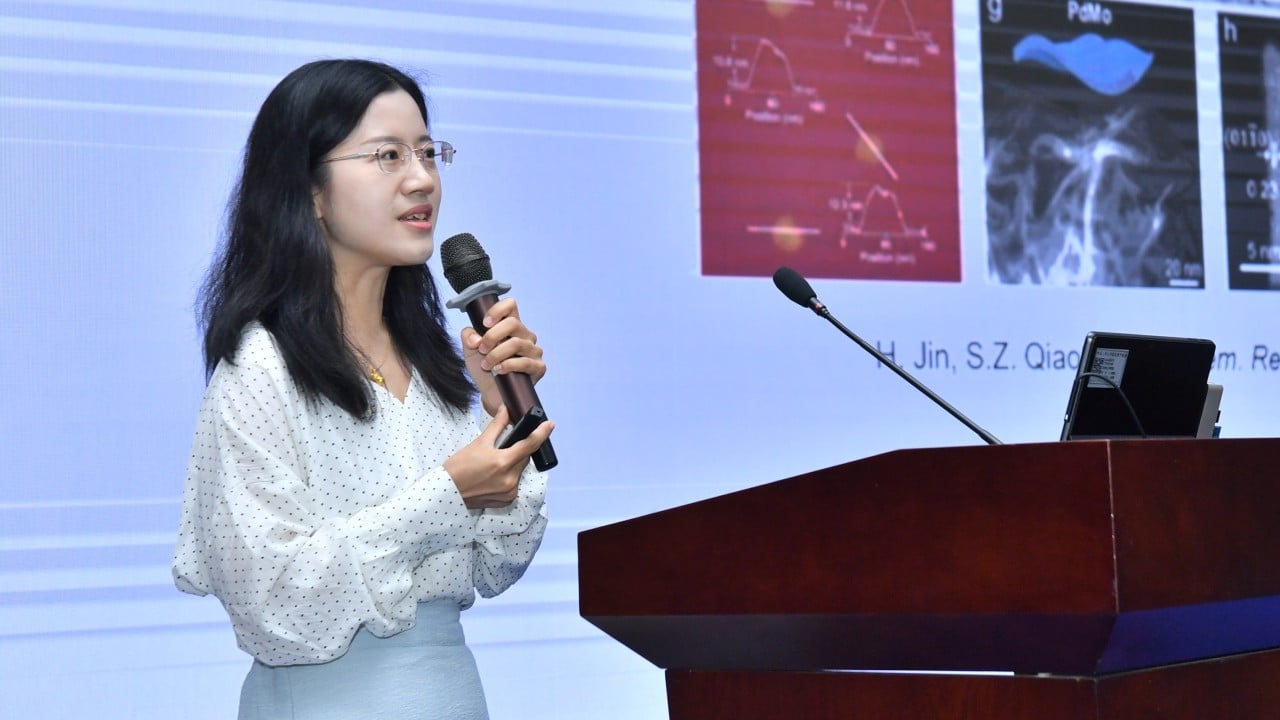
The media loves a good geographic migration story. When an electrochemist like Liu Jiawei packs up from Singapore and heads north to set up shop in Hong Kong, the narrative writes itself. Brain drain, rising Asian tech hubs, cross-border talent pipelines. It is neat, tidy, and completely detached from the brutal realities of hardware commercialization.
Everyone is applauding the shift as a masterstroke of regional positioning. They assume proximity to the Greater Bay Area manufacturing belt automatically translates to scientific velocity. They are wrong. Moving an early-stage electrochemistry lab to Hong Kong for logistical convenience is like trading a Formula One car for a Ferrari body shell with no engine, just because it is parked closer to the gas station. Recently making waves in related news: The Anatomy of Coal Powered Computation: A Structural Critique of AI Energy Policy.
I have watched founders torch millions of dollars chasing real estate subsidies and tax havens, only to drown in bureaucratic quicksand and supply chain friction. Let us dissect why the current romanticized view of lab relocation is a trap for serious scientists.
The Geographic Proximity Fallacy
The lazy consensus says that being next door to Shenzhen factories solves your scaling problems. If you need custom cell casings or specialized current collectors, you can just hop across the border, right? Wrong. Additional insights on this are covered by ZDNet.
Hong Kong is a financial services paradise and a hardware testing desert. Real estate costs per square foot for wet labs are astronomical, forcing startups into compromised spaces that restrict equipment density. Meanwhile, Shenzhen manufactures at scale, but scaling is not prototyping. When you are iterating on cathode slurries or solid-state electrolytes at milligram scale, you do not need a million-part manufacturing run. You need rapid iteration loops inside an integrated research facility.
Singapore understood this decades ago. They built cohesive biomedical and physical sciences clusters like Tuas and Biopolis, where the regulatory framework, hazardous waste disposal, and grant distribution happen within a tightly managed ecosystem. Hong Kong offers funding injections, sure, but cash without an operational physical ecosystem just means you burn through your runway paying rent to landlords who treat fume hoods like luxury amenities.
The Regulatory Mirage
Let us talk about compliance and talent acquisition. The narrative claims Hong Kong acts as a super-connector between mainland manufacturing and international capital. For software or fintech, maybe. For electrochemistry, you are dealing with hazardous materials, precursor chemicals, and strict import-export controls on critical battery minerals like lithium, cobalt, and nickel.
When you relocate, you do not just move glassware. You move supply chains. Singapore has streamlined dual-use chemical tracking and predictable import protocols that allow researchers to get precursors delivered without customs purgatory. In contrast, operating a chemical lab on the border means navigating dual bureaucratic layers: Hong Kong export-import laws and mainland customs scrutiny.
If your precursor shipment gets flagged for dual-use tech review, your three-month experiment timeline instantly balloons to nine months. Your burn rate does not care about geopolitical bridge-building.
What You Should Do Instead
If you are an electrochemist looking to build a generational company, stop chasing the hype cycle of municipal grants and glamorous press releases.
- Secure infrastructure over optics: Prioritize facility safety, waste management clearance, and reliable power grids over a prestigious zip code. An electrochemical workstation pulling heavy amps will test grid stability in ways office parks cannot handle.
- Isolate your R&D from your manufacturing: Keep your core research where talent flows freely and regulatory friction is lowest. Do not move your lab to the factory floor; bring your manufacturing partners to your lab data.
- Audit your burn versus your throughput: Calculate your cost per successful iteration cycle, not your cost per square foot. If a cheaper lab space doubles your administrative overhead and slows your material synthesis cycles by fifty percent, you are losing money.
Stop treating lab relocation like a branding exercise. Electrochemistry does not care about your press coverage. It cares about ionic conductivity, interfacial stability, and how fast you can fail in a controlled environment. Fix your fundamentals or stay home.