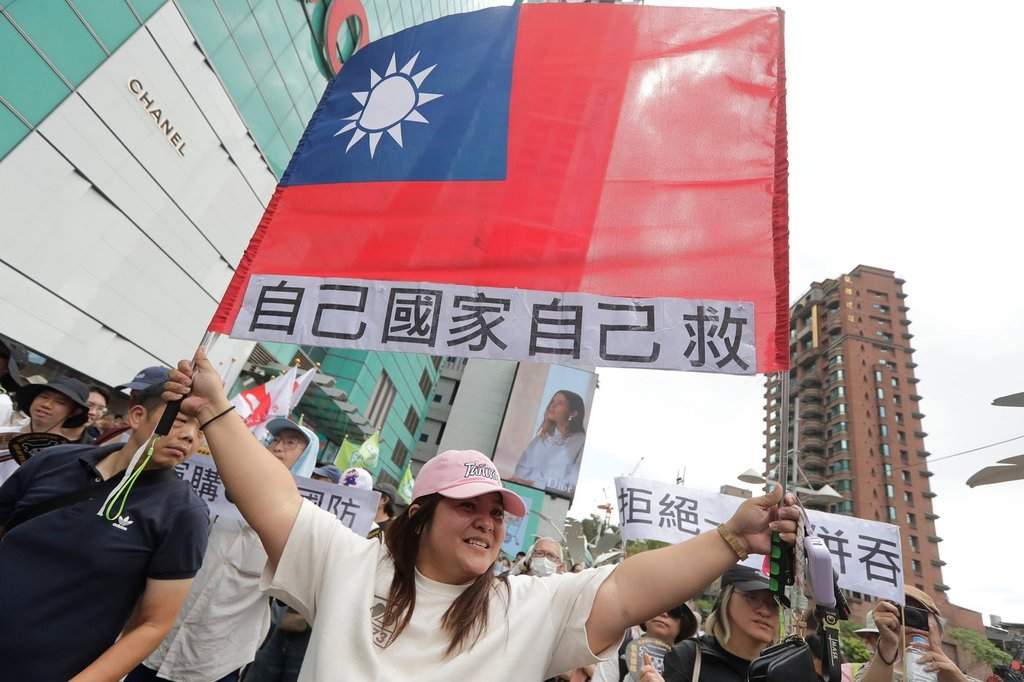
Western foreign policy has degenerated into a series of high-stakes photo opportunities.
The standard narrative surrounding Western politicians visiting Taipei follows a predictable, lazy script. A delegation of lawmakers announces a trip. Beijing issues a stern, formulaic warning about "hurtful ties" and violated sovereignty. The media frames the excursion as a courageous defense of democracy. The politicians get their pictures, return home, and change exactly nothing about their actual legislative or trade policies.
This is not diplomacy. It is geopolitical cosplay.
When Canadian Members of Parliament plan highly publicized visits to Taiwan under the guise of strengthening bilateral relations, they are not defying Beijing. They are exposing the empty core of middle-power foreign policy. Having spent over a decade analyzing trade flows and diplomatic posturing across the Pacific Rim, I have watched this exact theater play out. It wastes political capital, misleads the public, and actively harms the businesses operating on the ground.
The Illusion of Signaling Without Substance
The fundamental flaw in these parliamentary junkets is the belief that signaling support is identical to providing support.
Mainstream analysts argue that high-profile visits deter aggression by showing solidarity. That is a misunderstanding of how deterrence functions. True deterrence requires a calculations of material cost and capability.
When a middle power like Canada sends a handful of backbench MPs to Taipei, it signals the exact opposite of strength. It signals that Ottawa is willing to agitate its second-largest trading partner for a headline, yet lacks the military capacity or the political will to back it up with hard security commitments.
Consider the mechanics of Canadian-Taiwanese relations. Canada adheres to a "One China" policy, meaning it maintains unofficial cultural and economic ties with Taiwan rather than formal diplomatic recognition. This ambiguity is intentional. It allows for robust trade without triggering military crises.
When politicians disrupt this delicate balance purely for domestic political consumption, they create a dangerous asymmetry:
- Maximum Visibility, Minimum Risk: Lawmakers face no personal or financial consequences for their rhetoric.
- The Private Sector Pays the Bill: Canadian exporters—particularly in agriculture, aerospace, and critical minerals—are the ones who face the quiet, bureaucratic retaliation from Beijing via customs delays and sudden regulatory hurdles.
- Zero Strategic Gain: Taiwan does not receive a single extra dollar in defense funding, nor does it secure a binding bilateral treaty from a legislative field trip.
The Foreign Investment Promotion and Protection Agreement Trap
Advocates for these trips frequently point to economic cooperation, specifically pointing to agreements like the Foreign Investment Promotion and Protection Agreement (FIPA) signed between Canada and Taiwan.
The argument goes that parliamentary visits pave the way for these critical frameworks. This is backward logic.
Trade negotiators and corporate executives build international trade frameworks through quiet, tedious, years-long bureaucratic grinding—not through politicians posing for cameras in Taipei.
In fact, loud political grandstanding often slows these processes down. It forces Beijing to turn a routine trade discussion into a matter of national prestige, compelling them to pressure international bodies to exclude Taiwan further.
If Ottawa genuinely wanted to support Taiwan’s economic resilience, it would focus entirely on supporting Taiwan's membership in the Comprehensive and Progressive Agreement for Trans-Pacific Partnership (CPTPP). That requires quiet, rigorous diplomatic lobbying among the existing 11 member states. It requires doing the hard work behind closed doors, away from the television cameras.
Instead, we get parliamentary delegations. Why? Because lobbying the CPTPP membership is difficult and invisible, while flying to Taipei is easy and photogenic.
Dismantling the Democracy Versus Autocracy Binary
The media loves a simple binary. The coverage of these visits is almost universally framed as a moral battle between democracy and autocracy. While that narrative sells newspapers and wins votes at home, it ignores the cold reality of global supply chains.
Let us look at the semiconductor industry, specifically Taiwan Semiconductor Manufacturing Company (TSMC). The global tech economy depends on the peace and stability of the Taiwan Strait because TSMC produces the vast majority of the world's advanced microchips.
If a conflict erupts, the global economy does not just suffer a recession; it grinds to an immediate halt.
[Western Political Grandstanding]
       │
       ▼
[Increased Regional Tension]
       │
       ▼
[Supply Chain Instability for Critical Semiconductors]
True stability in the region requires maintaining the status quo. The status quo is boring. It is quiet. It relies on strategic ambiguity—the exact concept that loud parliamentary visits explicitly undermine. By forcing a public confrontation over sovereignty that neither side can back down from, Western politicians make the region less stable, not more.
The Hard Truth About Middle-Power Leverage
I have watched companies burn millions of dollars scrambling to pivot their supply chains because a politician decided to make an unscripted comment about cross-strait relations. The people cheering for these parliamentary visits are rarely the ones who have to manage the fallout.
To understand why this strategy is broken, you have to look at the power dynamics honestly:
- Canada is not the United States. Washington possesses the naval assets and regional alliances to project power in the Pacific. Ottawa does not. Pretending to play the same geopolitical game without the same cards is a recipe for irrelevance.
- Beijing expects this behavior from Washington. It is factored into their strategic calculations. When Canada suddenly mimics US moves without US capabilities, it creates unpredictable variables that increase the risk of miscalculation.
- The Taiwanese public is more sophisticated than Western media gives them credit for. They know the difference between a country offering concrete security guarantees and a country offering a photo op. They tolerate the photo ops because they need any international visibility they can get, but they are under no illusions about what a Canadian MP delegation can actually deliver in a crisis.
Stop Touring Taiwan, Start Doing the Actual Work
If Canada wants to be a serious player in the Indo-Pacific, it needs to abandon the theater and focus on material reality.
Stop sending politicians on symbolic tours that yield nothing but predictable diplomatic friction. Start investing in the structural capabilities that actually matter to the region.
Increase funding for maritime security. Expand the diplomatic corps in Southeast Asia to build a deeper understanding of regional dynamics. Speed up the regulatory approvals for Canadian critical mineral projects so Western tech manufacturers have a viable alternative to Chinese supply chains.
These actions are expensive. They take years. They do not fit into a neat soundbite on the evening news. But they are the only things that carry real weight in a multipolar world.
The next time you see a headline about a group of MPs heading to Taipei to stand up for democracy, do not applaud. Ask them what specific, measurable commitment they are bringing back with them. When the answer is silence, you will know exactly what the trip was worth.
Stop treating the Taiwan Strait as a backdrop for domestic political posturing. The stakes are far too high for amateur theater.


:max_bytes(150000):strip_icc():focal(665x0:667x2)/gettyimages-50733149-2000-8b129a2475974982a915418ce92a73d8.jpg)