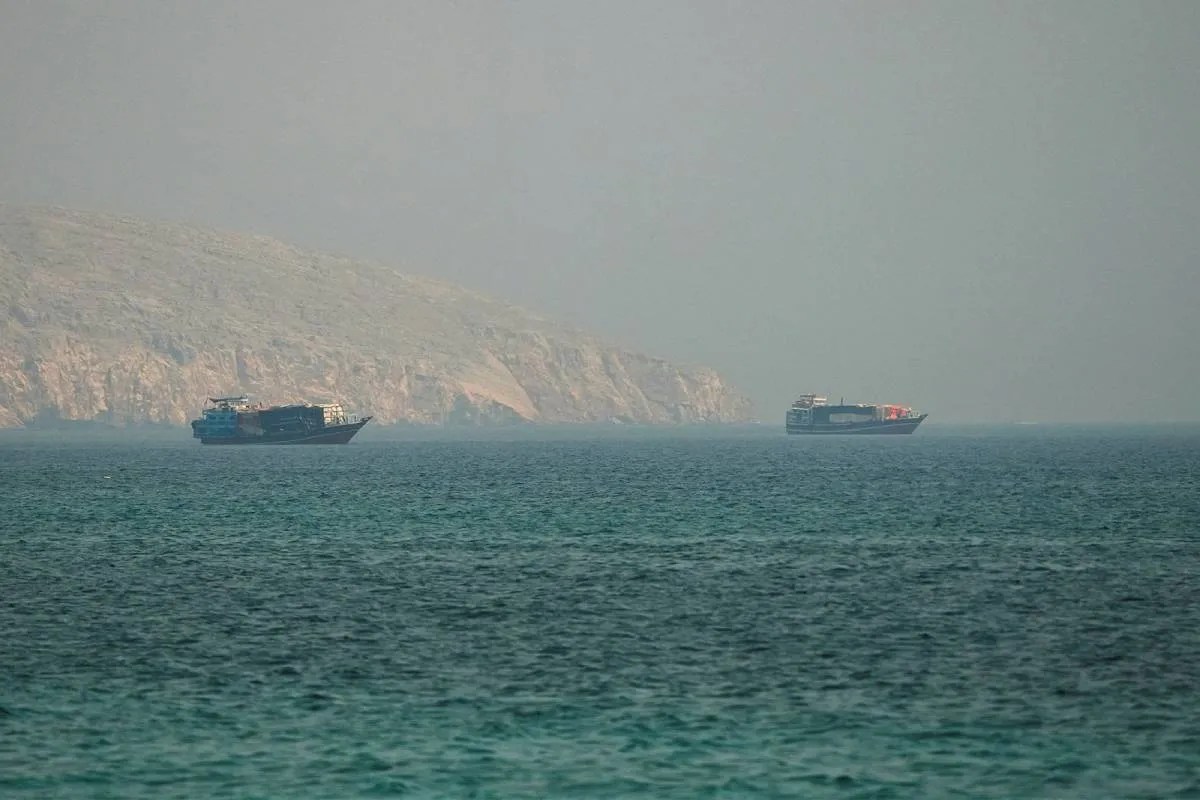
The mainstream media is hyperventilating again. Another tanker gets harassed, boarded, or dinged by an Islamic Revolutionary Guard Corps (IRGC) speedboat in the Strait of Hormuz, and the immediate response is a flood of frantic headlines. Cable news pundits scream about an imminent US-Iran war. Op-eds claim regional powers like Saudi Arabia and Pakistan are frozen in shock.
It is a tired, decades-old script written by analysts who do not understand how energy markets, naval logistics, or modern asymmetric diplomacy actually function.
Let us kill the hysteria right now. Tehran attacking a vessel despite Western sanctions and naval deployments is not a breakdown of global order. It is not the opening salvo of World War III. It is a highly calculated, predictable ritual of friction. The narrative that the Middle East is surprised by these maneuvers ignores the reality of modern geopolitics: everyone involved is playing a carefully scripted game of chicken where no one actually wants to crash the car.
The Performative Shock of Riyadh and Islamabad
The claim that Saudi Arabia and Pakistan are shocked by Iran's maritime aggression is laughably out of touch with reality.
Riyadh is not shocked. They have spent the last several years actively recalibrating their foreign policy because they reached a glaring realization: the American security umbrella is no longer an absolute guarantee. Ever since the 2019 drone strikes on Saudi Aramco’s Abqaiq and Khurais facilities—which met with a remarkably muted response from Washington—the House of Saud understood the rules changed. They did not panic when recent tensions flared; they simply accelerated their diplomatic hedging. The Beijing-brokered detente between Riyadh and Tehran was not a peace treaty born of trust; it was a pragmatic insurance policy. Saudi Arabia knows exactly what Iran is capable of, which is precisely why they are choosing diplomatic engagement over Western-led military escalations.
Pakistan, meanwhile, is dealing with a catastrophic domestic economic crisis, systemic political volatility, and intense pressure from the International Monetary Fund. The idea that Islamabad is losing sleep over a tanker incident in the Gulf assumes a level of regional policing capability that Pakistan simply does not possess right now. Islamabad’s primary concern with Iran is managing a restive border in Balochistan and securing cheap energy. They are not shocked by Iranian posturing; they are indifferent to it as long as it does not disrupt their internal stability.
To frame these nations as astonished observers is to treat serious regional players like naive spectators. They know the geography. They know the players. They know the stakes.
The Flawed Mathematics of a Total Blockade
The most persistent piece of lazy consensus in international reporting is the idea that Iran will, or even can, completely shut down the Strait of Hormuz. Roughly one-fifth of the world’s liquid petroleum passes through this narrow stretch of water daily. The media treats it as a giant light switch that Tehran can flip at any moment to plunge the global economy into darkness.
The math does not work.
First, consider the physical reality of the strait. The shipping lanes themselves consist of a two-mile-wide inbound lane, a two-mile-wide outbound lane, and a two-mile-wide separation zone. While narrow, it is deep, highly regulated, and constantly monitored. To truly block it, Iran would need to mine the waters systematically, sink multiple ultra-large crude carriers in precise locations, and sustain a continuous artillery and anti-ship missile barrage against an immediate, overwhelming international naval response.
Second, and more importantly, shutting down the strait would be an act of economic suicide for Iran. The Western media loves to highlight how blockades and sanctions have isolated Tehran. What they omit is the thriving, highly organized network of the dark fleet. Iran relies heavily on the Strait of Hormuz to export its own crude—largely to buyers in China who are more than willing to ignore Washington’s sanctions regime. If Iran seals the strait, it chokes off its own vital economic lifeline.
Tehran does not want a closed strait. It wants a volatile strait.
By maintaining a baseline of insecurity, Iran achieves two things:
- It drives up the cost of marine insurance for its adversaries.
- It signals to the West that any attempt to completely cut off Iranian oil exports will result in asymmetrical pain for global consumers.
It is a strategy of calculated irritation, not total interdiction.
The Reality of the Shadow Fleet
We are told that sanctions have crippled Iran's ability to operate internationally, making their continued maritime operations a shocking defiance of Western power. This view completely misunderstands how global trade functions in the modern era.
Sanctions do not stop oil from moving; they merely change the color of the money and the flags on the ships. The global energy market now features a massive, resilient parallel infrastructure. Hundreds of aging tankers operate under flags of convenience, using obscured ownership structures, disabled transponders, and ship-to-ship transfers in international waters to move sanctioned crude.
Iran is not operating in a vacuum. It is deeply integrated into an alternative economic orbit backed by major global consumers who have zero interest in enforcing unilateral US sanctions. When an Iranian fast boat approaches a tanker, it is not a desperate act of an isolated rogue state; it is a tactical demonstration of leverage by a nation that knows its primary customers are insulated from Western financial pressure.
Dismantling the Flawed Premises of Global Escalation
When analyzing these maritime flashpoints, the public routinely asks the wrong questions because they are fed flawed premises. Let us dismantle the most common assumptions.
Will oil prices skyrocket to $200 a barrel if these attacks continue?
No. The energy markets of today are fundamentally different from those of the 1970s. The growth of non-OPEC production, particularly US shale, provides a massive supply cushion that did not exist during the historical oil shocks. Furthermore, oil traders are incredibly cynical. They have grown completely desensitized to low-level kinetic friction in the Persian Gulf. A tanker getting boarded by the IRGC used to cause a multi-dollar spike in Brent crude; now, it barely registers as a blip before the market refocuses on macroeconomic data out of Washington and Beijing. The risk premium is already baked into the baseline price.
Why doesn't the US Navy simply flatten Iran's naval bases to end this threat?
Because the Pentagon understands the cost-benefit analysis far better than armchair generals on social media. A conventional military campaign to destroy Iran’s asymmetric naval capabilities would require an immense expenditure of resources, put global shipping at massive risk for months, and inevitably trigger a wider regional war involving rocket attacks on Gulf oil infrastructure. The US military presence in the region is designed for deterrence and containment, not total eradication. Washington knows that managing a controlled amount of friction is vastly cheaper and less risky than initiating a regime-change conflict with a nation of 85 million people.
The Tactical Playbook of Friction Management
Step away from the sensationalist reporting and look at the actual mechanics of how these incidents unfold.
Iran selects its targets with extreme care. They rarely target vessels flying the American flag or those directly operated by major Western superpowers. Instead, they focus on third-party managed tankers, vessels owned by smaller nations, or ships with tenuous legal or commercial links to regional rivals.
This is deliberate. It provides just enough provocation to make headlines and pressure international insurers, but not enough to trigger a mandatory military response under international law or mutual defense treaties. It is the maritime equivalent of a shove in a crowded bar; it is designed to test boundaries and see who steps back, not to start a full-scale brawl.
For the international shipping industry, this is simply the cost of doing business in a fractured world. Shipowners do not stop routing vessels through the region; they adjust their risk models, pay higher premiums to their P&I clubs, and pass the costs down the supply chain to the end consumer.
The next time a headline flashes across your screen declaring that a new tanker incident has brought the world to the brink of a US-Iran war, ignore the panic. The strait will remain open. The oil will keep moving. The regional powers will continue their behind-the-scenes diplomatic maneuvering. The status quo is not breaking down; it is functioning exactly as intended by the cynics who control it.