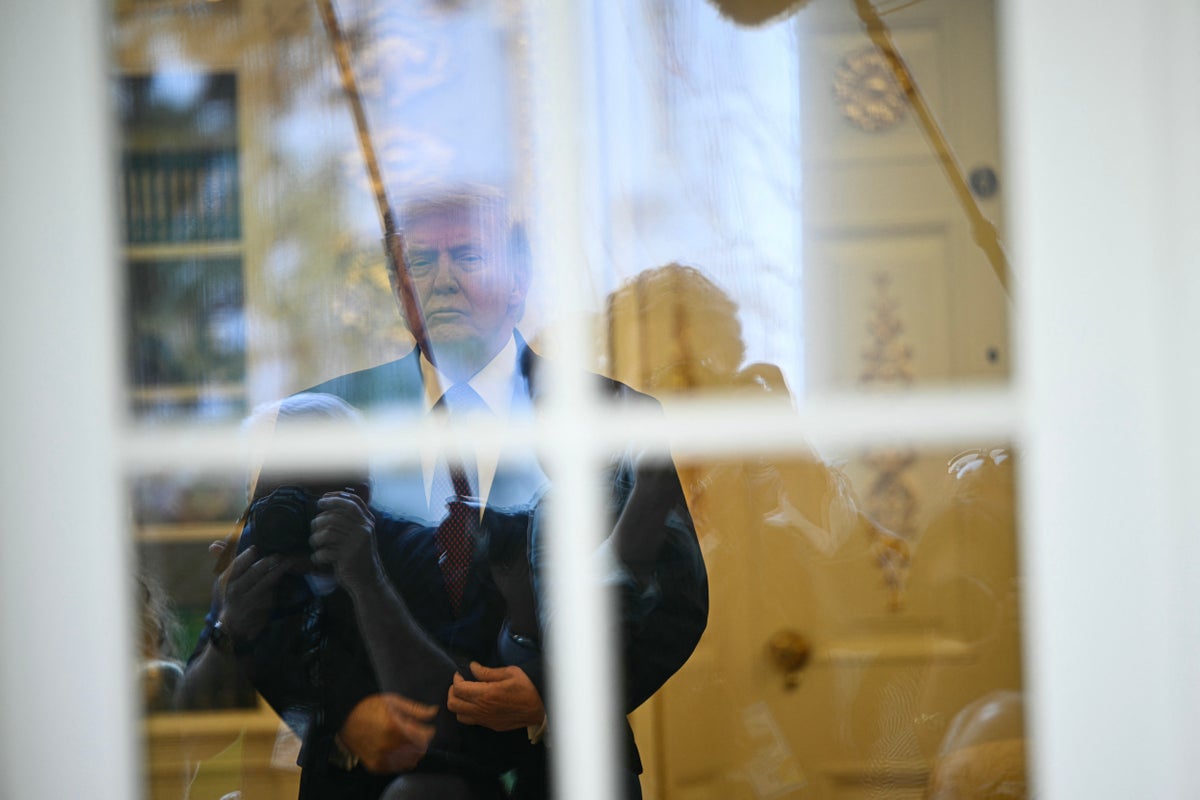
The mainstream political press loves a good soap opera. For years, the definitive narrative of the United States exiting the Joint Comprehensive Plan of Action (JCPOA) has been framed as a temper tantrum. We have been fed an endless stream of breathless, behind-the-scenes reporting detailing a furious, red-faced Donald Trump shouting down his advisors in a tense Oval Office showdown, determined to rip up the Iran deal simply because it bore his predecessor’s signature.
It is a neat, dramatic story. It is also completely wrong. Don't forget to check out our recent post on this related article.
By focusing on the personality clashes, the palace intrigue, and the alleged emotional volatility of the commander-in-chief, analysts missed the actual structural shifts happening right under their noses. The breakdown of the Iran deal was not a failure of impulse control. It was a cold, calculated execution of leverage designed to upend a deeply flawed accord that the American defense establishment had already written off.
The media spent months hyper-fixating on how Trump delivered the news, completely ignoring why the deal was fundamentally unsustainable from a market and structural perspective. If you want more about the context here, TIME provides an in-depth breakdown.
The Fatal Flaw of the JCPOA the Pundits Ignored
The lazy consensus states that the JCPOA was a masterpiece of diplomacy that safely locked away Iran’s nuclear ambitions until an erratic president blew it up. This narrative ignores basic economic reality.
As someone who has tracked sanctions compliance and sovereign risk for over a decade, I watched corporate compliance officers across Europe and Wall Street treat the JCPOA with extreme skepticism long before Trump took office. The agreement was built on a volatile foundation: the temporary suspension of secondary sanctions via presidential waivers that had to be renewed every 90 days.
Imagine a business model where your entire regulatory framework risks vanishing every three months. No serious multinational enterprise deploys billions of dollars in capital under those conditions.
The deal failed to trigger the massive, sustained Western investment in Iran that Tehran expected because the private sector inherently understood the risk. Trump didn't kill the deal's economic utility; the deal’s own architecture did.
Furthermore, the JCPOA suffered from two fatal structural omissions:
- The Sunset Clauses: The deal's key restrictions on uranium enrichment and centrifuge operation possessed expiration dates, starting as early as 2025. It wasn't a permanent solution; it was a high-priced lease on a temporary pause.
- The Regional Blindspot: The agreement completely decoupled Iran's nuclear program from its ballistic missile development and regional proxy funding. It treated a regime’s geopolitical strategy as if it existed in a vacuum.
To view the exit as a mere act of petulance is to misunderstand the fundamental nature of international leverage.
The Oval Office Drama Was the Strategy, Not the Problem
Let's dissect the "tense Oval Office meeting" that mainstream commentators obsess over. The reports describe Rex Tillerson and H.R. McMaster desperately trying to "contain" a president who was dead-set on decertification. The establishment viewed this as a breakdown of the policy-making process.
In reality, that friction was the policy.
The administration was executing a classic madman strategy, leveraging the president's unpredictable reputation to force European allies—specifically France, Germany, and the UK—to renegotiate the terms of the deal. Washington wanted the sunsets removed and the missile program included. The threat of a chaotic, unilateral American exit was the only mechanism capable of shifting Brussels and London out of their diplomatic inertia.
[U.S. Threat of Unilateral Exit]
               │
               ▼
[Pressure on European Signatories] ──► [Demands for Structural JCPOA Revision]
               │
               ▼
[Economic Sanctions Snapback Risk]
When the European powers refused to blinked, assuming the American foreign policy establishment would successfully tie the president's hands, the administration snapped back the sanctions. It wasn't a tantrum. It was a strategic pivot to Maximum Pressure once negotiation avenues were exhausted.
Dismantling the "People Also Ask" Delusions
The public discourse surrounding this event is plagued by flawed premises. Let's answer the questions people are actually asking, without the partisan spin.
Did exiting the Iran deal make the Middle East less safe?
This question assumes the region was stable prior to 2018. The influx of cash resulting from sanctions relief under the JCPOA directly funded regional escalation via proxy forces in Yemen, Syria, and Iraq. The deal bought temporary nuclear compliance by subsidizing conventional regional destabilization. Exiting the deal didn't create the instability; it exposed the underlying conflict that the JCPOA had papered over with cash reserves.
Why didn't Trump just fix the deal from within?
Because the JCPOA’s Joint Commission mechanism was designed to protect the status quo. Any attempt by the United States to alter the terms from within the framework would have been vetoed by Russia, China, and Iran. The only way to alter the dynamic was to break the framework entirely and leverage the global dominance of the U.S. dollar.
Did sanctions fail to bring Iran back to the table?
Only if you measure success by a signed piece of paper within a two-year window. Maximum Pressure decimated Iran’s oil exports, dropping them from over 2.5 million barrels per day to under 500,000. It severely restricted the regime's liquidity. The strategy didn't fail due to structural flaws; it was paused by a change in U.S. administrations that signaled a return to the old accommodation strategy.
The Hard Truth of Sovereign Risk
Let's be clear about the downsides of this contrarian approach. Unilateral exits damage Washington's diplomatic credibility. They signal to allies and adversaries alike that commitments made by one American administration can be erased by the next. That is a real, measurable cost.
But the alternative—sticking to a broken agreement out of a desire to look polite on the world stage—is far worse.
International relations are governed by power and economic leverage, not by the etiquette rules of a Washington dinner party. The corporate giants of Europe didn't stay out of Iran because Trump was loud; they stayed out because they knew that the moment American secondary sanctions were reinstated, they would lose access to the U.S. financial system.
If Company X chooses Iran ($50B market) OVER the United States ($25T market) -> Immediate Financial Suicide.
The U.S. dollar is the ultimate weapon of economic warfare. The Trump administration understood that global corporations would always choose access to the American market over the Iranian market. The Oval Office shouting matches were merely the theatrical smoke signaling a massive, deliberate shift in the global financial landscape.
Stop reading historical events through the lens of psychological profiles and personality clashes. The JCPOA was a structurally deficient contract with a counterparty that had no intention of changing its long-term strategic goals. The exit wasn't a tantrum. It was an eviction notice.



