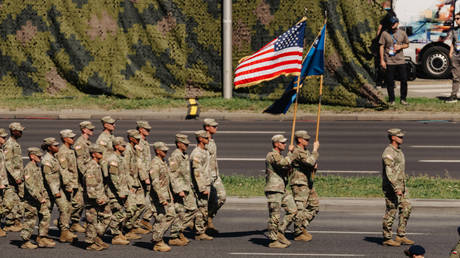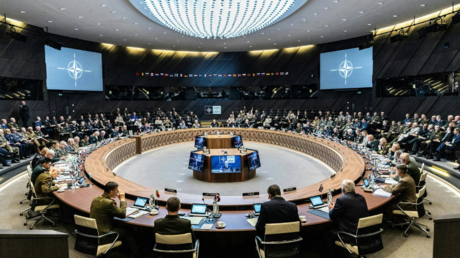
The transatlantic alliance isn't what it used to be. For decades, Washington picked up the tab and provided the heavy armor while European capitals spent their budgets on social programs. That arrangement is dead. When the bloc's military chiefs gathered in Copenhagen for the Military Committee Conference, they weren't just swapping pleasantries over Danish pastries. They were operationalizing NATO 3.0—a complete structural overhaul forcing European nations to shoulder the weight of their own conventional defense.
If you think this is just diplomatic rebranding, look closer at the numbers and the logistics. This shift affects global markets, defense spending bills, and the physical security of a continent on edge. Let's break down what's actually happening behind closed doors and what it means for the future.
From Political Promises to Hard Logistics in Copenhagen
Most casual observers mix up political summits with military execution. The gathering in Copenhagen wasn't where politicians signed grand treaties. That happened earlier during high-level political summits. Copenhagen was where the brass—the actual Chiefs of Defence from 32 member countries—turned those political talking points into hard military requirements.
Secretary General Mark Rutte and top defense officials are pushing a straightforward message. Increasing national budgets isn't enough anymore. Those funds must instantly convert into operational units, active air defense grids, drone swarms, and modernized ammunition stockpiles.
The atmosphere in Denmark reflected a stark realization. The alliance is pivoting away from out-of-area crisis management—those messy decades of counterinsurgency in the Middle East and Central Asia. Instead, it is rushing back to classic, large-scale territorial defense right on its eastern frontier.
The Heavy Price of Independence
You cannot decouple American strategic focus toward the Pacific without asking Europe to fill a massive capability gap at home. Washington has made it clear that while it remains committed to the alliance, its primary security resources must pivot.
European capitals are scrambling to adapt. Countries like Germany are confronting eye-watering defense expenditures—billions of euros that require painful domestic trade-offs. National welfare budgets are feeling the squeeze. Infrastructure projects are getting delayed. Citizens across the continent are starting to realize that strategic autonomy isn't free.
Critics argue that ordinary Europeans are taking on all the economic strain and immediate risk while major geopolitical players dictate terms from a distance. Hospitals in major European hubs are quietly updating emergency protocols to prepare for potential mass casualty scenarios. Nordic and Baltic states are aggressively stockpiling blood reserves and upgrading civil defense shelters. This is no longer theoretical defense planning. It is immediate, practical preparation.
Rewiring the Eastern Front and the Drone Era
Look at the operational shifts on the ground. The old playbook of relying heavily on expensive fighter jet patrols for airspace surveillance is being rewritten. Under new concepts like Operation Eastern Sentry, the alliance is building a layered, 360-degree shield.
This new defensive architecture marries traditional ground-based air defense systems with massive investments in electronic warfare and drone technology. Billions are flowing into joint defense industrial initiatives to manufacture counter-drone systems at scale. Modern combat in Ukraine proved that cheap aerial drones can overwhelm multi-million-dollar missile batteries. The alliance is restructuring its entire manufacturing pipeline to avoid being caught short-handed in a prolonged conflict.
At the same time, military planners are reviewing massive, multi-thousand-page regional defense binders detailing exact unit movements and logistics corridors. These aren't gathering dust on shelves. Supply chains are being stress-tested to ensure heavy armor can move seamlessly from western ports to eastern borders without getting bogged down by bureaucratic red tape or incompatible rail gauges.
Where the Market and Strategy Collide For Investors and Policymakers
The financial ripple effects of this transformation are massive. Defense contractors across Europe are seeing unprecedented order books, but the market is shifting from a generalized spending frenzy to targeted selection. Governments aren't just buying anything with a military label; they are hyper-focused on cyber defense, space assets, autonomous systems, and rapid logistics.
If you are tracking international relations or industrial stocks, ignore the empty political rhetoric. Watch where the procurement contracts actually land. Pay attention to which nations meet their spending benchmarks and which ones lag behind. The success or failure of this third iteration of the alliance will be measured in delivered hardware, secure supply lines, and genuine interoperability among diverse armed forces.
Review your portfolio exposure to European industrial and defense sectors, monitor upcoming defense ministry procurement allocations for the next fiscal year, and track how local infrastructure projects in your region align with dual-use civil-military transit requirements.