For years, the standard narrative about military aid was a one-way street. Western capitals sent hardware, Ukrainian forces learned how to use it, and everyone assumed NATO's top brass had nothing left to learn from a country fighting off an invasion.
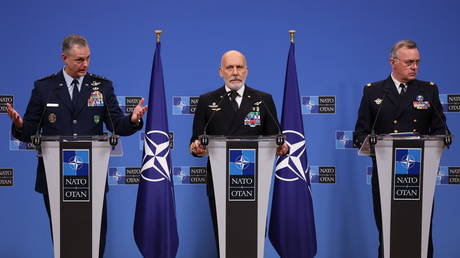
That assumption expired on October 6, 2026, when the entire NATO Military Committee—representing the military chiefs of all 32 allied nations—touched down in Kyiv for their first collective visit since 2018. Led by Admiral Giuseppe Cavo Dragone, the delegation didn't just meet with Ukraine's Commander-in-Chief, Major General Mykhailo Drapatyi, for a photo op. They went to study.
The Real Reason NATO's Top Brass Made the Trip
If you think this was just another diplomatic gesture of solidarity, you're missing the entire strategic shift. Sure, the delegation paid respects at Kyiv's Wall of Remembrance, but the core of the visit happened behind closed doors and out in the field.
NATO's senior military authority came to inspect air-defense setups, drone-warfare installations, and unmanned ground systems. Why? Because the student has quietly become the teacher in modern industrial warfare.
For decades, Western militaries operated under assumptions built around absolute air superiority and high-end, exquisitely expensive hardware. The war in Ukraine shattered those doctrines. Ukrainian forces have spent years figuring out how cheap consumer drones, electronic jamming, and decentralized command structures survive under relentless surveillance.
NATO isn't just teaching anymore; they are desperately trying to catch up.
What the Alliance Is Actually Learning
Let's be honest about how Western defense establishments usually operate. They build multi-million-dollar weapon systems designed for wars that look nothing like the trenches of eastern Europe. Then reality hits.
During their briefings with the Ukrainian General Staff, the 32 allied military representatives dug into hard operational data:
- Electronic Warfare Realities: How cheap commercial gear gets neutralized in weeks, forcing a constant cycle of software adaptations.
- Unmanned Integration: Moving from experimental drone use to industrial-scale aerial and ground autonomy.
- Resilient Logistics: Keeping supply chains running when every square mile is watched by thermal optics and loitering munitions.
Admiral Cavo Dragone noted that the insights gathered in Kyiv will directly feed into NATO's own defensive doctrines and preparedness for current and future threats. When your entire military committee travels into an active war zone, it means your domestic training grounds can no longer replicate the scale of modern electronic and drone conflict.
The Message Behind Closed Doors
Beyond the technical briefings, the timing of this gathering sends a clear signal. Amid shifting political winds in Washington and persistent Russian hybrid threats across Europe—ranging from cyberattacks to airspace violations—the alliance needed a visible anchor.
By bringing all 32 nations to the table in Kyiv, NATO made it clear that distance and political noise won't erase the integration happening between Ukrainian and Western defense structures. It's a pragmatic recognition that European security now depends as much on innovations born in Ukrainian basements as it does on heavy armor manufactured in Western factories.
The generals didn't fly into Kyiv to hand down orders. They flew in because they realized they couldn't write the playbook for the next war without the people actually fighting this one. Stop looking at Kyiv as just a recipient of aid. It's the new laboratory for global military strategy.