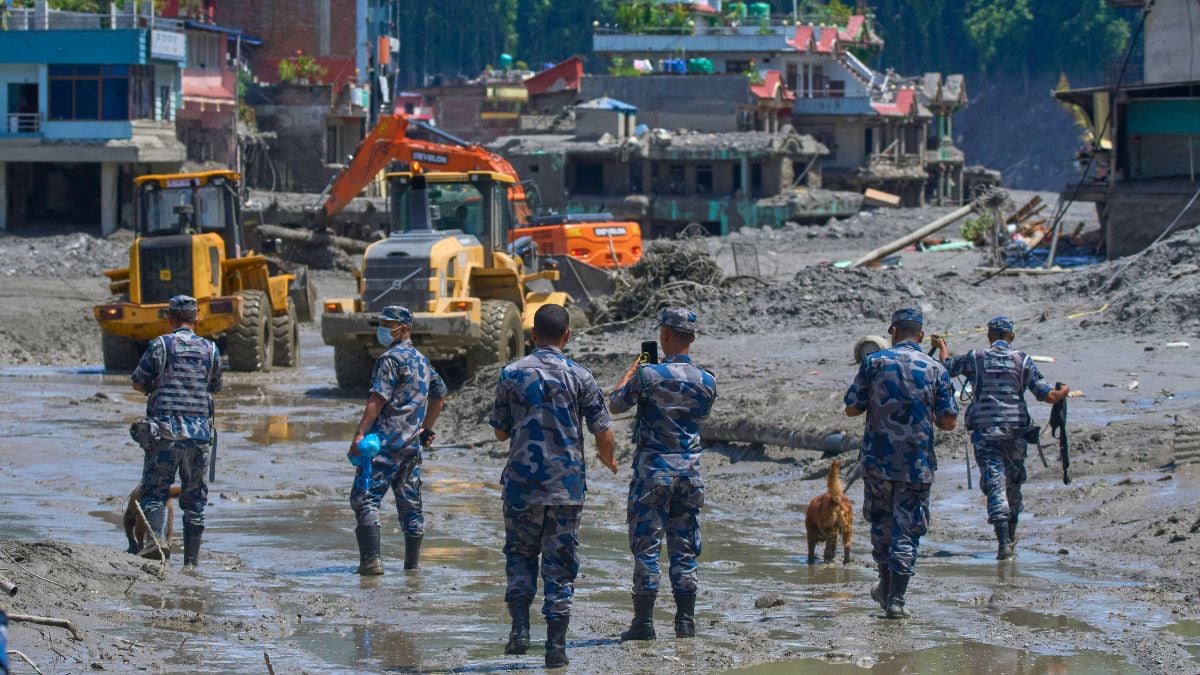
A wall of mud, ice, and debris doesn't knock politely. When catastrophic flash floods tore down the valleys near the Nepal-Tibet border, entire villages vanished in minutes. Right now, thousands of soldiers from the Nepali Army are locked in a brutal race against time. They aren't just fighting rushing waters. They are battling an unforgiving landscape that refuses to cooperate.
If you look past the breaking news headlines, you see the raw, grinding reality of mountain rescue work. Mud slush inches deep, collapsed tunnels, and washed-out bridges turn every single hour into a matter of life and death. Understanding why relief operations move as slowly as they do requires looking closely at the geography that breaks them. If you enjoyed this piece, you might want to read: this related article.
The Reality of Ravaged Terrain
Mountains hide their danger behind gorgeous views until disaster strikes. When the recent floods hit districts like Rasuwa, Nuwakot, Dhading, and Chitwan, they didn't just overflow riverbanks. They dragged down massive walls of debris from high-altitude slopes.
Roads simply dropped off into gorges. Nearly 25 miles of vital roadways and dozens of bridges were wiped out instantly. When asphalt disappears, heavy machinery can't roll in. Trucks stay parked because there is nowhere to drive. For another look on this event, check out the latest update from BBC News.
Rescuers face a nightmare of logistics. Ground crews have to slog through thick, heavy riverbed sludge that swallows boots and stops vehicles cold. You cannot rush through terrain like that. Moving too fast in an unstable ravine means risking the lives of the very people sent to help.
When the Weather Grounds the Cavalry
Helicopters offer the only fast entry into cut-off pockets, but the skies above the Himalayas play by their own cruel rules. Thick monsoon clouds, unpredictable fog, and low visibility trap aircraft on the tarmac for hours.
Brigadier General Rajaram Basnet of the Nepali Army noted that narrow gorges and shifting weather make every flight a calculated risk. When pilots can't see the canyon walls, search sorties stall.
More than 5,500 military personnel have deployed to the ground, yet they face physical limits. Troops have been airdropped into tight spots like the Rasuwa tunnel, where workers were trapped behind walls of thick mud. Soldiers crawled across suffocating layers of slush just to pull survivors out. That is hand-to-hand combat with nature.
The Human Toll and the Missing Hundreds
Disasters of this scale leave staggering gaps in communication. Hundreds of people—including tourists and pilgrims from India, the United States, Britain, and other countries—remain unaccounted for. Families crowd outside military barracks and army training centers holding out hope for a name on a clipboard.
Local police record names day and night while makeshift medical camps treat hundreds of injured survivors. But finding people downstream in widespread debris fields takes days. Bodies have turned up miles away from where houses originally stood.
Governments and humanitarian groups are scrambling to channel clean water, food, and emergency medicine to survivors. Yet coordination remains tight. Nepal has leaned heavily on its own domestic forces and specialized local agencies rather than complex international integrations, prioritizing rapid local deployment over bureaucratic delay.
What Comes Next for Vulnerable Mountain Communities
Fixing a broken road is simple compared to fixing a broken watershed. As climate pressures increase the frequency of glacial collapses and sudden deluges, mountain infrastructure needs a complete rethink. Building back the exact same way on the exact same riverbanks guarantees the next disaster will hit just as hard.
For now, the focus stays squarely on the search. Every cleared ton of mud brings rescuers closer to someone waiting in the dark.
One Of The Biggest Disasters In Nepal
This short video provides a firsthand look from regional leaders detailing the massive logistical hurdles and infrastructure damage hampering ongoing emergency efforts in Nepal.
http://googleusercontent.com/youtube_content/1