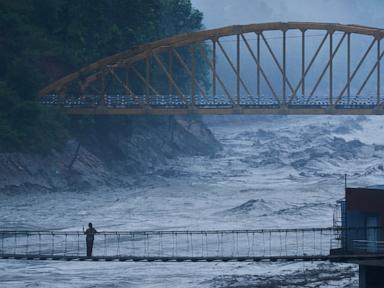
The water did not arrive with a warning siren. It came as a wall of grinding rock, grey slurry, and uprooted pine trees that swallowed entire settlements along the Bhotekoshi and Trishuli river corridors before midday. When the high-altitude glacier collapsed near the Nepal-Tibet border, sending an unprecedented surge downstream into Rasuwa district, it exposed a terrifying reality for modern disaster management. Official death tolls have climbed past six hundred, with thousands still unaccounted for, but focusing merely on the body count misses the systemic structural failure that allowed a predictable geological hazard to unfold into a national catastrophe.
For years, climatologists and disaster risk reduction specialists have mapped the vulnerability of the Hindu Kush Himalaya region. They have documented how rising global temperatures destabilize high-altitude ice masses and prime unstable mountain slopes for catastrophic failures. Yet, regional infrastructure planning continues to treat these events as anomalous "acts of God" rather than recurring mathematical certainties. Hydropower projects multiply along narrow river gorges without adequate upstream glacial monitoring or real-time sensor grids. When an ice-rock avalanche blocked the Lhende River, creating a temporary dam that eventually burst, the lack of automated early-warning telemetry meant downstream communities had zero minutes to evacuate.
The human cost of this institutional inertia is etched across the makeshift notice boards outside Kathmandu hospitals and military barracks. Families clutch laminated photographs of missing relatives, scanning lists that grow longer with each passing hour. Among the missing are not only local villagers and hydropower engineers trapped in subterranean tunnels, but hundreds of international tourists and pilgrims caught unaware during peak seasonal travel. The tragedy compounds historical grievances, too; reports indicate that several of the worst-hit households belonged to families who had already been displaced to low-lying riverbanks following the devastating 2015 earthquake. Pushed onto marginal lands by land scarcity and economic desperation, they were placed directly in the path of the next inevitable hydraulic crisis.
Emergency response frameworks currently mobilizing across the region are impressive in scale yet reactive by design. Military personnel, international forensic units, and specialized tunnel-rescue squads from neighboring nations are working under grueling conditions in unstable mountain terrain. Pledges of financial aid from global bodies and bilateral partners offer immediate relief, but they do nothing to address the structural vulnerability of the next valley over. As long as regional development policies prioritize rapid economic expansion over rigorous ecological zoning, reconstruction efforts will remain merely temporary repairs on a breaking dam.
Heavy monsoonal patterns persist, and secondary threats loom as unstable debris lakes risk further secondary breaches. The immediate crisis demands boots on the ground and heavy excavation equipment in the mud-choked streets of Syaphrubesi and Timure. However, the broader reckoning belongs to the planners and policymakers who must decide whether mountain communities will continue to live at the mercy of an unmonitored sky, or whether the architecture of Himalayan development will finally adapt to the brutal physics of a warming world.


