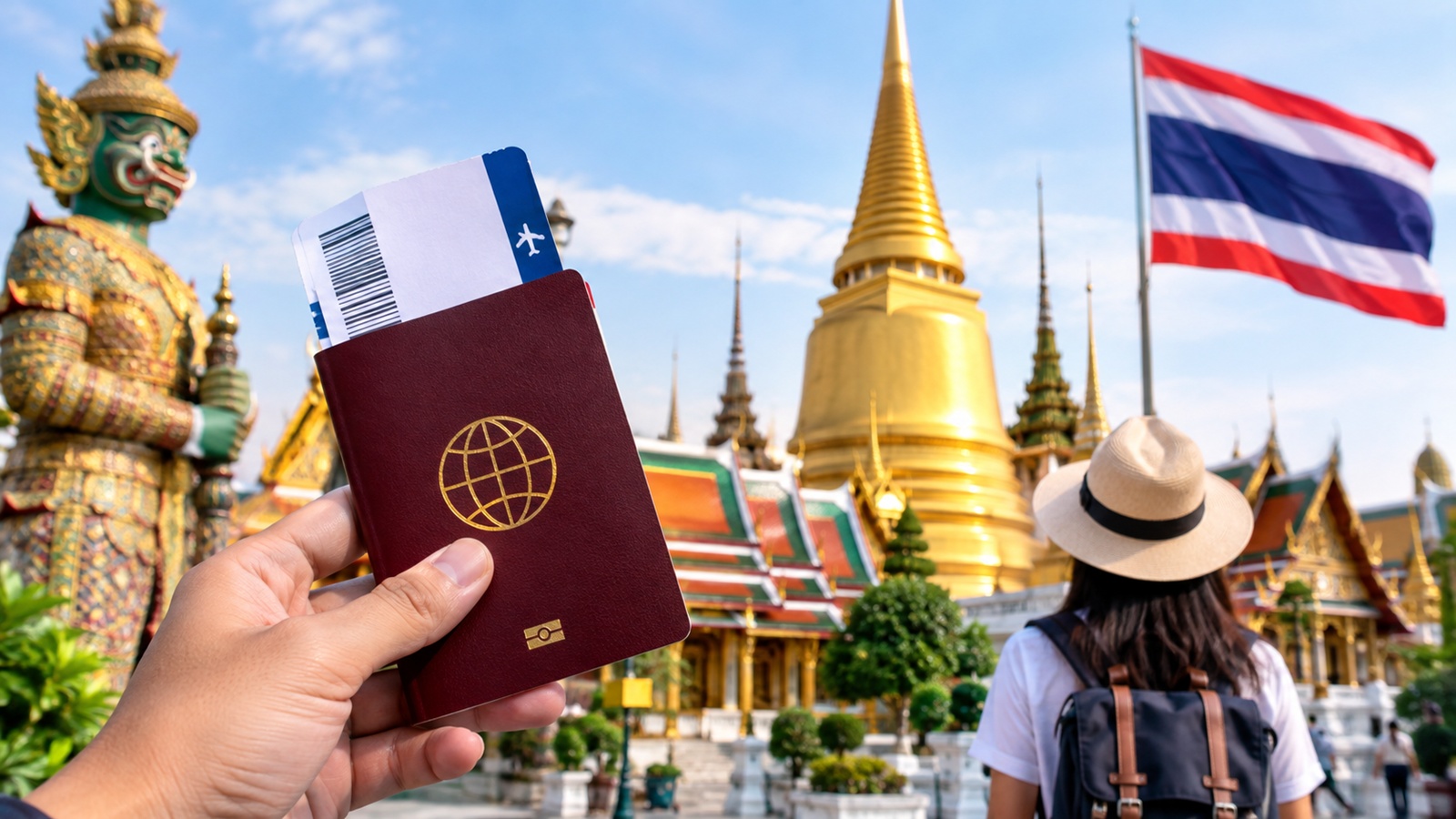
Thailand keeps messing with its entry rules, and if you are planning a trip right now, you need to pay attention. The Thai government has officially overhauled its tourist entry framework, cutting the maximum visa-free stay from 60 days back down to 30 days for passport holders from 60 countries and territories, including India.
If you remember the massive push back in 2024 when Thailand flung its doors open with generous 60-day visa exemptions to juice post-pandemic tourism, this new policy feels like whiplash. But look at the data: government metrics showed that roughly ninety percent of foreign visitors leave within 30 days anyway, and the extended stays were increasingly drawing unintended long-term remote workers rather than short-term spenders. The cabinet decided to roll things back under a new "one country, one entitlement" system.
How the 30-Day Limit Works in Practice
Starting September 15, 2026, eligible travelers arriving in Thailand for tourism or short business engagements will receive an initial stay of up to 30 days without needing to purchase a visa in advance.
Before you panic about truncation, realize that this is still a solid upgrade compared to historical baselines. For decades, Indian tourists and many other nationalities dealt with strict 15-day Visa on Arrival counters or tedious pre-departure paperwork. A clean 30-day window covers the vast majority of standard vacations.
- Entry limit: You can only use this visa exemption via land-border crossings or immigration checkpoints twice per calendar year. Airport entries remain the smoothest route.
- Extensions: If 30 days simply isn't enough time to island-hop from Phuket to Chiang Mai, you aren't completely out of luck. You can still apply for a one-time 30-day extension at a local Thai Immigration office for a fee of 1,900 Thai Baht.
- Timing matters: If you enter Thailand before the mid-September enforcement date under the old 60-day framework, your authorized duration of stay is grandfathered in. Immigration officers will honor the period stamped into your passport upon arrival.
Navigating the Confusion Over Visa on Arrival
Earlier drafts of this policy shift caused absolute chaos online. Initial cabinet proposals floated the idea of dropping India entirely from visa-exemption lists and shoving millions of travelers into a 15-day Visa on Arrival category costing 2,000 Baht.
That draft sparked an immediate, measurable drop in forward flight bookings and travel agency inquiries. Realizing they were about to shoot their own tourism economy in the foot, policymakers course-corrected. India was officially restored to the 30-day visa-free exemption list. You will not have to cough up cash at the airport counter or stand in grueling Visa on Arrival queues just to get your passport stamped.
What You Still Need to Prepare Before Flying
Skipping the visa line doesn't mean you can show up unprepared. Thai immigration is tightening enforcement on administrative compliance, and getting sent back at the gate happens more often than people admit.
Make sure you have your digital paperwork sorted ahead of time. The Thailand Digital Arrival Card, known as the TDAC, remains mandatory for international visitors. Fill this out online within the required window before your flight touches down to avoid getting stuck at airport kiosks.
Pack physical proof of your travel logistics. Border agents can—and occasionally do—ask to see confirmed return or onward tickets out of Thailand within your 30-day window. Keep digital and printed copies of your hotel reservations handy.
Carry proof of financial solvency. The official regulation requires foreign tourists to demonstrate access to adequate funds for their stay, typically benchmarked at 10,000 Thai Baht per person or 20,000 Baht per family. While airport checks are random, getting caught without funds when pulled aside means an instant headache.
Stop treating Thai entry requirements as an afterthought. Check your passport validity to ensure it spans at least six months past your arrival date, book your return flight before you leave, fill out your arrival documentation early, and enjoy your month-long escape without stressing over unnecessary paperwork.