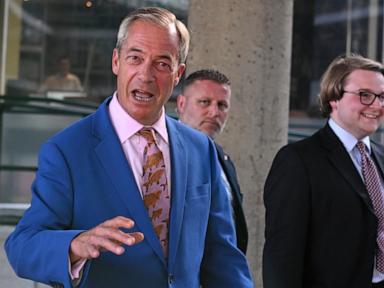
The political press pack is predictably running the same tired script. Nigel Farage announces he is stepping down as an MP to force a by-election and "clear his name" amid some swirling controversy, and the commentariat immediately treats it as a defensive retreat. They call it a crisis. They call it a gamble. They see a politician on the ropes, desperately trying to survive a news cycle.
They are entirely missing the point. In other news, we also covered: The Real Reason Nigel Farage Resigned His Seat (And Why It Could Backfire).
This isn't a defensive retreat. It is a calculated offensive strike designed to exploit the fundamental flaws of modern parliamentary democracy. Farage isn't running away from a fight; he is weaponizing the electoral system to bypass the media elite and secure a direct mandate that his Westminster colleagues cannot touch. Standard political logic dictates that you hold onto power by any means necessary, hunkering down behind parliamentary privilege until the storm passes. But conventional wisdom fails to understand populism.
In Westminster, an MP's power is supposed to come from the institution. For a populist, the power comes entirely from the friction against the institution. By engineering his own exit to trigger a by-election, Farage is rejecting the rules of the club to force a high-stakes referendum on his own terms. It is a masterclass in asymmetrical political warfare. The Washington Post has also covered this critical issue in great detail.
The Lazy Consensus of the Westminster Bubble
Look at the standard coverage of this move. The mainstream consensus frames a resignation as an admission of vulnerability. The narrative assumes that a politician under investigation or facing intense scrutiny should wait for the official channels to clear them—a process that routinely takes months, saps momentum, and leaves the accused bleeding out in the court of public opinion.
This view relies on a flawed premise: that the official process is neutral, efficient, and carries weight with the voting public. It does not.
When a politician relies on an internal committee or a bureaucratic report to "clear their name," they are playing an insider game. The public sees white-washed reports and procedural technicalities. They see a system protecting its own.
Farage understands that in the current political climate, external validation from an institution holds zero currency with his base. A committee saying "you did nothing wrong" is weak. A constituency voting booths saying "we don't care, we want you anyway" is absolute. By shifting the venue of his trial from a Westminster committee room to a working-class constituency, he changes the jury from biased political opponents to the very voters who put him there.
The Mechanics of the Manufactured Crisis
To understand why this works, you have to look at the mechanics of political capital. Most MPs treat their seats like a scarce asset to be hoarded. They spend years climbing the greasy pole, terrified of anything that might jeopardize their slim majorities or party backing.
But when you operate outside the traditional party structures—or when you are the party structure, as is effectively the case with Reform UK—the seat itself is secondary to the brand.
Imagine a scenario where an establishment politician faces a serious allegation. They stay in office, issue defensive statements through lawyers, and watch their polling numbers steadily erode over six months of drip-fed media leaks. By the time the investigation concludes, even an acquittal feels hollow. They are politically dead, categorized forever as "damaged goods."
Now look at the alternative mechanic Farage is deploying:
- Total Control of the Timeline: He truncates a months-long media circus into a frantic, six-week campaign. The media no longer dictates the questions; the campaign trail dictates the coverage.
- Starving the Story: An investigation relies on a lack of closure to stay interesting. By resigning, Farage delivers a shock climax that renders the ongoing speculation obsolete. The story is no longer the allegation; the story is the election.
- The Ultimate Loyalty Test: He forces his local association, his donors, and his volunteers into an immediate mobilization. It filters out the waverers and solidifies a hyper-loyal core.
I have watched political campaigns blow millions of pounds trying to manage reputational crises using traditional PR firms. They buy expensive polling, draft carefully worded statements, and try to hide their candidate from hostile journalists. It fails every single time because it looks guilty. Farage’s strategy does the exact opposite. It leans directly into the chaos. It says, "If you think I'm finished, come and prove it at the ballot box."
Dismantling the Punditry: People Also Ask
The media's collective confusion over this strategy is perfectly captured by the questions currently dominating the news cycle. The public is being fed flawed premises, and it is time to answer them honestly.
Isn't triggering a by-election a massive waste of taxpayer money?
This is the standard, low-level attack used whenever a politician forces an unscheduled vote. It completely misjudges the electorate's priorities. Voters who are already angry at the political establishment do not change their minds because a local council has to spend a few hundred thousand pounds setting up polling stations. In fact, for a populist base, spending that money to give the establishment a bloody nose is considered excellent value for money. Framing this as a fiscal issue is a fundamental misunderstanding of voter psychology.
What happens if he loses the seat?
The pundits love to speculate about the "existential risk" of this move. They argue that if he loses the by-election, his career is over.
This is structurally incorrect. If an establishment politician loses a by-election, they vanish into corporate consultancy or the House of Lords. Their career relies on holding office.
For Farage, a loss would certainly be a setback, but it wouldn't be terminal. The narrative would immediately shift to "the system rigged the vote against the outsider." He would return to the airwaves, unburdened by parliamentary schedule, playing the martyr.
But more importantly: he isn't going to lose. You don't trigger a voluntary by-election unless your internal polling shows a guaranteed path to victory. This isn't a roll of the dice; it’s a trap.
The Dark Side of the Populist Playbook
Let's be clear about the downsides of this approach. This isn't a flawless strategy, and it carries significant systemic costs.
By bypassing the established mechanisms of accountability, this maneuver further degrades public trust in political institutions. It sets a precedent that any politician with a loud enough microphone and a safe enough seat can simply ignore parliamentary standards, quit when things get tough, and buy back their legitimacy through a localized campaign.
It turns serious institutional oversight into a reality television popularity contest. If you have the money, the charisma, and a concentrated voter base, you can effectively insulate yourself from the rules that govern every other lawmaker in the country. It is deeply cynical, highly volatile, and terrible for the long-term health of a representative democracy.
But complaining about the morality of the move is irrelevant. In politics, mechanics matter more than morals. The strategy works because the existing parliamentary standards system is slow, bureaucratic, and deeply unpopular with a public that already views Westminster as a closed shop. Farage didn't create these vulnerabilities; he is merely exploiting them.
The Real Agenda: 2029 and Beyond
This move isn't about clearing a name over some ephemeral scandal. It is about setting the stage for the next general election.
The current government is already showing signs of mid-term exhaustion. The traditional opposition is fractured. By staging a dramatic, high-profile by-election victory right now, Farage achieves several strategic objectives simultaneously:
- A Total Media Eclipse: For six weeks, every news broadcast will be centered on one constituency. The government’s legislative agenda will be completely overshadowed.
- A Free National Marketing Campaign: Reform UK gets to run a national campaign under the guise of a local by-election, testing messaging, gathering voter data, and refining their ground game without the expense of a full general election.
- The Subjugation of the Conservatives: A thumping victory in a seat the Tories need to win back sends a clear signal to the right of British politics: you either merge with us, or you die.
The political class is treating this like a desperate defense mechanism from a man cornered by scandal. They are looking at the finger pointing at the moon, completely blind to the macro-strategy at play. Farage isn't defending his past; he is clearing the deck to dominate the future.
Stop analyzing this through the lens of traditional parliamentary etiquette. The old rules are dead. While the Westminster bubble discusses procedures and ethics committees, the reality on the ground is simple: Farage is resetting the board, choosing his own battleground, and daring the political establishment to try and stop him.