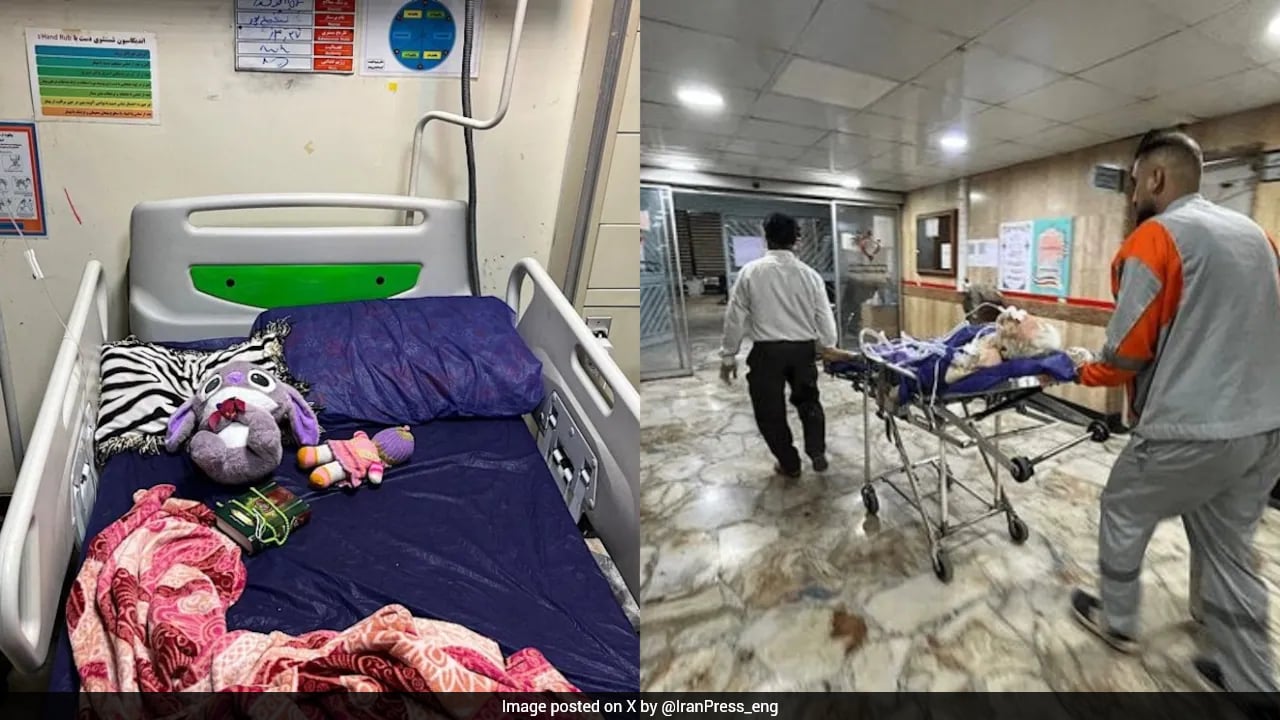
The IV drip has a rhythm. It is a slow, sterile, reassuring tick that marks the steady flow of life-saving poison designed to kill the sickness before it kills the child. To a parent sitting in the dim light of Shahid Baqaei Hospital in Ahvaz, that rhythmic drip-drip is the sound of hope.
Then came the sky.
It did not just crack; it shattered. On a Wednesday night in southwestern Iran, the delicate sanctuary of a children’s oncology ward was instantly torn apart by the concussive, bone-rattling roar of nearby airstrikes. The windows rattled in their frames. The floorboards buckled and groaned.
Panic.
In an instant, the sterile sanctuary of the specialized hematology and oncology center became a war zone of a different kind.
When Precision Meets Pediatric Care
Geopolitics is often discussed in sterile, detached terms. Strategists speak of "degrading military capabilities," "precision munitions," and "securing maritime transit" in the highly contested Strait of Hormuz. They draw lines on maps. They calculate acceptable margins of error.
But there is no margin of error when you are six years old, bald from chemotherapy, and hooked to a machine that keeps your heart beating.
As US Central Command (CENTCOM) launched its latest wave of strikes targeting Iranian military assets, the physical shockwaves traveled far beyond their intended targets. They ripped through the walls of Shahid Baqaei Hospital.
Consider the sheer logistics of terror.
Evacuating a building is difficult under any circumstance. Evacuating a high-stakes medical facility in the pitch black of night, under the threat of incoming missiles, is an exercise in absolute desperation.
There were 211 pediatric cancer patients in that hospital.
Two hundred and eleven.
These were not mobile, healthy individuals. These were children in the deepest, most vulnerable throes of medical treatment.
"Some people had children in their arms, some had IVs in their hands, and some were in wheelchairs," a staff member later recalled, the shock still coating their words. "Everyone went outside".
Picture the scene on the asphalt outside. The desert air of Ahvaz is thick. In the distance, the low rumble of continued strikes vibrates through the soles of bare feet. Mothers are carrying their children, holding IV bags aloft like plastic flags of surrender, trying desperately to keep the needles from ripping out of fragile veins. Some children are on oxygen tanks; others are pulled from ventilators, their breathing suddenly dependent on the manual, rhythmic squeeze of a plastic bag.
This is the human cost of a "precision strike."
The Cold Logic of the Battlefield
Every conflict has its justifications. The geopolitical chess match currently playing out over the global energy chokepoints is complex. Washington points to naval blockades, drone operations, and the vital necessity of keeping international trade routes open. Tehran retaliates with its own strikes, aiming at regional military infrastructure and refusing to back down.
It is a classic, agonizing cycle of escalation.
But the tragedy of modern warfare is that the chess pieces are made of flesh and blood. When the dust settled on Wednesday night, the hospital was empty. Temporarily taken out of service. A place that existed solely to preserve the most fragile lives was rendered dark and silent.
While the political machinery in Tehran quickly condemned the strike as a "cowardly war crime" and compared it to other regional atrocities, the political rhetoric matters very little to the families who spent the night huddled in the corridors of backup medical facilities. What matters to them is the sudden, terrifying interruption of a treatment plan that represents their child's only shot at a future.
Cancer does not pause for airstrikes. It does not wait for diplomats to negotiate a ceasefire or for military commanders to calibrate their coordinates. Every hour a child misses their chemotherapy is an hour given back to the disease.
The physical damage to the hospital may have been indirect, caused by the violent pressure waves of nearby explosions. But the psychological and medical damage is direct, immediate, and lasting.
How do you explain to a child who is already fighting for their life that the sky itself has turned against them?
The Invisible Casualty
We measure wars in casualties. We count the dead and the wounded. But we rarely count the invisible casualties—the stolen peace, the shattered sanctuaries, the collective trauma of a population realizing that even a hospital bed is not safe.
The conflict in the region shows no signs of slowing. The temporary security agreements and mediated talks of the past have evaporated into the hot summer air, replaced by the loud, uncompromising language of artillery and airstrikes.
As the military reports are filed and the strategic assessments are drawn up, the memory of that chaotic night in Ahvaz will likely be reduced to a footnote. A brief mention of collateral disruption. A minor detail in a larger campaign.
But for 211 children, the world changed on Wednesday night. They learned that the walls built to protect them are desperately thin. And as they sit in temporary hospital beds across the city, waiting for the sirens to quiet and the machines to restart, they are left to listen to a different kind of silence.
Not the sterile, comforting tick of the IV drip.
Just the quiet, lingering echo of the blast.