The plastic chairs inside the tavern in Soweto did not scrape against the concrete floor. They screeched.
It was 4:54 AM. Outside, the winter air was a bitter, biting skin that crawled off the highveld, but inside, the room sweated. Nobody looked at their drinks. Nobody looked at each other. Eighty pairs of eyes locked onto a television screen that flickered with the cold, distant light of a stadium in Wellington, New Zealand.
Think about the sheer cruelty of the clock. When your life’s ambition is separated from reality by eleven agonizing minutes of injury time, time ceases to be a measurement. It becomes a physical weight. It sits on your chest.
On the screen, eleven women in green and gold shirts were suffocating under an avalanche of Italian attacks. The equation was brutal in its simplicity. A draw meant elimination. A loss meant obscurity. Only a win would take South Africa—a team that had never won a single World Cup match in its history—into the promised land of the knockout rounds.
Then, the whistle blew.
Silence lasted for perhaps half a second. It was the brief, terrifying pause before a dam breaks. What followed was not a cheer. It was a guttural, collective release of air, tears, and decades of accumulated frustration that shook the corrugated iron roof. People fell to their knees. Strangers collided in desperate, weeping embraces.
South Africa had done it. They had beaten Italy 3-2. They were through to the Round of 16.
To understand why a football match in the dead of a southern hemisphere winter caused an entire nation to drop its tools and weep, you have to look past the scoreboard. The scoreboard tells you a story of goals and minutes. It tells you nothing about the invisible stakes.
The Cost of the Kit
Consider a hypothetical young girl growing up in a township like Khayelitsha, outside Cape Town. Let's call her Thandi.
Thandi wants to play football. It is an innocent desire, but in South Africa, innocence is expensive. When Thandi looks at the local pitch, she doesn’t see manicured grass; she sees dust, broken glass, and rocks. If she wants a pair of boots, her mother has to choose between leather cleats and a month's worth of paraffin for the stove.
This is not a metaphor. This is the reality that birthed the players on that pitch in Wellington.
The national team, affectionately known as Banyana Banyana, did not arrive at this World Cup on a private jet paved with corporate sponsorships. They arrived after a civil war with their own federation. Just weeks before the tournament began, the players walked off the pitch in a warm-up match. They refused to play on a field that was essentially a patch of clay, risking career-ending injuries right before the biggest tournament of their lives. They were fighting for equal pay, for basic medical support, and for the simple dignity of being treated like professionals.
Imagine the immense psychological burden of that moment. You are told you are representing your country, but your country's football authorities won’t even ensure you have proper insurance. You are called greedy by administrators sitting in air-conditioned boardrooms.
Yet, when the whistle blew in New Zealand, all of that baggage was carried onto the grass. Every tackle made by Thembi Kgatlana, every desperate save by Kaylin Swart, was infused with the fury of women who knew that if they failed, their anger would be dismissed as entitlement. If they won, however, they would become undeniable.
The Anatomy of an Upset
Football is a game of spaces and systems, but at the highest level, it becomes an interrogation of the human spirit. Italy arrived at the tournament with the backing of a historic footballing culture, a fully professional domestic league, and the quiet arrogance that comes with institutional stability.
South Africa arrived with hope and a point to prove.
The match itself was a chaotic, heart-stopping thriller that felt less like a sport and more like an opera. Italy scored early through a penalty. The old narrative threatened to write itself again: the brave African underdogs who try hard but ultimately succumb to European tactical discipline.
But something shifted in the dirt of the pitch.
An equalizer came from an Italian own goal—a moment of pure panic forced by South Africa’s relentless, suffocating pressure. Then, Hildah Magaia scored in the second half to put Banyana ahead. The room in Soweto erupted. But Italian resilience answered back. Arianna Caruso equalized in the 74th minute.
2-2.
The clock ticked past the 90th minute. The board went up: eleven minutes of added time. Eleven minutes for a dream to bleed out.
It is during these moments that tactical diagrams disappear. Your legs are heavy with lactic acid. Your lungs feel like they are filled with hot sand. You have played three games in two weeks against the fittest athletes on earth.
In the 92nd minute, Magaia picked up the ball inside the box. Instead of shooting blindly through a thicket of Italian defenders, she did something remarkable. She paused. In the eye of the hurricane, she kept her head, slipping a soft, perfectly weighted pass across the face of the goal to Thembi Kgatlana.
Kgatlana did not miss.
The Scars We Carry
To appreciate Kgatlana’s goal, you have to know what she lost to score it.
Just three weeks before the tournament, Kgatlana lost three members of her family in quick succession. She was marooned on the other side of the world, unable to attend the funerals, unable to grieve with her community. She was recovering from an Achilles tendon injury that had kept her out of the game for a year. By all medical logic, she shouldn't have even been in top match fitness.
"I got a lot of criticism," Kgatlana said after the match, her voice cracking with an emotion that had nothing to do with tactics. "But this is for everyone back home. I could have stayed home, but I chose to come here and fight."
That is the difference between a competitor's dry reportage of a sporting event and the human truth of it. A statistical breakdown will tell you that South Africa had 30% possession. It won't tell you about a woman playing through the fog of grief, carrying the expectations of 60 million people on a partially healed ankle.
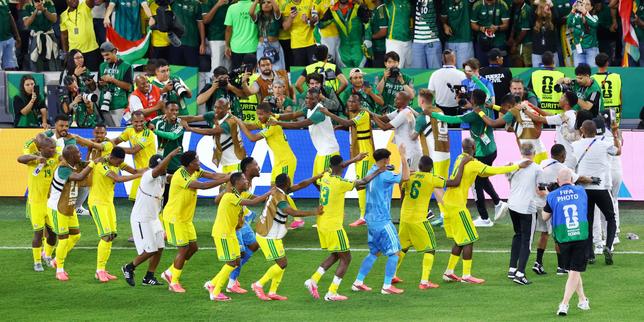
When the final whistle blew, the players did not celebrate with rehearsed choreography. They collapsed. They wept. They danced the amapiano dances of their youth, singing songs that had comforted them in the dusty streets of their childhoods.
The Changing of the Guard
This victory changes the geometry of South African sport forever. For decades, the narrative around South African football has been one of nostalgia—endlessly recycling the memory of the men’s team winning the Africa Cup of Nations in 1996, or hosting the World Cup in 2010. Those memories were growing stale, yellowed at the edges like old photographs.
Banyana Banyana just tore up the script.
They proved that the biggest obstacle to excellence in the global south is not a lack of talent; it is a lack of imagination from those who hold the purse strings. They won in spite of the system, not because of it.
As the sun finally climbed over Johannesburg, illuminating the smog and the gold mine dumps that ring the city, the music from the taverns did not stop. People walked to the taxi ranks with a different posture. Their shoulders were back.
A sporting victory does not fix a broken economy. It does not repair potholes, or bring back the electricity during blackouts, or erase the systemic inequalities that still haunt the nation. It doesn't do any of that.
But what it does is far more potent. It provides a mirror. For ninety minutes, a group of women from the forgotten corners of the world showed an entire nation exactly what it looks like when you refuse to be broken by the weight of your own history.
On the pavement outside a shop in downtown Johannesburg, an old man in a faded yellow jersey stood quietly, watching the highlights replay on a television through a store window. He wasn't cheering. He just watched the screen, a slow, beautiful smile spreading across his face, his hand pressed firmly against his heart as if to make sure it was still beating.