The coffee in the newsroom tastes like battery acid at 2:00 AM, but nobody is drinking it for the flavor. You drink it because the fluorescent lights are humming, the police scanners are crackling, and the tickers are feeding a steady stream of data that someone has to turn into the truth before sunrise.
For twenty years, that was the rhythm. You sit at a desk, you look at a raw feed of state data, and you tell the public what happened without asking permission from the people who made it happen. It is a fragile arrangement. It relies entirely on an invisible line that politicians are perpetually trying to erase: the line between the state’s megaphone and the public’s airwaves.
When that line snaps, you don't hear a loud explosion. You just hear the quiet click of a voting machine in a parliament building, miles away from the studio, rendering the highest court in the land completely powerless.
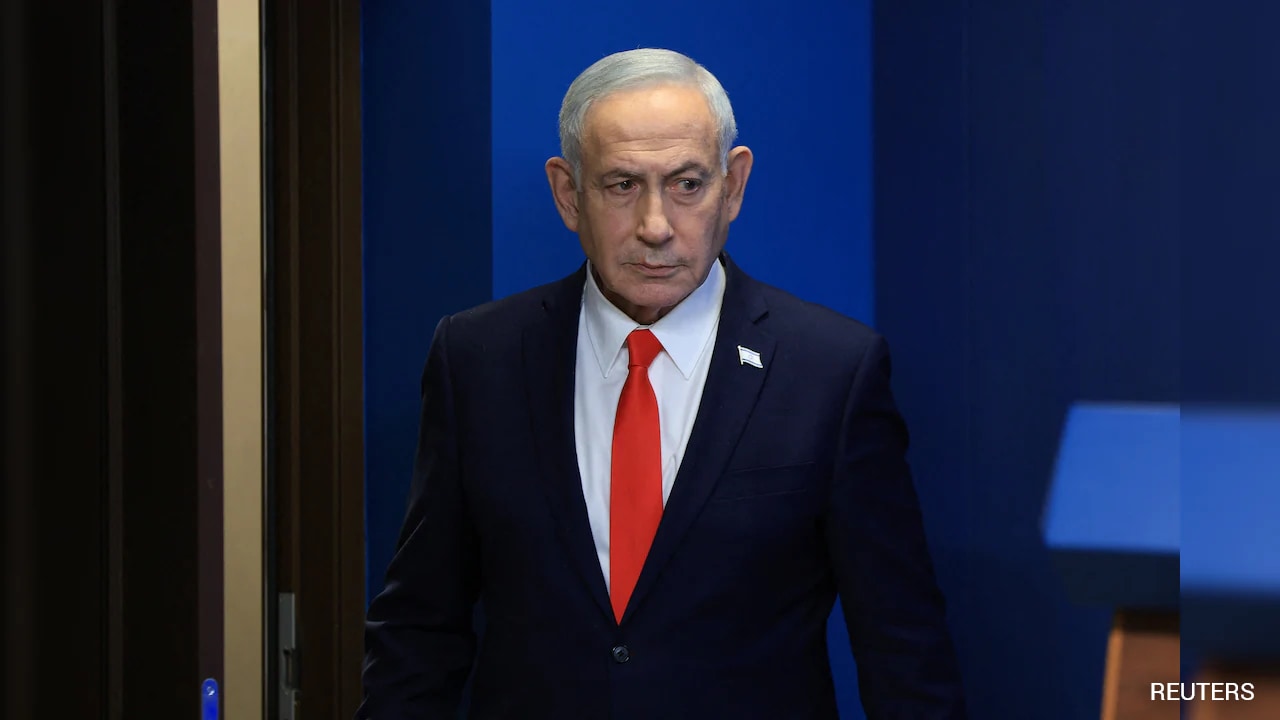
That is precisely what happened when the Israeli Knesset voted to defy a Supreme Court ruling concerning the country's public broadcast regulator. To the casual observer scanning a headline, it sounds like a tedious, bureaucratic turf war. It reads like legal jargon. But underneath the dry terminology of "regulatory oversight" and "judicial mandates" lies a much colder reality. It is the story of how an independent voice is systematically disassembled, piece by piece, until only an echo chamber remains.
The Machinery of Voice
To understand why a government would risk a constitutional crisis over a broadcasting authority, you have to look at how power operates when the cameras are off.
Imagine a hypothetical journalist named Maya. She isn't an activist. She doesn't have a grand political agenda. Her entire professional existence is defined by a single, stubborn habit: asking uncomfortable questions to people in expensive suits. Maya works for a publicly funded network. Her paycheck comes from tax dollars, but her editorial direction is legally shielded from the whims of the prime minister’s office.
This shield is not an accident. It is a deliberate piece of democratic engineering. The Supreme Court acts as the custodian of that shield. When the government tries to stack the regulatory board with political loyalists, the court steps in and says, No. The airwaves belong to the citizens, not the coalition.
But what happens when the coalition simply decides that the court's voice no longer carries weight?
The vote to defy the ruling isn't just an attack on a specific regulatory board. It is a declaration of immunity from accountability. By voting to bypass the judiciary’s decision, the legislative branch effectively told the public that the rules are entirely optional for the people who write them.
The mechanism is simple. If you control the regulator, you control the budget. If you control the budget, you control the programming. Suddenly, the investigative documentary on government corruption gets delayed. The critical interview gets shortened. The anchor who asks too many follow-up questions finds their contract quietly unfulfilled at the end of the quarter.
It doesn't look like censorship. It looks like administrative restructuring.
The Anatomy of an Overrule
The friction between judges and politicians is as old as governance itself. Judges look at the law as an anchor; politicians look at it as a hurdle.
When the High Court ruled that the government's interference in the broadcast regulator was a violation of existing legal frameworks, it was relying on the doctrine of reasonableness. It was a statement that public institutions must serve the public interest, not partisan survival.
The legislative pushback, however, operates on a different logic. The argument from the Knesset floor is one we have heard in varying dialects across the globe: We were elected by the people. The judges were not. Therefore, our will supersedes their judgment.
It is a seductive argument. It sounds democratic on the surface. But it ignores the fundamental vulnerability of a system without checks and balances. Democracy is not merely the rule of the majority; it is the protection of the minority and the preservation of truth, even when that truth is inconvenient to the majority of the day.
Consider the ripple effect of this defiance.
When a parliament successfully ignores a supreme court ruling on media regulation, it sets a precedent that cannot be easily contained. Tomorrow, it could be a ruling on property rights. Next week, a ruling on civil liberties. The exact topic matters less than the breakdown of the mechanism itself. Once the public witnesses the government successfully ignoring the judiciary, the authority of the law changes from a binding contract into a polite suggestion.
The atmosphere in media circles across Jerusalem and Tel Aviv isn't one of panic; it is one of profound exhaustion. Journalists are waking up to the realization that the legal architecture they relied on to protect their sources and their reporting is eroding faster than they can write about it.
Why the Airwaves Matter
We live in an era where information is abundant but trust is scarce. We are drowning in content, yet starving for clarity. In this environment, an independent public broadcaster is not a luxury. It is an infrastructure project, just as vital as roads, clean water, or electrical grids.
Commercial networks are bound by the iron law of ratings and advertising dollars. They must entertain to survive. State-run networks, conversely, are bound by the desires of the regime. They must flatter to survive.
Public broadcasting was designed to be the rare third option: funded by the public, accountable to the law, and independent of both commercial pressure and political retaliation. It exists to cover the stories that don't make money but do make a difference—the complex policy debates, the marginalized communities, the systemic failures that require months of quiet, unglamorous investigation.
When politicians vote to override judicial protections for this institution, they are attempting to convert a public utility into a state asset.
The strategy is rarely to shut the station down entirely. Total darkness creates martyrs and international outcry. A far more effective tactic is the slow bleed. You replace the independent director with a bureaucrat who understands the value of silence. You reallocate funds away from hard-hitting news into soft lifestyle programming. You create an environment where the staff begins to censor themselves out of sheer self-preservation.
Maya sits at her desk, looking at a document that proves a government minister misallocated public funds. A year ago, she would have run the story without hesitation, confident that the law protected her network from sudden closure. Today, she hesitates. She looks at her editor. The editor looks at the floor. That hesitation is exactly what the vote was designed to achieve.
The Invisible Cost of Silence
The real tragedy of this institutional decay is that it is largely invisible to the person rushing to catch a train or making dinner for their kids. The lights don't go out. The television screen doesn't go to static. The morning news anchor still smiles and reads the teleprompter.
The change is subtle. It is defined by what isn't said.
It is the question that wasn't asked during the press conference. It is the investigative piece that was filed away under the excuse of "insufficient evidence." It is the gradual narrowing of the public conversation until only approved narratives remain.
When the Knesset voted to defy the Supreme Court, they didn't just alter a regulatory framework. They altered the trajectory of public awareness. They sent a clear signal to every journalist, editor, and producer that the shield has been lowered.
The struggle over the Israeli broadcast regulator is not an isolated local dispute. It is a localized symptom of a global contagion. From Eastern Europe to the Americas, the playbook remains remarkably consistent: delegitimize the press, defund the independent voices, ignore the courts that protect them, and replace the truth with a version of reality that is more convenient for those in power.
The newsroom is quiet now. The tickers are still rolling, spitting out numbers and names, but the air feels heavier. The coffee is still bitter. The reporters are still typing, but every keystroke feels like a calculation of risk rather than an act of reporting. The guardrails are gone, and everyone inside knows exactly how fast the cliff is approaching.