The sirens do not sound like music anymore. To the people who live within earshot of the docks, they are a physical weight, a screeching claw that drags everyone out of whatever thin, fragile sleep they managed to steal.
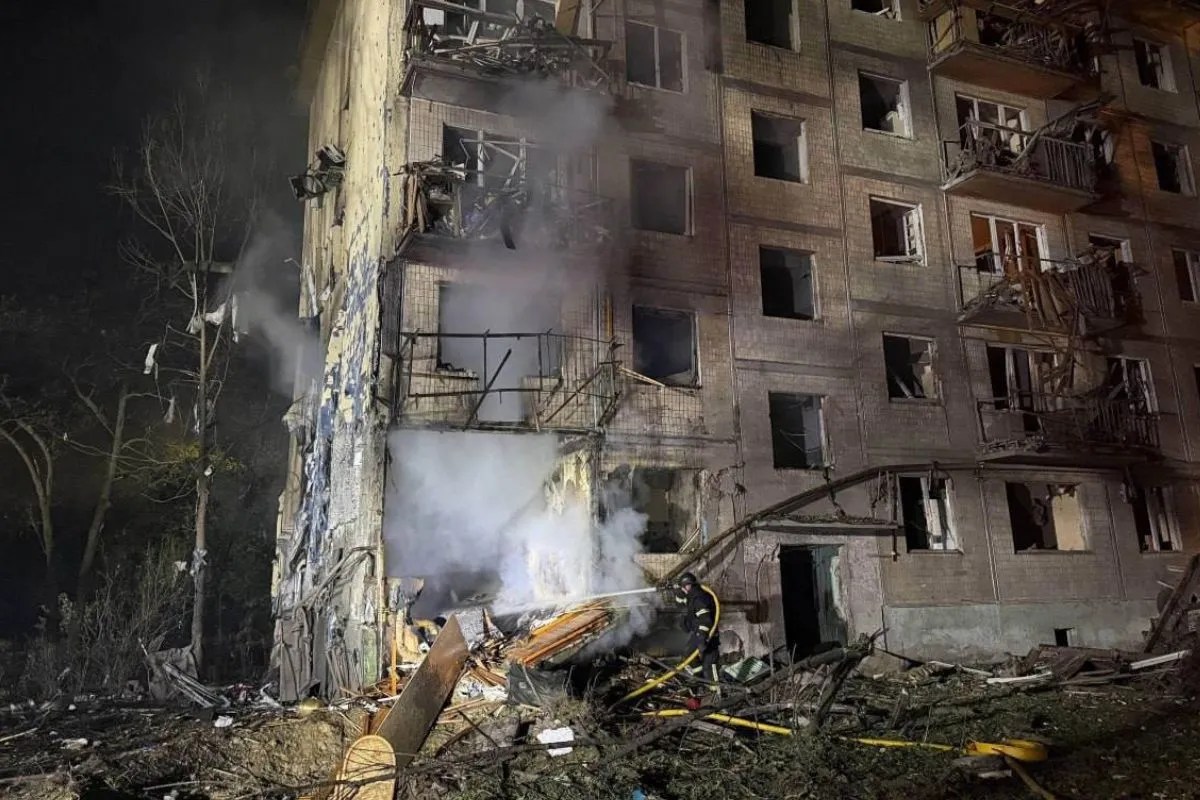
Midnight in a port city is supposed to smell of salt, wet wood, and the heavy, sluggish diesel of idling cargo ships. Instead, on that particular night, the air smelled of ozone and scorching masonry. The sirens tore through the dark, and then came the impact. It was not a distant rumble. It was a physical blow that rattled tea cups on kitchen tables and blew out windows three blocks away.
A multi-story residential building, a mundane stack of concrete flats where families kept houseplants and children did homework by desk lamps, took the brunt of the strike. In the span of a single heartbeat, an apartment block became a jagged ruin of exposed rebar and choking dust.
Behind the flash and the thunder of that late-night explosion lies a grim calculus that has become routine. The war is no longer confined to muddy trenches in the east. It breathes down the necks of civilians who simply wanted to watch the morning sun rise over the water. And the water itself, the Black Sea, was holding its breath.
Ports are the arteries of survival. When a missile slams into a port city, the shockwave ripples far beyond the shattered concrete. It hits the grain silos. It hits the tanker lanes. It whispers terror to the crane operators and the ship captains who are trying to navigate one of the most volatile maritime chokepoints on earth. For months, these ports have been the fragile pivot point between starvation and sustenance for millions across the globe. Every time an air raid klaxon wails near the docks, the global food supply chain shivers.
Consider what happens inside the mind of a mother who pulls her shivering child under a stairwell while the walls shake. There are no grand geopolitical speeches in that stairwell. There is only the smell of dust, the sound of falling glass, and the desperate hope that the ceiling holds. This is the human cost of the map being redrawn in fire.
We look at satellite imagery and casualty counts on our glowing screens, reducing human misery to neat little percentages and tactical assessments. We talk about strategic ports, air defense radiuses, and intercept trajectories as if they were chess pieces. But behind every blinking dot on a military radar screen is a street corner where ordinary people used to buy fresh bread, children walked to school, and neighbors argued over parking spots.
The strike on the multi-story building wasn't an isolated anomaly. It was another heavy stroke in a relentless campaign designed to break the spirit of a population that refuses to stop living despite the darkness closing in around them. As the smoke drifted out toward the dark water of the Black Sea, the cranes on the docks stood motionless against the graying dawn, waiting for the all-clear, waiting for permission to work, waiting for a peace that still feels impossibly far away.
In the end, wars are not won or lost solely on the battlefield. They are endured in the suffocating dark of basement shelters, measured in the seconds between the whistle of incoming metal and the blinding flash of impact, and remembered by the empty chairs left behind in homes that will never be quiet again.