The air in the capital during the first week of July does not move. It sits on your chest, thick with humidity and the scent of fried food from early-bird vendors locking down their street corners. By mid-afternoon, the temperature hits a oppressive peak, turning the asphalt into a soft, sticky tar that clings to the boots of production crews.
Everyone is tired. Everyone is rushing.
We see the holiday as a finished product. We see the crisp white uniforms of the military bands, the polished brass instruments gleaming under television spotlights, and the bursts of crimson and emerald fire against a dark velvet sky. What we do not see are the steel bolts, the plywood sheets, the miles of black audio cables snaking through the grass, and the exhausted men and women in high-visibility vests who have been awake since dawn. They are the ghosts who build the scaffolding of our collective joy.
Then, a sudden, sickening crack tears through the humid afternoon air.
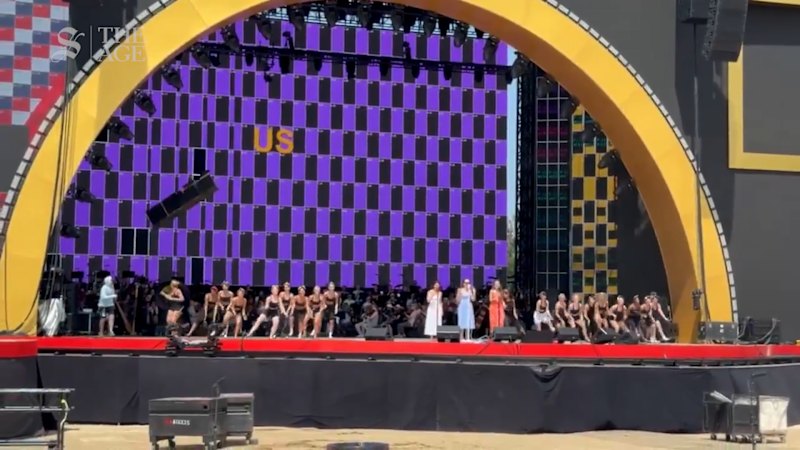
The rehearsal was in full swing. A vocalist was marking her positions on stage, humming a melody to test the monitors, while a technical director waved his clipboard toward the lighting rig. It was a routine they had performed a thousand times in a dozen different cities. But routine breeds a quiet, dangerous comfort. Without warning, a massive section of the main performance platform gave way, folding inward like a cardboard box under a heavy boot. Plywood splintered into jagged teeth. Steel supports groaned, twisted, and collapsed into a tangled heap of metal and dust.
Silence followed. A heavy, terrifying silence.
The Illusion of Solidity
When we step onto a stage, or when we watch our leaders and artists stand upon one, we accept an unspoken contract. We assume the ground beneath them is as permanent as the earth itself. It is a psychological trick. The height of a stage gives authority; its elevation demands respect. Yet, a temporary event stage is nothing more than a giant jigsaw puzzle of aluminum legs, wooden decks, and pins, held together by gravity and the meticulous care of underpaid technicians.
Consider a hypothetical stagehand named Marcus. He has been rigging outdoor events for twenty years. His hands are calloused, permanently stained with grease and rust, and his lower back aches whenever a storm system rolls in. Marcus knows that a stage is a living thing. It breathes when the wind blows. It shifts when a hundred-person choir steps onto its planks in unison. It expands under the blistering sun and warps when a sudden summer downpour floods the backstage area.
"People think a collapse happens all at once," Marcus would tell you, gesturing with a heavy wrench. "It doesn't. It happens hours before, when someone gets distracted by a text message and forgets to lock a diagonal brace. Or when a leveling jack sinks two inches into the soft, rain-soaked turf because someone skipped placing the wooden mud-sills underneath. The collapse is just the gravity finally catching up to the mistake."
In the case of this July 4th rehearsal, the failure was a stark reminder of how fragile our grandest spectacles truly are. The structure that was meant to hold the weight of national pride, heavy audio equipment, and dozens of performers simply dissolved. It took less than three seconds for months of planning to turn into a crime scene of debris.
The immediate aftermath was a chaotic scramble. Walkie-talkies crackled with panicked voices. Emergency vehicles, their sirens cutting through the festive atmosphere of the surrounding park, arrived within minutes. First responders navigated a maze of scattered sheet music, crushed instruments, and broken wood to ensure everyone was accounted for.
Miraculously, the physical injuries were minor—a sprained ankle, some deep cuts from flying splinters, and a stage manager shaken so badly he couldn't hold his water bottle straight. The real casualty was the timeline. And the illusion of safety.
The Invisible Stakes of Public Joy
Why does a broken stage at a holiday rehearsal matter so much? It is easy to dismiss it as a minor logistical hiccup, a brief delay for a television broadcast. But the implications run far deeper than a rescheduled soundcheck.
Every major public gathering is a high-stakes gamble against entropy. The logistics are staggering. Security cordons, crowd control barriers, electrical grids tapped into temporary generators, and pyrotechnic matrices all must operate in perfect harmony. When one element fails so spectacularly, it forces us to look at the entire operation with a cold, critical eye.
The pressure on the production company was immense. In the world of live entertainment, there is no phrase more terrifying than hard stop. The fourth of July cannot be postponed. The sun will set, the crowds will gather, the television cameras will go live, and the satellite feeds will open. The clock does not care about structural failure.
But the real problem lies elsewhere. The panic that follows an incident like this creates a secondary hazard: the rush to fix it.
Imagine the scene just an hour after the dust settled. Local inspectors, corporate safety officers, and frantic producers gathered around the wreckage. The easy answer is always to point fingers. Was the engineering plan flawed? Did the rental company provide sub-standard equipment? Was the crew pushed past the limits of human endurance?
Live event technicians routinely work fourteen-hour shifts in extreme weather. They survive on lukewarm catering, energy drinks, and pure adrenaline. When you push human beings to that brink, their cognitive abilities drop. A bolt that looks tight through bleary, sweat-stung eyes might actually be two threads away from stripping. The system is designed to handle a lot of stress, but it cannot handle a chain reaction of exhaustion and corner-cutting.
Rebuilding on a Shaky Foundation
What happens next is a masterclass in professional resilience, mixed with a healthy dose of desperation. The broken pieces must be hauled away. Every single remaining component of the stage must be re-inspected, not with the casual glance of a routine day, but with the hyper-vigilant scrutiny of people who just looked into the abyss.
They had to rebuild. There was no alternative.
The crew worked through the night under the harsh glare of construction floodlights. The heat of the day gave way to a cool, damp fog, but the sweat kept pouring. Every clamp was tightened until the metal pinged. Every platform was checked with a spirit level until the bubble sat dead center between the lines.
The vocalist who had been on stage during the collapse returned the next morning. She walked slowly, her sneakers making a dull thudding sound on the freshly laid plywood. She didn't hum this time. She stood in the center of the structure, looked up at the sky, and gently stomped her foot. She was checking the ground. She was wondering if she could trust it.
We live in a world that demands flawless execution without ever wanting to see the machinery behind the curtain. We want our fireworks to detonate at the exact crescendo of the national anthem, and we want our performers to soar without ever thinking about the rigging holding them aloft. We treat these events as if they happen by magic.
But there is no magic. There is only engineering, labor, and the fragile grace of things staying where we put them.
As the sun began to rise on the morning of the celebration, the new stage stood ready. It looked identical to the one that had broken less than twenty-four hours earlier. The fresh paint covered the scars on the support beams, and the colorful banners hid the extra braces that had been hastily bolted on for reassurance. To the thousands of spectators filing into the venue with their lawn chairs and American flags, the stage looked solid. It looked permanent.
But the crew stayed backstage, eyes fixed not on the performers or the fireworks, but on the joints where the steel met the wood, watching for the slightest shudder.