An eighteen-year-old college football player goes out on a boat with three high school friends to celebrate the Fourth of July on a barrier island off the Mississippi coast. By evening, those three friends return home. The young man does not. Two days later, his body is spotted face down on a beach.
That is how Nolan Xavier Wells died.
What should have been a straightforward investigation into a tragic holiday weekend turned into a national flashpoint almost overnight. Local authorities quickly hinted at accidental drowning. But the details coming out tell a far more complicated story. From erased cellphone data and unexplained physical findings to a prematurely closed narrative, the timeline of what happened on Horn Island is full of holes that simply don't add up.
The Disappearance on Horn Island
On July 3, Nolan Wells baked a salmon dinner for his parents. He was an eighteen-year-old freshman wide receiver at Southwest Mississippi Community College. Those close to him described him as a silent leader. A big kid with a warm smile who looked out for his younger siblings.
The next morning, Wells headed out to Horn Island, an undeveloped strip of sand eight miles off the coast of Ocean Springs, Mississippi. It is a popular spot for holiday boaters, accessible only by water. Photos taken that afternoon show Wells on a boat with three white friends, smiling in blue swim trunks and sunglasses.
By 4:30 PM, those friends left the island. They later told investigators their boat was taking on water due to a failing bilge pump. They claimed Wells chose to stay behind on the island, expecting to get a ride back to the mainland with another group.
He never made it back.
Around 11 PM that night, one of the friends called Wells' mother, Christine Wonsley, to say Nolan was missing. His father, Elmore Wonsley, spent the early morning hours searching the waters with Nolan's football coach. They found nothing.
On July 6, a U.S. Park Ranger found Wells' body on the northwestern end of Horn Island. Todd Terrell, president of the United Cajun Navy, revealed that Wells was found face down and fully clothed. That detail raised immediate flags for his family. Why was a skilled athlete who went swimming in trunks suddenly found fully dressed in the surf?
Premature Conclusions and Missing Data
The Jackson County Sheriff's Department quickly suggested Wells likely drowned and stated they did not suspect foul play. That assessment came well before official autopsy results or toxicology reports were finished.
For the Wells family and civil rights attorney Ben Crump, that early narrative felt way too rushed.
"Safety is in numbers," Elmore Wonsley said during an interview after his son's death. "We always taught him, if you go with a group, you stay with a group. If you go with five, you come back with five."
Beyond the questionable timeline of his disappearance, the physical evidence left behind created even more suspicion:
- The Cellphone: When the family recovered Nolan's phone, they noticed his Snapchat history and recent media had been wiped. Nolan was an active teenager who documented everything. It made zero sense that a day spent on a crowded island yielded no saved photos or videos.
- The Clothing: Photos from July 4 showed Wells shirtless in swim trunks. When his body was recovered on July 6, he was fully clothed.
- The Water Conditions: Search leaders noted heavy rip currents around the island. But family members questioned why a fit, 18-year-old college athlete who knew how to swim couldn't navigate the water, and why his body didn't surface until July 6 if he had drowned on July 4.
- The Witnesses: Horn Island was packed with 300 to 400 people on Independence Day. Yet almost nobody has come forward with clear accounts of seeing Wells after his friends departed.
What the Independent Autopsy Actually Found
Dissatisfied with local authorities' initial statements, the family arranged an independent autopsy. Former NFL player Colin Kaepernick funded the second examination through his Know Your Rights Camp.
The findings were presented by Ben Crump and forensic pathologist Dr. Roger Mitchell at the NAACP National Convention in Chicago.
The result? Inconclusive.
Dr. Mitchell noted that severe decomposition made it impossible to confirm or rule out subtle physical trauma. Crucially, because the Mississippi state medical examiner had already conducted the initial procedure, the body arrived for the second autopsy without internal neck organs or structures. That standard state practice made it impossible for independent toxicologists to check if water had entered his lungs or if he suffered neck trauma.
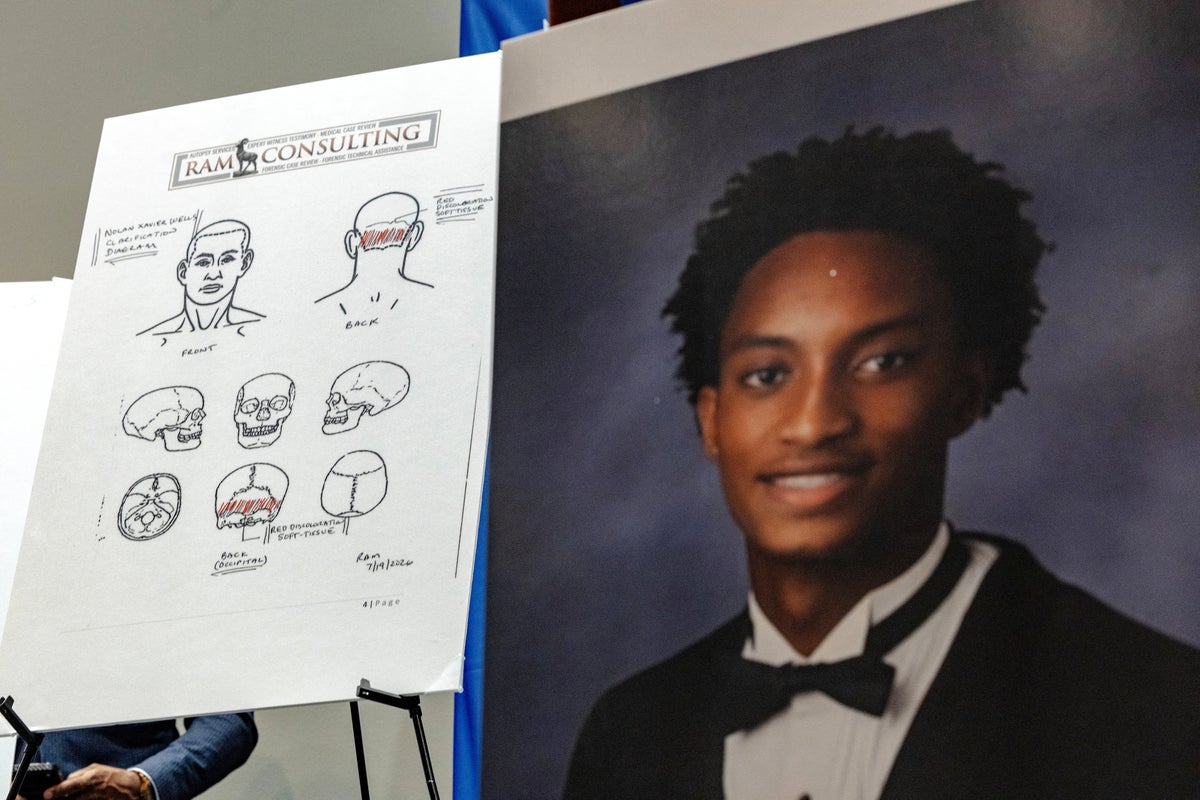
However, Dr. Mitchell highlighted a specific "red discoloration" at the back of Wells' skull. While the mark could not be definitively linked to blunt force trauma due to decomposition, Mitchell explicitly refused to rule out foul play or non-accidental factors.
"This pathologist cannot rule out if any intervening non-accidental factors contributed to or caused the death of Nolan Wells," Crump told the crowd.
National Pressure and the Push for Grand Jury Scrutiny
The case has attracted national attention for obvious reasons. Mississippi's history with race relations hangs heavy over every unexplained incident involving a Black teenager and white companions. Prominent figures have stepped up to demand accountability and offer financial backing.
Civil rights leader Rev. Al Sharpton pledged $50,000 for verified leads, while filmmaker Tyler Perry covered funeral expenses and added to a total reward pool now standing at $125,000 alongside former NFL star Terrell Owens. High-profile voices like ESPN's Stephen A. Smith have used their platforms to keep the pressure on local law enforcement.
The legal strategy is shifting. The Wells family recently met with District Attorney Angel Myers McIlrath. They agreed to jointly inspect the data on Nolan's phone using forensic tools. More importantly, the DA committed to presenting the full investigative file to a grand jury once local agencies finish their work.
In Mississippi, grand juries evaluate whether there is sufficient evidence to issue criminal indictments. Bringing 15 to 25 local citizens into the process offers a layer of oversight that the family hopes will bypass any potential local bias.
How to Follow and Support the Investigation
This case is moving fast, and public scrutiny remains one of the most effective tools for ensuring a thorough inquiry. If you want to follow the case accurately or assist, keep these points in mind:
- Filter out social media rumors: Unverified claims on TikTok and X have created noise that distracts from official forensic updates. Stick to primary statements from the family's legal team and formal press briefings from District Attorney Angel Myers McIlrath's office.
- Submit tips through official channels: Anyone who was on Horn Island on July 4, 2026, and took photos or videos near the west end between 2:00 PM and 6:00 PM should submit raw footage to the Jackson County Sheriff's Department or the DA's office. Small background details in party photos often provide critical timeline markers.
- Support independent legal defense funds: The National Action Network and the Know Your Rights Camp continue to back civil rights investigations in cases where official autopsy reports leave lingering doubts.
The investigation into Nolan Wells' death is far from over. The coming weeks will depend heavily on what digital forensics recover from his phone and how the grand jury evaluates the physical evidence.