Pyongyang announced a test of a new torpedo system equipped with artificial intelligence capabilities, framing the weapon as a leap in underwater strike autonomy. State media releases on North Korean weapons tests routinely package incremental engineering work as transformative breakthroughs, and independent defense analysts treat any claim of onboard AI in an underwater munition with heavy skepticism. Because no verified test telemetry, independent acoustic recordings, or recovered hardware exist in the public domain, the claim must be read first as strategic signaling aimed at Washington, Seoul, and Tokyo, and only second as a technical milestone.
To understand what an AI-enabled torpedo could actually mean in naval warfare, you have to look past the buzzwords and examine what happens beneath the surface. Water bends and absorbs radio waves almost immediately. GPS does not work underwater. Satellite links are dead the moment a weapon or submarine drops below periscope depth. That physical reality forces any underwater system to rely on inertial navigation, active or passive sonar, depth sensors, and onboard computing once it is in the water.
What Underwater Autonomy Actually Requires
Autonomy in a torpedo is not the same thing as running a large language model in a data center. A torpedo operates in a cramped, vibrating, high-pressure tube with strict limits on power draw, thermal dissipation, and compute weight. Every watt spent on a processor is a watt not driving a propeller, spinning a turbine, or feeding a guidance actuator.
In naval engineering, "AI capabilities" in a torpedo typically points to machine learning classifiers or adaptive guidance algorithms rather than general reasoning. A system might be trained to distinguish a commercial freighter from a naval hull by analyzing propeller cavitation, blade rate, and tonal signatures in noisy coastal waters. It might also use pattern recognition to reject decoys, bubble screens, or false seabed returns during the terminal phase of an attack.
Why Shallow Waters Complicate Everything
The waters around the Korean Peninsula are notoriously unforgiving for acoustic sensors. Shallow depths, uneven bottoms, thermoclines, heavy fishing traffic, and industrial noise create dense multipath clutter where sound bounces off the surface and seafloor in ways that confuse simple target trackers.
If Pyongyang is genuinely testing neural-network-based target discrimination or adaptive route planning in those environments, the primary hurdle is training data. Acoustic signatures shift with water temperature, salinity, sea state, and hull condition. A model trained on limited trial runs or synthetic simulations can fail abruptly when confronted with real-world clutter or active countermeasures from a modern destroyer or submarine.
Compute Limits Inside a Munition
Hardware constraints do not vanish just because a press release mentions artificial intelligence. Defense electronics designed for harsh shock, vibration, and thermal swings lag behind consumer silicon for good reason. Radiation hardening, ruggedized packaging, and strict supply chains limit what chips make it into a weapon system.
Sanctions further complicate Pyongyang's access to high-end edge AI processors, specialized test benches, and dual-use microelectronics. Even when smuggling networks bypass export controls, integrating foreign components into a reliable naval munition requires extensive environmental testing that cannot be faked on a desk.
Strategic Signaling Meets Naval Doctrine
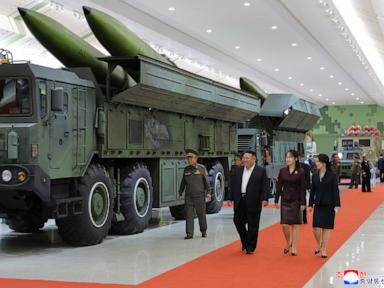
State media announcements around weapons tests serve domestic and diplomatic purposes long before a weapon reaches fleet deployment. Showing a sleek munition, a control room, or a senior official inspecting a test site projects technical competence and deterrence. It tells adversaries that North Korea is trying to keep pace with modern unmanned and autonomous warfare trends.
Asymmetric threats have long been central to North Korean military planning. Facing conventional naval and air superiority from the United States and South Korea, Pyongyang has invested heavily in submarines, coastal batteries, cruise missiles, and underwater drones designed to complicate adversary planning and raise the cost of any conflict.
Countermeasures and Escalation Risks
A weapon that claims autonomous target selection raises sharp operational questions for naval commanders. Traditional torpedoes follow wire guidance, preset profiles, or straightforward homing logic that remains tied to human command decisions up to launch. A munition that makes independent terminal decisions in congested waters increases the risk of misidentification or unintended escalation.
At the same time, naval forces already deploy layered defenses against advanced torpedoes. Towed array sonar, hull-mounted sonar, anti-submarine aircraft, decoy launchers, and evasive maneuvering remain core pillars of undersea defense. An algorithm does not repeal the physics of sound propagation or the limits of battery endurance.
How Analysts Separate Signal From Propaganda
Veteran defense watchers know better than to take state announcements at face value, yet dismissing them outright is an equally lazy mistake. Countries with tight information controls often exaggerate maturity while hiding real, incremental progress underneath. A system might have a basic target-recognition routine or an upgraded digital autopilot while still lacking reliable long-range autonomy.
Consider a hypothetical scenario to see how gaps show up in practice. Suppose a test unit uses an onboard model trained primarily on calm-water runs against a single surface target. In a wartime engagement with multiple vessels, active jammers, and rough seas, that model could lock onto the wrong signature or lose track altogether. Without transparent operational testing under realistic conditions, capability claims remain unproven hypotheses.
What Independent Observers Look For
Credible assessment depends on observable indicators rather than rhetoric. Analysts watch satellite imagery of test ranges and shipyards, track maritime notices and range closures, and compare new announcements against prior systems such as North Korea's previously publicized underwater attack drones and conventional torpedoes.
Over time, patterns emerge. Repeated tests of the same designation, gradual improvements in reported range or depth, and integration with specific launch platforms matter far more than a single headline. Until hard technical evidence surfaces, the smartest posture is clear-eyed scrutiny paired with serious attention to the underlying direction of North Korean naval modernization.