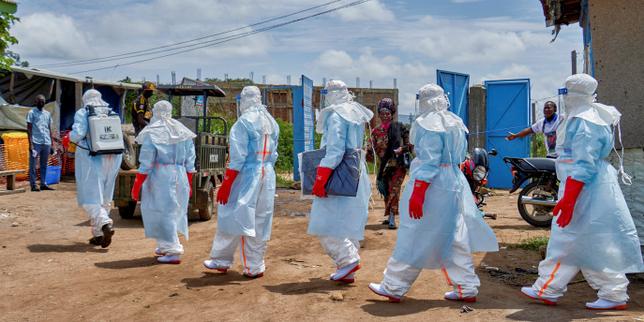
The sirens are blaring in Manhattan, and the media is running its favorite playbook. Fifty people fall ill, an emergency operations center activates, and suddenly every headline reads like the script of a contagion thriller. The breathless coverage wants you terrified, locked in your apartment, and waiting for a bureaucratic savior.
It is pure theater.
Every time a localized spike in infectious cases hits the five-borough radius, the public health apparatus defaults to panic-induced mobilization. We see the same pattern: emergency declarations, sudden reallocations of municipal budgets, and press conferences filled with solemn faces promising aggressive intervention. But if you look past the flashing lights, you find a deeper, more troubling reality. This is not a sudden, unpredictable crisis. It is the mathematical certainty of a city that prioritizes PR management over structural hygiene.
Public health departments routinely treat endemic environmental failures as acute medical emergencies. When fifty people contract a disease tied to urban decay, zoonotic vectors, or infrastructure neglect, it is not a black swan event. It is a billing invoice from decades of deferred maintenance coming due.
The Myth of the Sudden Outbreak
The foundational lie of modern urban health reporting is that outbreaks happen in a vacuum. The competitor narratives imply that a pathogen simply dropped from the sky, caught the city off guard, and requires a militarized medical response to contain.
This perspective is fundamentally broken. It ignores the baseline ecology of a metropolis.
New York City sits on an aging infrastructure framework designed in the 19th and 20th centuries. Combined sewer overflows, subterranean heat islands, and concentrated waste management hubs create permanent incubators for pathogens. Whether the specific culprit is leptospirosis tracked through an exploding rodent population, legionella breeding in unmaintained cooling towers, or foodborne clusters originating from supply chain bottlenecks, the root cause is never the microbe. The root cause is the environment that permitted its proliferation.
When municipal leaders announce an emergency response for fifty cases, they are trying to look proactive. In reality, they are admitting a systemic failure. By focusing entirely on the transmission phase, they avoid accountability for the decades of policy choices that built the perfect transmission highway.
Consider the data on urban vector control. For years, independent sanitarians have pointed out that superficial extermination campaigns do nothing to alter the carrying capacity of city blocks. If you leave tons of plastic garbage bags on the curbs every night, you are actively feeding the vector pool. Declaring an emergency after people get sick is like screaming at the rain after you refused to repair a hole in your roof.
Hygiene Theater and the Illusion of Safety
We have become addicted to visible, performative responses. When an outbreak hits the news cycle, the public demands to see workers in hazmat suits spraying bleach on asphalt.
This is completely useless.
Microbes do not care about political optics. Spraying down a subway platform or a public square offers a psychological placebo to a worried populace, but it does absolutely nothing to interrupt the actual lifecycle of a disease. Most pathogens driving these localized panics thrive in places bleach cannot reach: deep within the soil, inside the biofilm of unmonitored plumbing systems, or inside host populations living beneath the streets.
I have spent years analyzing how municipal budgets dissolve during public health scares. Millions of dollars get funneled into rapid-response task forces, temporary testing sites, and emergency public relations contracts. This capital is almost always stripped away from routine, unglamorous preventative services.
- Water quality monitoring gets deferred.
- Building code enforcement for commercial HVAC systems gets delayed.
- Restaurant inspection intervals get stretched thinner.
The net result is a vicious cycle. By starving the boring, everyday systems that keep a city clean to pay for high-profile crisis management, we guarantee the next crisis will be larger and arrive sooner.
The Flawed Logic of Case Counting
Go look at the standard queries popping up on search engines whenever these stories break. People ask: "Is it safe to walk outside in NYC?" or "How fast is the new disease spreading?"
These questions rest on a flawed premise. They assume that a raw case count of fifty individuals is an accurate barometer of personal risk.
It isn't. Raw case counts without dense demographic, behavioral, and spatial context are worse than useless—they are actively misleading.
If forty-five of those fifty cases occurred among a specific subset of workers exposed to a singular, identified environmental hazard—such as cleaning out an illegal basement conversion or handling specific wholesale goods without protective equipment—the general risk to a commuter walking down Broadway is mathematically indistinguishable from zero. But a blanket emergency declaration flattens that nuance. It terrifies the commuter while doing nothing to fundamentally rewrite the safety standards for the vulnerable worker.
We need to stop asking how many people are infected and start asking exactly where the breakdown in containment occurred. If a cooling tower at a specific housing complex wasn't cleaned for three years, that is a regulatory failure, not a city-wide health threat. Treating it as a generalized crisis protects the negligent property owners and the lazy inspectors who signed off on the paperwork.
Follow the Capital, Not the Scare Tactics
The contrarian approach to analyzing any public health emergency requires looking at where the emergency funds actually land. When an administration gets to bypass standard procurement rules under an emergency declaration, accountability vanishes.
Contracts for diagnostic kits, specialized sanitation services, and temporary staffing are handed out with minimal oversight. We saw this during every major health scare of the last two decades. The companies that secure these emergency windfalls are rarely the ones doing the long-term work of making cities livable. They are crisis capitalists who specialize in monetizing public anxiety.
If New York City wanted to prevent the next fifty infections, it wouldn't build an emergency command center. It would pass aggressive, legally binding mandates on containerized waste management. It would deploy real-time, automated sensor networks in municipal water lines. It would fine negligent landlords into bankruptcy.
But those solutions require political courage, structural disruption, and long-term capital allocation. They do not look good in a twenty-second clip on the evening news. An emergency declaration, however, allows politicians to stand behind a podium, look resolute, and pretend they are fighting a war against an invisible enemy, rather than ignoring a visible problem of their own making.
Stop reading the breathless live-blogs tracking every single hospital admission. The threat isn't a terrifying new plague sweeping through the metropolis. The threat is a system that finds it cheaper to manage occasional panics than to fix the rotting foundation beneath our feet. Turn off the news, ignore the press releases, and demand to see the infrastructure maintenance logs. That is where the real truth lives.