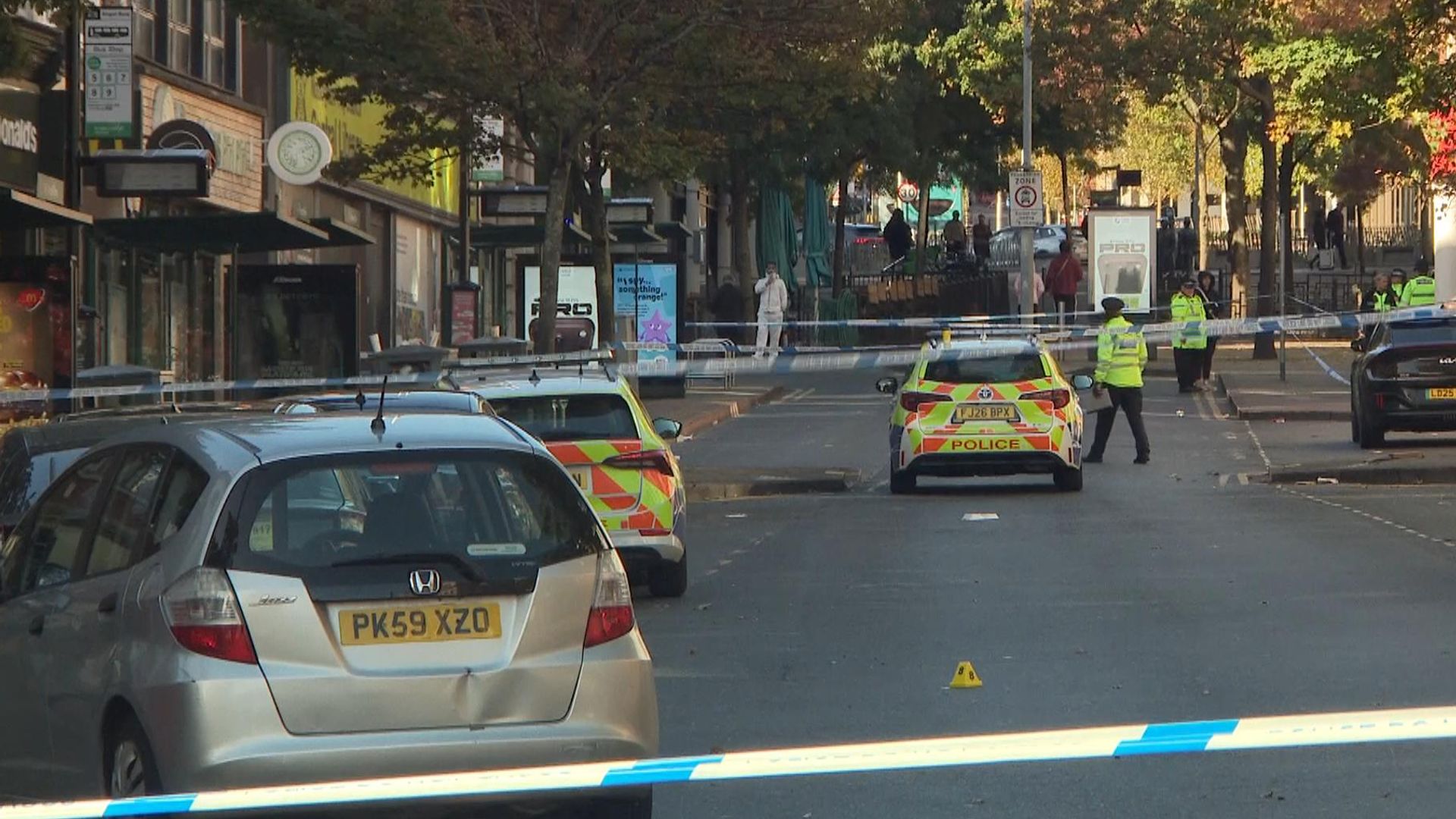
Every time a police officer is shot in the UK, the media machinery goes into predictable, breathless overdrive. A second suspect is charged in connection with the shooting of an officer in Nottingham, and the headlines immediately lock onto the tactical play-by-play. Who held the weapon? Who drove the car? Who hid the shells?
That is the lazy consensus. Mainstream crime reporting treats a police shooting like a dramatic whodunit, framing the prosecution of a second or third accomplice as a tidy victory for law and order.
They are asking the wrong question entirely.
When a second person is charged in a firearm offense in England and Wales, it rarely means detectives suddenly uncovered a criminal mastermind. More often, it exposes the brutal, blunt-force mechanics of UK secondary liability laws, the persistent availability of converted blank-firers on British streets, and a reactive policing model that celebrates arrests while ignoring the supply chains that make those shootings inevitable.
The Myth of the Mastermind and the Reality of Joint Enterprise
Read any standard news brief about a second charge in a Nottingham shooting case, and the subtext is clear. The public is meant to feel reassured that the net is closing. One person gets charged with attempted murder or possession of a firearm with intent to endanger life; days or weeks later, a second individual gets swept up on charges ranging from assisting an offender to conspiracy or possession.
Here is what the press releases leave out.
Under English criminal law, charging a second person in connection with a shooting does not require proving that person touched the gun, saw the gun, or even wanted the trigger pulled. Through the doctrines of secondary liability—historically and controversially known in the public consciousness as joint enterprise—prosecutors can bring severe charges against anyone who intentionally assisted or encouraged the principal offender.
Following the landmark 2016 UK Supreme Court ruling in R v Jogee, the legal bar shifted slightly. Prosecutors can no longer rely purely on "parasitic accessory liability," where mere foresight that a co-defendant might commit a crime was enough to convict someone of murder. Post-Jogee, the Crown Prosecution Service (CPS) must prove intention to assist or encourage.
Yet in practice, especially at the charging stage in high-profile firearm cases involving police victims, the net remains extraordinarily wide.
- The Charging Threshold: Under the Code for Crown Prosecutors, the CPS only needs a "realistic prospect of conviction" to authorize charges. When an officer is injured, institutional pressure to demonstrate total intolerance for violence against the state is immense.
- The Dragnet Effect: A person who lent a burner phone, provided a safe house for two hours, or drove a vehicle three miles away from the scene faces the same media branding—"charged in connection with the shooting of a police officer"—as the shooter.
- The Plea Bargaining Squeeze: Overcharging secondary actors early in an investigation is a standard investigative lever. Put a twenty-year-old in remand facing a decade behind bars for firearm conspiracy, and suddenly their memory regarding the primary shooter becomes remarkably sharp.
I have sat across from defense solicitors in the East Midlands who spend half their careers untangling these exact dragnet prosecutions. They see the pattern every single month. Police arrest four people, charge two, and by the time the case reaches Nottingham Crown Court eighteen months later, the charge sheet for the second defendant has quietly been downgraded from firearm conspiracy to perverting the course of justice or simple handling.
The headlines, however, never get updated. The public gets the illusion of a dismantled syndicate, while the actual shooter's network remains untouched.
Why Nottingham Keeps Showing Up in Firearm Headlines
If you look at the broader statistical picture across England and Wales, gun crime remains rare compared to knife crime. According to data consistently tracked by the Office for National Statistics (ONS), firearm offenses account for less than 0.2% of all recorded crime in England and Wales.
So why does Nottingham—a city that spent the mid-2000s fighting off the tabloid slur "Shottingham" through aggressive, targeted policing—continue to experience high-stakes gun incidents involving law enforcement?
Because the nature of illegal firearms in the UK has fundamentally mutated, and standard crime reporting refuses to keep up.
Twenty years ago, an illegal handgun in the Midlands was likely an antique revolver brought back from a European conflict or a smuggled Eastern European military pistol. Today, the National Crime Agency (NCA) repeatedly warns that the primary threat on British streets comes from converted blank-firing weapons—specifically Turkish-made top-venting blank firers (TVBFs) such as Retay, Ekol, and Zoraki models.
These guns are legally manufactured to fire blanks. Criminals import them in bulk, drill out the blocked barrels in makeshift backyard workshops, and manufacture homemade ammunition using modified blank cartridges and ball bearings.
Think about what that means for policing strategy.
- Zero Supply-Chain Bottlenecks: You do not need an international arms dealer to arm a street crew in Nottingham anymore. You need a pillar drill, a vice, and a batch of legally imported blank-firers bought before border controls or domestic bans catch up to the specific model number.
- Unpredictable Ballistics: Converted blank-firers are mechanically crude. They jam, they misfire, and they lack rifling. When someone fires one at a police officer, it is often a panic reaction during a routine stop-and-search or a raid gone wrong, rather than a calculated ambush.
- Disposable Hardware: Because a converted blank-firer costs a fraction of a genuine factory-made Glock or Makarov on the black market, criminals treat them as single-use items. They shoot, they dump the weapon in a canal or hand it to an associate to hide, and they source another one within forty-eight hours.
When the media celebrates a second person being charged in connection with a shooting, they are celebrating the mop-up of a disposable weapon's aftermath. They are ignoring the fact that the manufacturing pipeline for that weapon exists inside industrial estates and suburban garages across the UK.
The Flawed Premise Behind "People Also Ask"
Whenever a high-profile police shooting hits the news cycle, search engines flood with the exact same predictable queries. Let's dismantle the flawed premises behind the questions the public is conditioned to ask.
"Are UK police going to start carrying guns routinely?"
No. And anyone arguing that a shooting in Nottingham proves British officers need routine arming does not understand how policing actually works in Britain.
Every time an officer is shot, the Police Federation polls its members, tabloid columnists demand routine arming, and politicians offer solemn platitudes. It is pure political theater. Routine arming would destroy the foundational principle of British policing—policing by consent, established by Sir Robert Peel in 1829.
More practically, routine arming creates an arms race on the street. Right now, a street-level drug runner in Nottingham carries a knife or, occasionally, a converted blank-firer to intimidate rivals. If every beat cop patrolling the Meadows or St Ann's carries a Glock 17 on their hip, every routine traffic stop becomes a lethal standoff. Criminals who currently leave their firearms stashed in a safe house would start carrying them loaded in their waistbands because the perceived threat of encountering an armed officer jumps from rare to guaranteed.
Armed Response Vehicles (ARVs) in Nottinghamshire Police already operate on rapid deployment protocols, capable of reaching urban incidents within minutes. The issue is not a lack of armed officers; it is intelligence failures before routine unarmed officers are sent through a door.
"Why wasn't the second suspect charged with attempted murder?"
Because criminal law is not a vengeance machine, despite what comment sections demand.
To secure a conviction for attempted murder in England and Wales, the prosecution must prove a specific intent to kill. Notice the distinction: for actual murder, an intent to cause Grievous Bodily Harm (GBH) is sufficient if the victim dies. For attempted murder, intent to cause GBH is not enough. The Crown must prove the defendant specifically intended the victim to die.
When a second suspect is charged in connection with a shooting, charging them with attempted murder is almost always a guaranteed acquittal at trial unless there is ironclad digital evidence—such as text messages explicitly planning an assassination. Instead, prosecutors rely on charges like:
- Possession of a firearm with intent to endanger life (Section 16 of the Firearms Act 1968), which carries a maximum sentence of life imprisonment without requiring proof of an intent to kill.
- Section 18 wounding with intent (GBH with intent), which also carries a life maximum.
- Assisting an offender (Section 4 of the Criminal Law Act 1967), which targets the person who hid the gun, burned the clothes, or drove the getaway car after the fact.
Charging a secondary suspect with lesser-sounding offenses is not a sign of weakness by the CPS. It is a calculated move to ensure the charge actually sticks in front of twelve jurors.
"Does charging a second person mean the threat to the public is over?"
This is the most dangerous misconception of all.
A shooting involving a police officer almost never happens in a vacuum. Officers rarely get shot during random street robberies; they get shot during targeted warrants, proactive vehicle stops, or escalations tied to organized crime groups (OCGs) fighting over county lines drug territory.
When police charge a shooter and an accomplice, they have removed two players from the board. They have not removed the debt, the drug line, or the rival crew that triggered the paranoia in the first place. In fact, removing two key operators from a local criminal network often creates a power vacuum. Rival groups immediately move in to seize the territory, triggering a fresh wave of retaliatory violence that puts both the public and unarmed patrol officers at even greater risk over the next six months.
What Needs to Change in Crime Reporting and Policing Strategy
If we want fewer police officers shot in Nottingham, Manchester, or London, we have to stop treating every arrest as a mission-accomplished headline and start demanding accountability where it actually counts.
1. Audit the Intelligence Hand-Off Before Warrants Are Executed
Time and again, when an unarmed or standard-response officer encounters a firearm in the UK, a post-incident review reveals fragmented intelligence. One unit knew a suspect had links to converted weapons; another unit executed a routine arrest warrant without that flag showing up prominently on the briefing sheet.
Policing leadership loves investing in visible hardware—new patrol cars, body-worn cameras, tactical gear. They chronically underinvest in the boring backend data architecture that links local neighbourhood intelligence with regional organized crime units (ROCU) in real time.
2. Target the Machining Tools, Not Just the Street Dealers
Law enforcement and lawmakers have spent years playing whack-a-mole with specific brands of blank-firing guns. As soon as the Home Office bans one Turkish import model, workshops switch to another.
A smarter enforcement strategy tracks the downstream consumables and machining equipment—specific drill bits, barrel liners, and bulk orders of 9mm PAK blank ammunition bought by individuals with zero legitimate connection to theatrical production or dog training. Disrupting the converter is worth fifty street-level arrests.
3. Demand Follow-Through From Crime Journalists
The press has a responsibility to cover the entire lifecycle of a major firearm prosecution, not just the initial arrest and the dramatic first appearance at Nottingham Magistrates' Court.
When a second person is charged "in connection with" a shooting, newsrooms should set an automated calendar alert for twelve months out. Did the CPS drop the firearm charges? Was the second defendant acquitted because police overreached with weak circumstantial evidence? Or did they plead guilty to a minor obstruction charge? Without that accountability, law enforcement gets unlimited credit for dramatic press releases while quietly burying failed prosecutions years later.
The Uncomfortable Truth About the Next Headline
There is an obvious downside to pushing back against the celebratory "second suspect charged" narrative: it sounds cynical when an officer has genuinely put their life on the line and taken a bullet doing their job.
Acknowledging systemic flaws does not diminish the courage of the officer on the ground. It does the exact opposite. It refuses to let politicians and senior brass use an officer's injury as a PR shield while leaving the underlying conditions intact.
Charging a second suspect in Nottingham is a procedural milestone in a single case file. It is not a systemic victory. Until border enforcement stops the flood of convertible blank-firers, until intelligence systems stop sending under-equipped officers into high-risk doors, and until the media stops confusing an arrest warrant with actual justice, we are simply waiting for the next press release.