The coffee maker in a small coastal café in Puerto Escondido always rattles a few seconds before you feel it. It is a tiny, localized warning system born of a loose shelf and decades of tectonic instability. But on a Tuesday afternoon, the rattle did not stop. It deepened. It became a low, resonant hum that vibrated through the soles of your shoes before climbing up your spine.
Then the earth tore open.
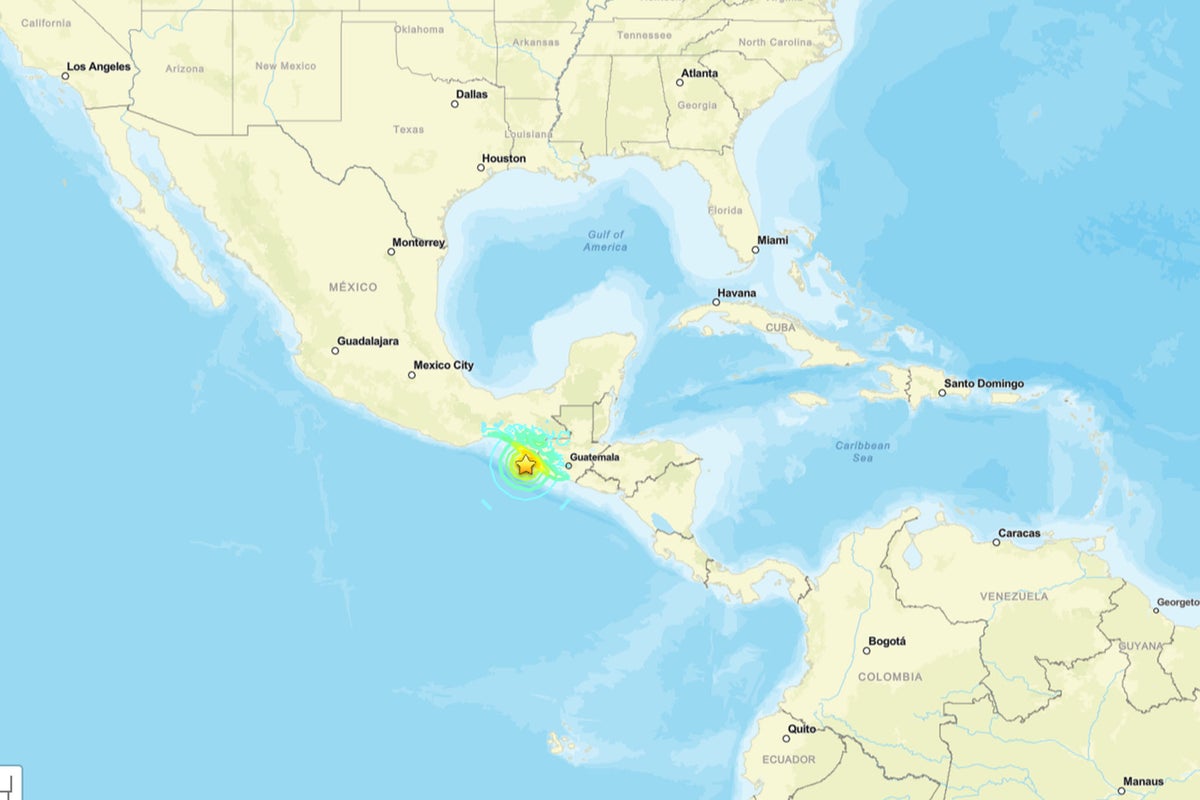
When a 7.3 magnitude earthquake strikes off the coast of Mexico, the numbers hit the news tickers instantly. Data points flash across screens in Tokyo, Washington, and London. 7.3 magnitude. 10 kilometers deep. Epicenter located off the coast of Oaxaca. To the outside world, these are sterile metrics. To the person standing on the shifting sand, feeling the planet liquefy beneath their feet, the numbers mean absolutely nothing.
What matters is the sudden, violent loss of gravity. The way the horizon violently jerks upward. The sound—a deafening, metallic roar like a freight train scraping through a concrete tunnel. For eighty seconds, the world forgot how to hold still.
The Anatomy of the Shudder
To understand why the Mexican coast lives in a perpetual state of quiet anxiety, you have to look beneath the postcard-perfect waves of the Pacific. The geography is beautiful, but the geology is brutal.
Off the southern coast lies the Middle America Trench. It is a massive underwater canyon where the Cocos tectonic plate meets the North American plate. Think of it as a slow-motion car crash happening in absolute darkness. The Cocos plate slides downward, shoving itself beneath the continental mass at a rate of a few centimeters a year. Usually, this movement is sticky. The plates catch on each other. Tension builds. The rock compresses, storing energy like a massive, continent-sized steel spring being wound tighter and tighter.
When the rock finally fails, it does so instantly.
During this latest 7.3 event, a section of the fault line hundreds of miles long snapped. The sudden release of energy sent shockwaves tearing through the ocean floor, traveling outward at miles per second. On land, concrete cracked like dried mud. In the capital, hundreds of miles away in Mexico City, the ancient lakebed mud beneath the metropolis began to amplify the waves, swinging skyscrapers like pendulums.
But the immediate shaking is only the first act of the drama. The true terror of a submarine earthquake lies in what it does to the water column above it.
The Invisible Rise
Imagine a giant hand suddenly lifting a square mile of the ocean floor by ten feet. Millions of tons of seawater are displaced in a single heartbeat. The water has nowhere to go but up, creating a mound on the surface that immediately collapses under its own weight, sending waves radiating outward in every direction.
This is the birth of a tsunami.
In the deep ocean, a tsunami is completely invisible. A ship sailing directly over the crest of a 7.3-induced wave wouldn’t even notice it. The wave height might only be a foot or two, spread across a wavelength of a hundred miles. The danger lies in its speed. In deep water, these waves travel at over five hundred miles per hour—the speed of a commercial jetliner.
The Pacific Tsunami Warning Center issued its alerts within minutes of the initial rupture. Hazardous waves were projected for coasts situated within 300 kilometers of the epicenter.
For the people living in the coastal towns of Oaxaca and Guerrero, the warning came not from a smartphone app, but from the sea itself.
The Withdrawal
Consider a hypothetical resident named Elena. She has run a small beachfront palapa for thirty years. She knows the rhythm of the tide better than her own heartbeat. After the shaking stopped, after she wiped the shattered glass from her counters and checked that her neighbors were breathing, she looked out at the ocean.
The sea was gone.
This is the most haunting prelude to a tsunami, a phenomenon known as a drawdown. When the trough of the underwater wave reaches the shallow waters of the coast first, it acts like a massive vacuum cleaner, sucking the water away from the shoreline.
The reef lay bare, glistening under the hot sun. Flopping fish trapped in tide pools gasped for air. The ocean had retreated hundreds of yards in a matter of minutes, exposing a landscape that human eyes were never meant to see.
To the uninitiated, this looks like a curiosity. It looks like an invitation to walk out onto the wet sand and gather shells. To those who know the coast, it is a death sentence. It is the ocean drawing back its fist.
The air turns strangely quiet. The normal crash of the surf is replaced by a wet, hissing sound. The clock is ticking, and you have perhaps five minutes to find high ground.
The Race for the Hills
An earthquake of this scale strips away the illusions of modern infrastructure. Power grids fail instantly. Transformers explode in flashes of brilliant blue light, silencing the sirens. Cell phone towers overload as thousands of people try to call loved ones simultaneously, rendering networks useless.
Survival becomes primitive. It depends entirely on your feet and your relationship with gravity.
In towns like Huatulco and Puerto Ángel, the exodus began silently and then turned chaotic. People ran up the steep, jungle-covered hillsides, abandoning cars in the narrow streets as traffic jammed. Mothers carried children; young men assisted the elderly up makeshift concrete staircases.
Every foot of elevation gained is a layer of safety. The math of survival in a tsunami is brutal but simple: you must outclimb the volume of the incoming ocean.
When the wave finally arrived, it did not look like the towering wall of water seen in Hollywood movies. Real tsunamis rarely do. Instead, it looked like a fast-rising, muddy tide that simply refused to stop. It breached the seawalls. It swallowed the beaches. It pushed into the estuaries and river mouths, reversing the flow of the water and flooding inland streets with a churning soup of saltwater, mud, and debris.
The water carried away cars, outdoor furniture, and the lightweight wooden structures of the beachside businesses. It clawed at the foundations of concrete hotels.
Then, just as quickly, the water began to rush back out to sea, carrying the wreckage of the coast with it, leaving behind a thick layer of grey slime and a profound, echoing silence.
The Aftermath of the Silence
The true weight of a disaster settles in the hours after the main event. The tsunami warnings eventually expire. The ocean tames itself, returning to its familiar, rhythmic lapping against a altered coastline.
The immediate reports will tally the structural damages. They will list the number of collapsed roofs, the shattered highways, and the economic toll on a tourism-dependent economy. But the invisible scars run much deeper.
The earth does not settle down after a 7.3 magnitude event. The aftershocks come every few hours—sharp, sudden jolts that mimic the beginning of another big one. Each rumble sends a fresh jolt of adrenaline through the nervous systems of those who spent the day running for their lives. Nobody sleeps. Every creak of a house feels like a threat.
The coast will rebuild. The palapas will be framed with fresh timber, the roads will be repaved, and the tourists will return to chase the world-class waves that define this stretch of the Pacific.
But for those who stood on the sand when the coffee maker rattled, the ocean will never look entirely the same. They will always watch the horizon. They will always remember the afternoon the sea turned its back on the shore, paused, and gathered its strength.


.png?width=1200&auto=webp&trim=0%2C0%2C0%2C0)