Geopolitical risk premiums rarely deflate linearly. When headline volatility recedes following an abrupt pause in direct military friction between Washington and Tehran, pricing models tend to undergo an immediate adjustment driven by inventory positioning rather than structural supply alterations.
The baseline error in standard market commentary involves treating kinetic pauses as permanent supply-chain restorations. A momentary cessation of hostilities between the United States and Iran does not erase the systemic structural vulnerabilities embedded in maritime choke points or sovereign production assets. Instead, it resets the short-term volatility index, shifting the trading dynamic from immediate tail-risk management back to fundamental supply-and-demand mechanics.
The Anatomy of Geopolitical Risk Pricing
Crude benchmarks operate on a dual-track valuation model: baseline physical availability and the forward-looking geopolitical risk premium. When tensions escalate in the Persian Gulf, physical barrels do not necessarily immediately disappear from the market. Rather, the cost of moving those barrels spikes instantly.
[Kinetic Threat Spikes]
       │
       ▼
[Insurance & Freight Costs Surge]
       │
       ▼
[Forward Risk Premium Expands in Futures Curve]
When direct strikes pause, the first variable to adjust is the forward risk premium. Traders unwind speculative long positions built on worst-case disruption scenarios.
- The Freight Differential: Tanker rates for Suezmax and Very Large Crude Carriers operating in the Middle East react violently to conflict indicators. A temporary lull compresses spot freight pricing, which flows directly into landed crude costs.
- The Insurance Loading: War-risk insurance premiums for voyages transiting the Strait of Hormuz exhibit asymmetric pricing behavior. They spike vertically upon the first sign of kinetic action but decay slowly as underwriters demand proof of sustained stability before revising risk profiles downward.
- The Inventory Cushion: Commercial storage levels in OECD nations act as a shock absorber. When geopolitical threats recede, high visible inventory totals exert downward pressure on prompt pricing structures, accelerating the easing phase.
The Strait of Hormuz Mechanics
The fundamental vulnerability governing US-Iran dynamics remains structural geographic concentration. Approximately one-fifth of global petroleum liquid consumption passes through the Strait of Hormuz daily.
Strait of Hormuz Daily Throughput
       │
       ├─► Regional Exports (Saudi Arabia, UAE, Iraq, Kuwait)
       └─► Iranian Export Channels (Despite Sanctions / Shadow Fleet)
Any disruption to this narrow maritime corridor bypasses marginal supply adjustments in North American shale fields. When Washington and Tehran step back from direct engagements, the primary economic relief is not the unlocking of new oil, but the restored velocity of existing flows.
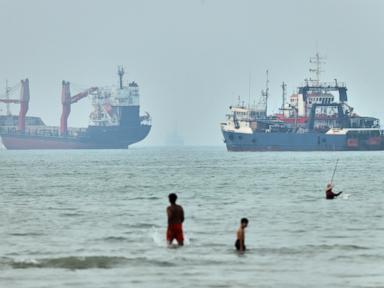
The operational reality for maritime operators involves maintaining elevated security protocols even during political pauses. Shipping companies do not instantly dismantle electronic countermeasures, alter pre-planned deviation routes, or strip down security details based on short-term diplomatic breathers. Therefore, the friction cost of maritime logistics remains elevated above historical baselines, setting a natural floor beneath which crude prices cannot easily fall during a ceasefire window.
Supply Elasticity and OPEC Plus Response Functions
Beneath the headline diplomacy, physical supply management continues via organized cartel coordination and non-OPEC production growth. The pause in US-Iran attacks hands tactical initiative back to major producer alliances.
When geopolitical panic subsides, internal quota discipline within OPEC Plus comes back into sharp focus. During active conflict phases, compliance rates often fracture as members prioritize individual revenue capture or hedge against regional instability. A cooling of hostilities removes the fear premium, forcing producer groups to confront underlying global demand softness or oversupply trajectories.
- Spare Capacity Deployment: Saudi Arabia and the United Arab Emirates maintain the world's primary buffer of swing production capacity. The valuation of this spare capacity changes inverse to geopolitical risk. When relations stabilize, the market prices spare capacity as an active threat to price stability rather than a comforting safety blanket.
- Non-OPEC Output Vectors: United States tight oil producers operate on capital expenditure cycles that are largely insulated from day-to-day diplomatic updates, though broad price crashes alter drilling economics. A rapid easing of prices driven by political sentiment rather than fundamental demand destruction often triggers defensive hedging programs among exploration and production firms.
The Refiner Margin Transmission Channel
Price drops at the global crude benchmark level do not translate uniformly down the value chain. Refiners process heavy sour grades originating from the Middle East alongside light sweet varieties.
When geopolitical friction eases specifically in the Persian Gulf, heavy sour discounts—often tracked via Sour Maya or Dubai benchmarks—react differently than Brent or West Texas Intermediate. A normalization of Gulf transit routes increases the availability of heavy sour crude, expanding refining margins for complex facilities configured to crack discounted feedstocks into high-value distillates like diesel and jet fuel.
Middle East Crude Flows Normalizing
       │
       ▼
Heavy Sour Discount Widens
       │
       ▼
Complex Refiner Margins Expand
       │
       ▼
Product Yields Adjust (Diesel/Jet Fuel Prioritized)
This dynamic creates a secondary economic impulse. While headline crude prices ease, the resulting improvement in product yields can incentivize higher crude processing throughput, eventually putting a counter-cyclical floor under crude demand. Markets fail to drop indefinitely because cheaper crude inputs stimulate higher refinery utilization rates.
Strategic Market Positioning
Evaluating the aftermath of a US-Iran military pause requires looking past headline price corrections and assessing structural operational realities.
- Monitor Maritime Underwriting Rates: Do not rely on diplomatic statements. Track commercial war-risk insurance surcharges for the Persian Gulf. Sustained reduction in insurance premiums validates actual structural deescalation.
- Track Floating Storage Metrics: Measure the volume of crude currently held on stationary tankers in Asian and Middle East waters. A drawdown in floating storage indicates physical absorption of excess barrels, confirming true market balance.
- Assess OPEC Plus Quota Compliance: Anticipate tighter internal enforcement among major producers as the protective canopy of geopolitical fear disappears.
The strategic play for industrial consumers and market participants involves differentiating between a pricing adjustment caused by sentiment liquidation and one driven by fundamental supply expansion. Short-term price relief following a pause in hostilities offers a tactical window for hedging forward exposure, provided operational metrics confirm that maritime logistics and physical export infrastructure have genuinely returned to baseline integrity.