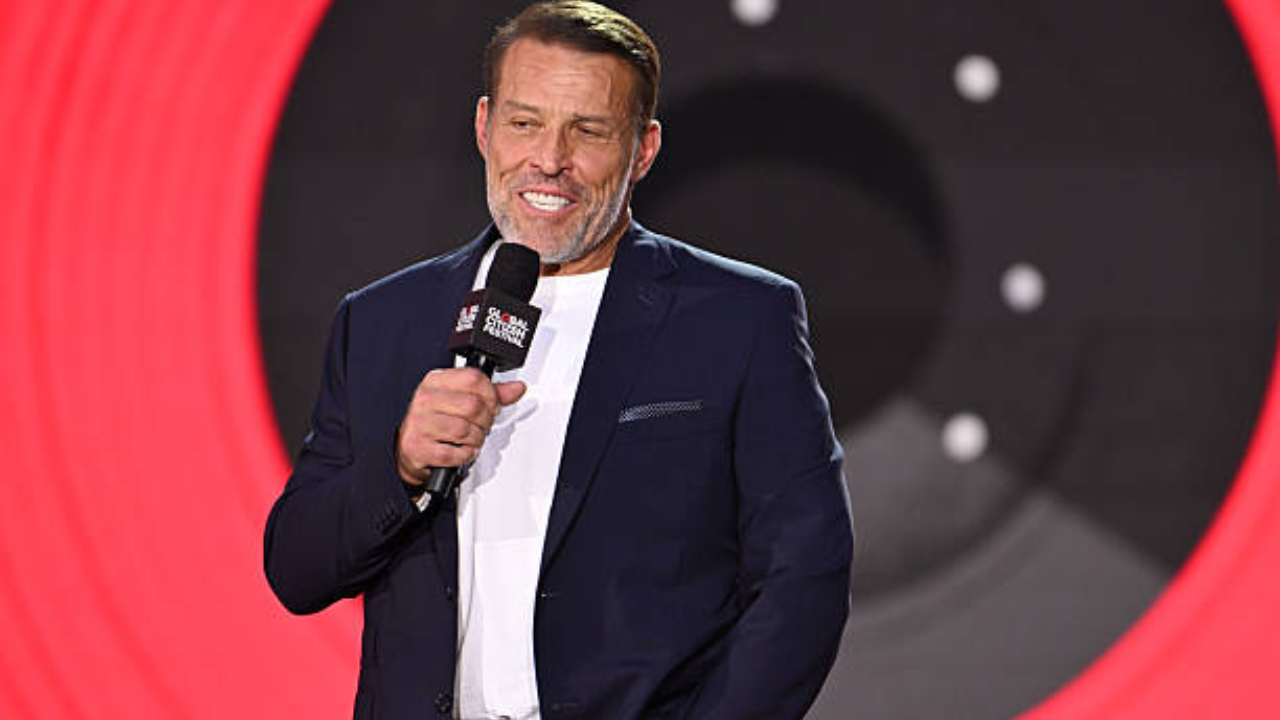
Hunger has a specific sound. When you are a kid watching your mother stare at empty cupboards on Thanksgiving, you don't think about global economics or supply chain logistics. You just feel the cold dread of a holiday stripped of its warmth. That exact memory is what drove Tony Robbins to build one of the most effective hunger relief campaigns in modern history.
Most people know him as the loud guy shouting from a stage about peak performance. But his real legacy might just be the Feeding America 100 Million Meals Challenge and its massive expansion past the one billion meals mark.
Let's talk about what actually happens when celebrity influence meets raw, grassroots organizing.
The Childhood Night That Changed Everything
You can't understand the scale of the 100 Million Meals Challenge without looking at the kitchen table in Azusa, California, back in 1974. Robbins was just a teenager living in a chaotic household with no money for food. Thanksgiving morning arrived with zero prospects for a meal.
Then a stranger knocked on the door. He wasn't a social worker or a church representative. Just a regular guy carrying grocery bags filled with a turkey and all the fixings.
That single act of charity saved his family from starvation. More importantly, it planted an obsessive belief in young Tony's mind. He swore that if he ever made enough money, he would make sure nobody else had to wonder where their next meal was coming from.
Years later, when he hit financial success, he didn't just write a check and move on with his life. He decided to leverage his entire platform. He partnered with Feeding America to launch a campaign that looked impossible on paper.
Why Traditional Charity Fails
Charity is broken. Or at least, it used to be. You see a sad commercial, you text a twenty-dollar donation, and you feel good for a minute. But does it scale? Rarely.
Robbins understood the psychology of giving. People don't give because they have surplus cash. They give because they feel a connection and see a clear path to impact.
When he launched the 100 Million Meals Challenge in late 2014, he didn't ask people to trust an abstract fund. He put skin in the game immediately. He matched donations out of his own pocket.
He also bypassed the bureaucratic red tape that usually strangles large non-profits. Feeding America was the right partner because they already had the infrastructure. They had the food banks, the truck routes, and the local pantries. Robbins provided the megaphone.
The Brutal Reality of Food Insecurity
We live in a country where grocery stores throw away thousands of tons of perfectly good food every single day while families skip meals in the suburbs. It makes no sense.
When people think of hunger, they picture downtown street corners. That's a tiny fraction of the reality. The real crisis lives in rural counties and working-class neighborhoods. It hits single parents working two jobs who can't afford fresh produce. It hits seniors on fixed incomes choosing between insulin and groceries.
Robbins drilled this message into his audience at every seminar. He didn't sugarcoat it. He pointed out that hunger destroys human potential before it even has a chance to start. If a kid is running on empty fuel tanks at school, you can't teach them math. You can't inspire them to dream big. You just have to feed them.
Breaking the Billion Milestone
By 2023, the initiative had crossed a threshold that skeptics said was unreachable. One billion meals.
How do you even measure a billion meals? It sounds like a marketing buzzword. But Feeding America tracks this through actual pounds of food distributed, matched against their standard metric where one dollar equals ten meals thanks to wholesale purchasing power and corporate partnerships.
Salesforce matching grants, corporate sponsors, and millions of small donors chipped in. But the engine behind the growth was relentless promotion. Robbins turned his birthday into a massive fundraising drive every year. He challenged his seminar attendees to compete in giving.
He weaponized social proof. When people see thousands of others stepping up, apathy dies.
What You Can Learn From This Model
If you want to make a dent in a massive social problem, stop waiting for government programs to fix everything.
- Leverage existing infrastructure. Don't build a new charity from scratch when trusted networks already exist. Partner up and amplify their reach.
- Remove friction. Make giving stupidly easy. If a donor has to jump through hoops, they drop off.
- Keep it personal. Data points don't move hearts. Stories do. The memory of that stranger at the door is why a billion meals got delivered.
Hunger hasn't been solved. Not by a long shot. Millions of people still face empty plates tonight. But the playbook exists. One person with a megaphone, a clear mission, and a refusal to accept the status quo can move mountains of food.
Stop waiting for someone else to care. Find a local food bank today, look at their actual needs list, and drop off something heavy.