Bureaucracy moves at the speed of a glacier. A teenager in Texas just proved you can bypass it entirely with off-the-shelf microcontrollers and stubbornness.
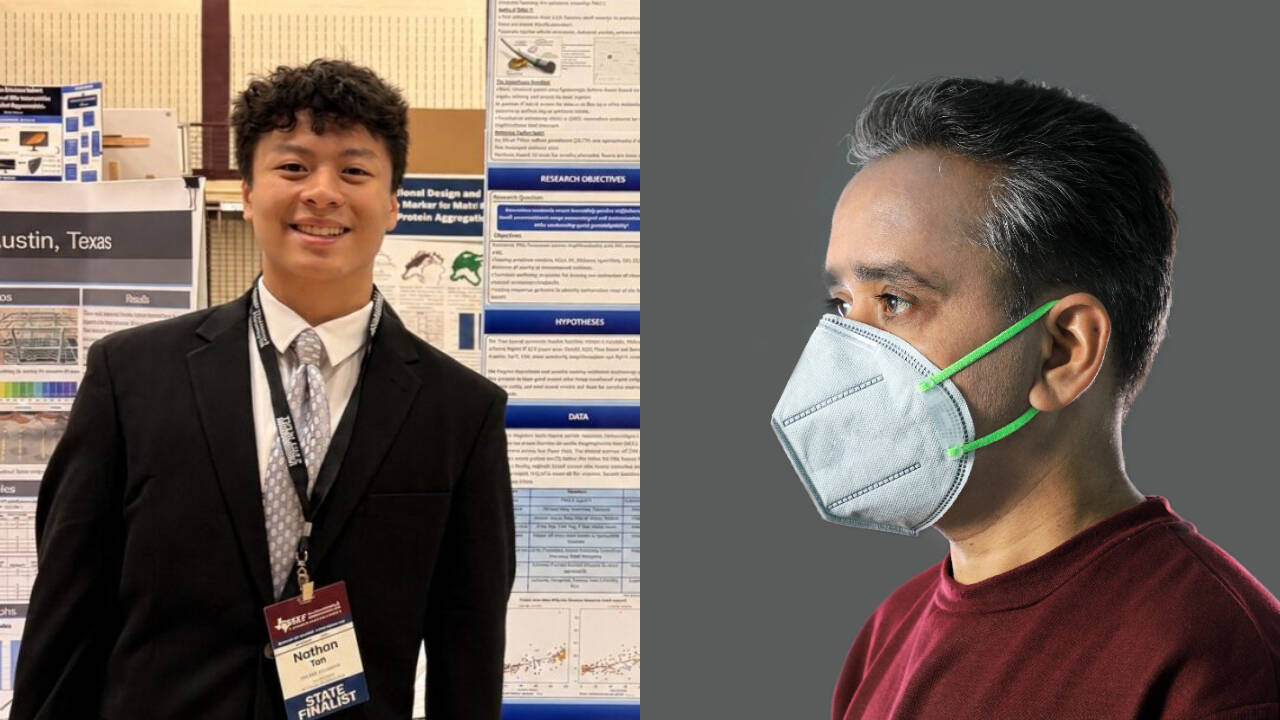
When seventeen-year-old high school students typically focus on college entrance exams and weekend social calendars, one Austin-area youth decided to map the invisible particulate pollution poisoning his school district's classrooms. Armed with low-cost optical particle counters, a soldering iron, and a rudimentary understanding of microcontroller code, he deployed environmental monitors across sixty different campuses. The project did not wait for district approval, state grants, or federal environmental agency sign-offs. It bypassed institutional gatekeepers entirely, delivering real-time particulate matter data directly to public dashboards.
Traditional institutional monitoring is expensive, centralized, and slow. Municipal air quality networks rely on reference-grade monitoring stations that cost upwards of one hundred thousand dollars each. Consequently, cities install them miles apart, creating vast data deserts where neighborhoods just a few blocks away from a highway or industrial facility remain completely unmonitored. Schools are particularly vulnerable. Most educational infrastructure in the United States dates back decades, operating with antiquated ventilation systems that struggle to manage carbon dioxide accumulation, mold spores, and fine particulate matter generated by nearby traffic.
The Texas student recognized this spatial blindness. Instead of petitioning school boards for millions of dollars in modern HVAC upgrades—a futile endeavor given local tax budgets—he built compact sensor pods using open-source hardware components. Each unit cost roughly forty dollars to assemble. By housing the sensors in weather-resistant 3D-printed enclosures and connecting them to local Wi-Fi networks, the student established a decentralized sensor array capable of tracking PM2.5 and PM10 concentrations down to the minute.
Deploying sixty monitors across sixty distinct campuses required navigating administrative friction. School principals are notoriously protective of their facility data, fearing that negative environmental disclosures might depress enrollment or trigger costly remediation mandates. To counter this, the student framed the initiative as an educational engineering exercise rather than an expose. Students within each participating school were recruited to maintain the units, transforming passive data collection into an active curriculum in atmospheric science and data literacy.
The findings exposed a stark reality. Classrooms located downwind of major arterial roadways routinely experienced indoor particulate spikes that exceeded World Health Organization safety guidelines during morning and afternoon drop-off windows. In several older buildings, elevated carbon dioxide levels—a reliable proxy for poor ventilation—correlated directly with afternoon dips in student concentration and performance. When teachers opened windows to flush out stale air, they unwittingly welcomed heavy diesel exhaust straight from idling school buses lined up outside.
These insights challenge the comfortable illusion that indoor spaces are inherently safer than the outdoor environment. Modern buildings are tightly sealed for energy efficiency, trapping volatile organic compounds from cleaning supplies, off-gassing from synthetic carpeting, and fine dust tracked in from hallways. Without continuous mechanical filtration or targeted ventilation, schools become micro-environments where pollutants accumulate quietly over the course of a instructional day.
The broader implications extend far beyond a single Texas school district. For decades, environmental justice advocates have argued that pollution monitoring infrastructure is distributed inequitably, favoring affluent neighborhoods while low-income communities bear the brunt of industrial proximity. Citizen science initiatives leverage low-cost technology to democratize environmental data collection. When high school students can map their own air quality with commercial-grade precision, municipal authorities lose the luxury of plausible deniability.
Yet, relying on grassroots hardware introduces distinct challenges. Low-cost optical particle sensors are susceptible to drift, particularly in high-humidity environments where water vapor droplets can scatter light and register as false particulates. Without regular calibration against reference-grade instruments, raw data streams can easily mislead the public. The young architect addressed this vulnerability by implementing algorithmic data correction models and partnering with local university researchers to cross-reference his sensor outputs against certified state monitoring stations.
Scaling such an initiative requires more than youthful enthusiasm; it demands durable maintenance protocols. Hardware fails, sensors degrade, and student operators eventually graduate. For a decentralized network to outlive its founder, it must transition from an individual crusade into an institutionalized habit. Several parent-teacher associations in the region have begun raising funds to maintain the sensor arrays, signaling a cultural shift in how communities value indoor air hygiene.
Clean air has historically been treated as an invisible luxury. As climate change intensifies wildfire seasons and urban density increases traffic congestion, atmospheric monitoring can no longer remain the exclusive domain of state regulators. The seventeen-year-old student did not invent new sensor technology. He simply applied existing tools where institutional leaders refused to look, proving that meaningful oversight often begins at the margins rather than the top.