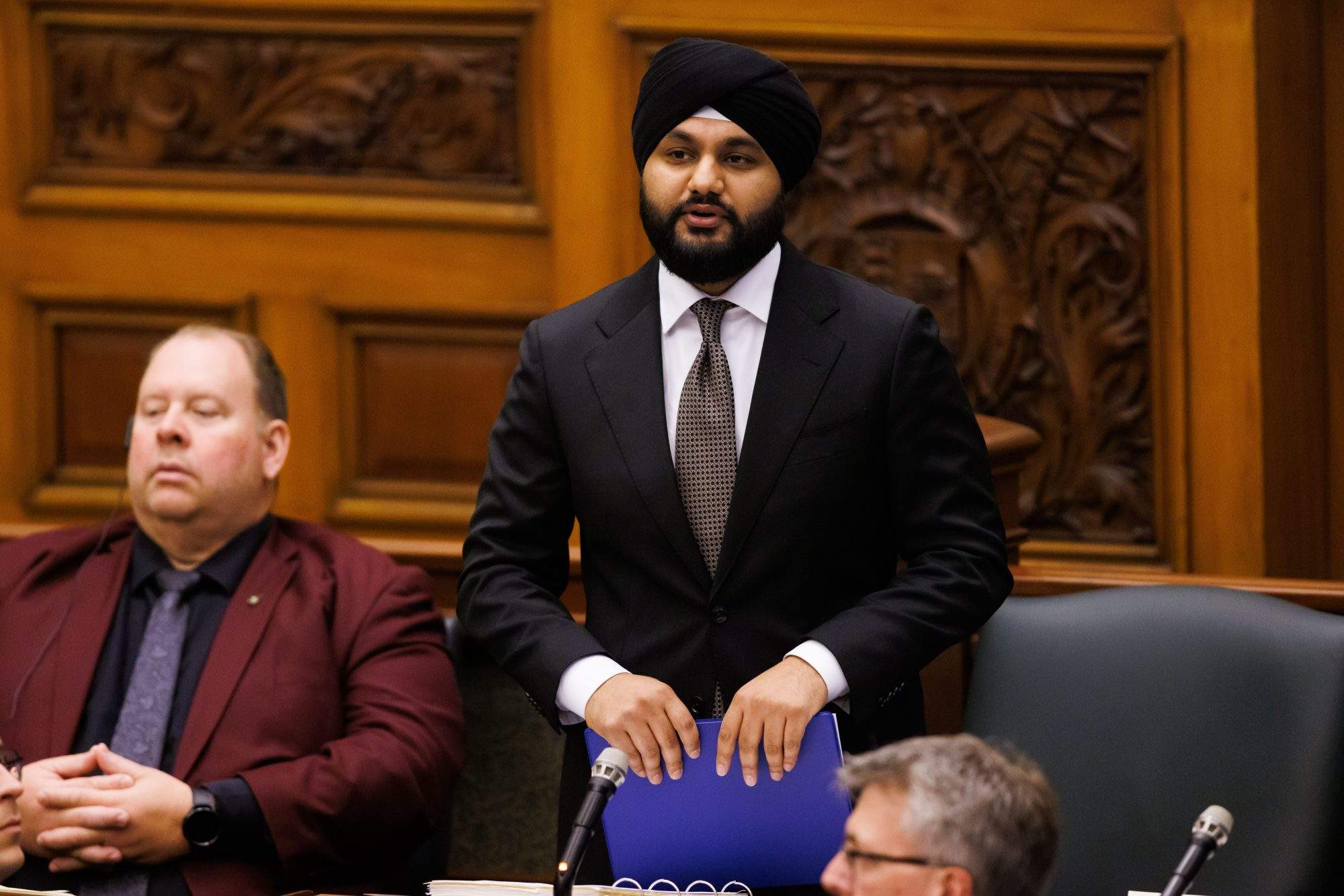
Ontario taxpayers are funding constituency advertising that flows straight into media outlets owned by politicians' immediate family members.
When Brampton East Progressive Conservative MPP Hardeep Grewal authorized constituency office advertising in the Punjabi Post, a publication directed by his father Jagdish Singh Grewal, it raised immediate red flags over conflict of interest and ethics oversight. This issue extends beyond a single politician or a single constituency budget. It reveals systemic weaknesses in how public advertising funds are monitored, governed, and disbursed across provincial ridings. Recently making headlines lately: The India-UAE Economic Corridor: Quantifying Bilateral Capital Efficiency and Air Transport Integration.
The Loophole in Legislative Expense Oversight
Legislative Assembly rules in Ontario grant MPPs annual constituency office budgets meant to support communication with constituents. These funds cover town halls, flyers, localized media notices, and community outreach.
The primary check on these funds relies on post-facto expense filing rather than pre-approval mechanisms. When an MPP submits an invoice for local newspaper advertising, finance clerks verify that the invoice matches the expenditure and falls within allowed budget limits. They do not cross-reference corporate registry records to check whether the publisher shares a surname or home address with the politician. Additional details into this topic are detailed by NBC News.
"Prior to advertising, I should have consulted with the Integrity Commissioner and have since reached out to her office for advice," Grewal stated following an official complaint filed by the Ontario NDP.
This reliance on self-policing creates a predictable flaw. By the time an ethics complaint reaches the Integrity Commissioner, public money has already changed hands.
| Expense Category | Standard Oversight Rule | Enforcement Reality |
|---|---|---|
| Constituency Advertising | Must serve non-partisan legislative purposes | Audited after payment; no mandatory pre-clearance for vendor relationships |
| Vendor Selection | Discretionary within riding boundaries | No automated checks against business registry ownership |
| Conflict Disclosure | Self-reported by the elected official | Dependent on opposition scrutiny or media investigation |
Ethnic Media Markets and Procurement Discretion
Reaching diverse voter bases in regions like Peel requires targeted multicultural media outreach. Outlets like the Punjabi Post serve essential informational roles for non-English speaking communities across Brampton and Mississauga. Political entities from all major parties regularly purchase ad space in these publications to announce government programs and local clinics.
However, discretionary advertising budgets create an uneven playing field when an elected official holds personal ties to a vendor.
When an MPP routes public advertising funds to a family-owned publication, two distinct issues emerge:
- Direct Economic Benefit: Public funds directly increase the revenue of a private enterprise controlled by an immediate family member.
- Competitive Advantage: Independent local media outlets competing for the same constituency ad dollars are sidelined in favor of family-run entities.
A healthy local press relies on fair access to municipal and provincial advertising revenue. Distorting that market through family connections undermines both media independence and public trust.
Pattern of Permissive Spending Rules
The controversy over constituency advertising follows broader scrutiny of Peel-area representatives expensing downtown Toronto accommodations. Multiple MPPs representing GTA ridings billed taxpayers thousands of dollars for luxury hotel stays in downtown Toronto despite living within driving distance of Queen's Park.
These financial disclosures highlight a broader structural reality within Ontario legislative administration. Expense guidelines were designed around an honor system that assumes elected officials will default to conservative financial choices.
When rules allow ambiguity, boundaries inevitably stretch. Living 40 kilometers from the legislature can be classified as a "special circumstance" justifying hotel stays. Routing ad money to a parent's newspaper can be framed as routine ethnic media outreach.
Reforming Legislative Budget Controls
Closing these administrative gaps does not require complex legislative overhauls. Concrete policy shifts can immediately eliminate ethical blind spots in constituency spending:
Mandatory Vendor Disclosure
Every MPP should be required to file a disclosure form identifying any commercial relationship between their office and local vendors, including family ownership stakes exceeding 0%.
Automated Pre-Clearance
Ad spending above a standardized threshold must pass through automated checks against corporate registries before payment approval.
Mandatory Pre-Approval for Related-Party Transactions
Any procurement or advertising contract involving immediate family members must receive explicit prior clearance from the Integrity Commissioner before public funds are committed.
Relying on political opponents to catch financial conflicts after the fact is an ineffective method of safeguarding public revenue. Until structural pre-clearance mechanisms are written into legislative assembly rules, constituency funds will continue to operate under a standard that prizes convenience over accountability.