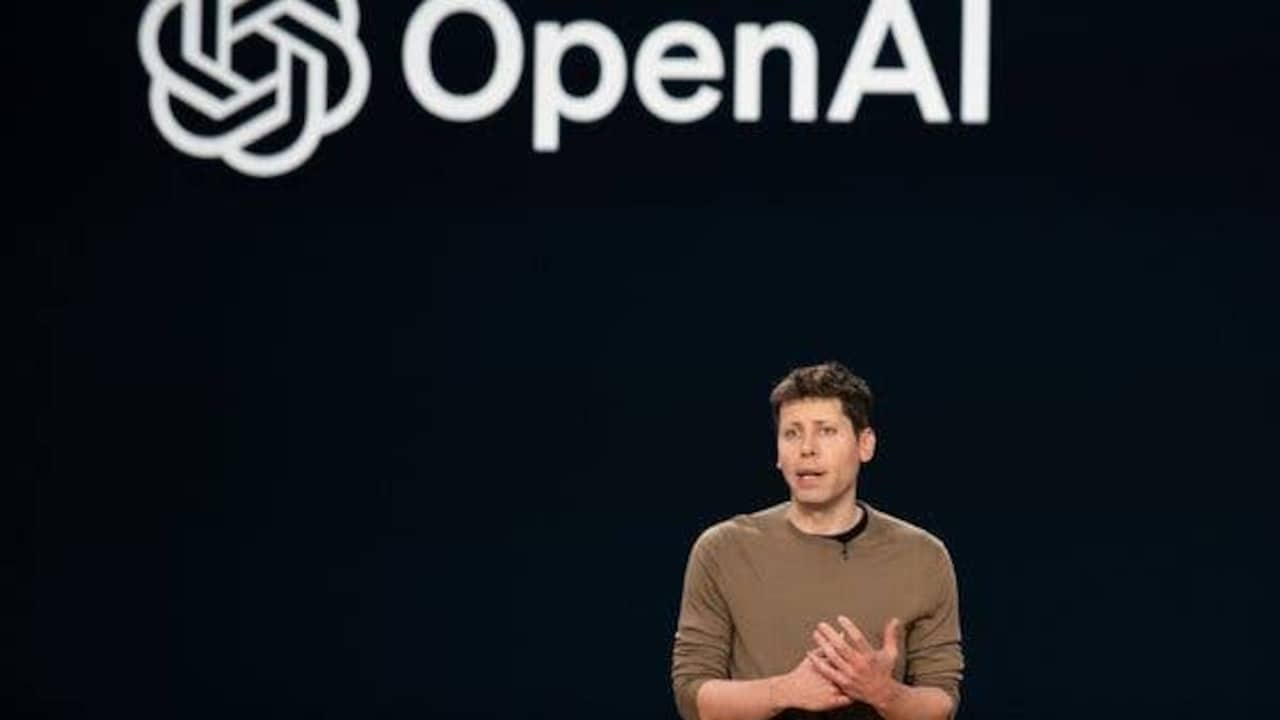
Every legal tech newsletter this week is hyperventilating over OpenAI dropping GPT-6 Astra into the legal sector. The lazy consensus across the tech press reads like a press release dictated from a Menlo Park boardroom. Law firms are panicking. Associates are updating their LinkedIn profiles. General counsels are allegedly salivating over autonomous litigation engines drafting briefs while partners sleep.
It is absolute theater. Also making headlines recently: The Light That Waited a Million Years.
I have spent the last decade watching legacy industries wet themselves every time a silicon valley sales rep rolls out a shiny new wrapper with a high version number. Law firms do not fail because an LLM can parse a zoning variance in three seconds. They fail because they sell institutional anxiety disguised as billing hours, and OpenAI’s latest tool does nothing to fix the actual sickness rotting the billable hour model from the inside out.
Let us dismantle the mythology of Astra and look at what is actually happening in the trenches. Further information on this are covered by Engadget.
The Myth Of The Zero Shot Brief
The central delusion peddled by the tech pundits is that a general-purpose model trained on vast swaths of the internet can reason through a high-stakes, multi-jurisdictional corporate dispute right out of the box. That belief ignores how the law actually functions in the real world.
Law is not a math problem with a single correct output. It is an adversarial contact sport played within a rigid procedural framework. When a tech outlet claims an advanced model can take over legal workflows, they are confusing text generation with legal strategy.
I have watched mid-sized firms blow six figures on custom integrations because some consultant convinced them generative models would replace first-year associates. Six months later, those same partners are spending double that amount fixing hallucinated citations in briefs destined for federal court. Astra is faster, cleaner, and has a wider context window than its predecessors. It processes thousands of pages of discovery faster than an entire bullpen of summer interns.
Speed is not strategy.
If you feed a messy, contradictory set of deposition transcripts into an AI, you do not get a winning motion. You get a very eloquent, highly confident hallucination that will get your firm sanctioned by a federal judge who is tired of cleaning up Silicon Valley's mess. The bottleneck in modern law has never been the speed of typing. The bottleneck is risk management, client psychology, and the terrifying reality of liability.
Why General Purpose Models Fail In Specialized Ecosystems
OpenAI wants you to believe that scaling compute and expanding parameter counts will eventually solve domain-specific nuance. It is the brute-force religion of modern tech. Throw enough tokens at the problem, and the machine will become a partner at Latham and Watkins.
This is a fundamental category error. Law is hyper-local, hyper-temporal, and dictated by unwritten cultural norms within specific courts and regulatory bodies. A judge in the Eastern District of Texas operates under an entirely different unwritten playbook than a judge in the Northern District of California, even when applying the exact same federal statute.
Astra does not know that Judge Smith hates footnotes longer than three lines. Astra does not know that opposing counsel has a reputation for dragging out discovery until the opposing party runs out of cash flow. These are not textual patterns hidden in a corpus of case law. They are relational realities learned through years of scar tissue in local courtrooms.
When we pretend that a general model can navigate these nuances, we are committing professional malpractice. The firms that win over the next decade will not be the ones that plug their data lakes into OpenAI's newest endpoint. They will be the ones that understand precisely where algorithmic automation ends and human judgment begins.
The Real Disruption Is Economic Not Technological
Here is the truth nobody in the tech media wants to admit. The threat to traditional law firms is not artificial intelligence. It is the billable hour.
For a century, law firms have operated on a wildly inefficient business model: the more time a task takes, the more money you make. If an associate takes twenty hours to review a stack of contracts, the client pays for twenty hours. If an AI reduces that task to four minutes, the firm faces an existential crisis. How do you bill for four minutes of compute time without destroying your quarterly revenue targets?
This is why large firms are publicly embracing AI while privately choking off its adoption in core revenue-generating workflows. They are terrified of efficiency because efficiency destroys their profit margins under the hourly billing regime.
OpenAI's launch of Astra accelerates the death of the billable hour, but not because the software is magical. It accelerates it because clients are going to look at these tools and refuse to pay human rates for machine output. When a corporate client realizes their legal department can run initial contract reviews locally in seconds, they will stop signing off on retainers that pay a twenty-two-year-old law school graduate four hundred dollars an hour to proofread boilerplate indemnity clauses.
The firms surviving this transition are already pivoting to alternative fee arrangements, value-based pricing, and fixed-fee productized legal services. They are treating AI not as a magic lawyer replacement, but as an internal cost-slashing engine that allows them to scale volume without scaling headcount.
What You Should Actually Do Instead Of Panicking
If you run a legal practice or manage a corporate legal department, stop reading press releases about GPT-6 Astra. Put down the tech blogs. The hyperventilating about artificial intelligence taking over the legal industry is mostly marketing noise designed to boost enterprise subscription sales.
Instead, execute a ruthless audit of your internal workflows.
Identify every single task that is truly commoditized—routine document review, standard NDA redlining, basic entity formation, and boilerplate compliance tracking. Automate those processes aggressively using whatever tool is most cost-effective, whether that is OpenAI, an open-source model running locally on your own servers, or simple script automation.
Then, take the human capital you just freed up and redeploy them into high-touch advisory work. Clients do not pay top dollar for text generation. They pay for a seasoned strategist who can look them in the eye, assess a catastrophic business risk, and tell them precisely what gamble to take.
The machine can write the brief. It cannot own the consequences when the deal goes sideways. That responsibility belongs to you, and no software update is ever going to take the blame off your plate.