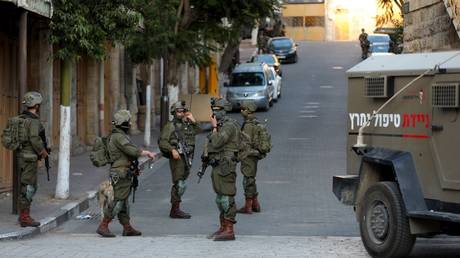
Standard news coverage of the November 2026 arrest of Agence France-Presse (AFP) video contributor Mohammad Ateeq treats the event as an isolated diplomatic friction point—a familiar sequence of nocturnal raid, unsubstantiated security allegation, and institutional condemnation. That framing misses the structural reality. When an army detains a stringer for a major international wire service without presenting public evidence, it is executing a repeatable operational doctrine that alters the economics, risk calculus, and supply chain of conflict journalism.
To evaluate the detention of Mohammad Ateeq and the preceding August 2026 arrest of fellow AFP contributor Mohammed Awad, analysts must strip away rhetorical statements from both military spokespeople and press advocacy groups. The underlying system operates through asymmetric legal authority, targeted disruption of local media infrastructure, and deliberate cost-shifting onto global newsrooms.
The Structural Anatomy of the Incident
Competitor reporting relies on chronological summary: Israeli Defense Forces (IDF) personnel entered Ateeq’s West Bank residence at night, blindfolded him, seized two mobile phones, discarded his AFP-issued video camera onto a balcony, denied him a winter coat, and transported him to an undisclosed facility. The IDF later stated Ateeq was suspected of ties to Hamas without releasing supporting documentation.
Deconstructing this sequence reveals three distinct operational mechanisms rather than a single policing action:
- Intelligence Harvesting Over Evidentiary Prosecution: Seizing two personal mobile phones while discarding professional broadcast equipment (the AFP camera) signals a specific collection priority. In counterinsurgency and territorial control operations, the primary asset on a local journalist is not their published footage—which is already public—but their metadata, contact graphs, encrypted messaging histories, and source networks. Leaving the camera behind avoids the immediate diplomatic liability of seizing foreign corporate property while still neutralizing the operator and extracting their communication web.
- Preemptive Incapacitation via Administrative Ambiguity: By withholding the detention location and declining to publish an indictment or evidentiary brief, the detaining authority shifts the burden of proof onto the employer and legal counsel. Under West Bank military jurisdiction, administrative detention frameworks allow security forces to hold suspects based on classified intelligence files unavailable to defense attorneys. The functional result is indefinite operational removal without the risk of an acquittal in an open evidentiary hearing.
- Patterned Attrition of Wire-Service Stringers: Ateeq’s arrest did not occur in a vacuum; it followed the August 2026 detention of Mohammed Awad near Ramallah under nearly identical allegations—suspected Hamas affiliation and advancing militant activity—similarly unaccompanied by public evidence. Two consecutive arrests of Palestinian stringers working for the same global wire agency within a ninety-day window establish a statistical pattern. Whether driven by targeted intelligence leads or broader security sweeps, the operational effect is the systematic degradation of AFP’s ground-level visual verification capacity in the territory.
The Asymmetric Risk Model of Stringer Journalism
Global news agencies like AFP, Reuters, and the Associated Press rely on a two-tier labor architecture to cover high-intensity conflict zones. Understanding this structure explains why local contributors bear disproportionate operational exposure compared to accredited foreign correspondents.
- Tier 1: Staff Correspondents and Foreign Bureau Personnel. These journalists typically hold foreign passports, operate out of centralized bureaus (such as Jerusalem or Tel Aviv), and carry formal press credentials issued by the Israeli Government Press Office (GPO). Detaining a Tier 1 staffer triggers immediate bilateral diplomatic intervention, consular access mandates, and high-visibility political blowback.
- Tier 2: Local Stringers and Freelance Contributors. These operators are permanent residents of the contested territory—in this case, Palestinian nationals living in West Bank cities and villages. They are contracted per assignment or on retainer to provide rapid-response video, photography, and local verification where Tier 1 staff cannot deploy quickly or safely.
This division of labor creates a severe structural vulnerability. Tier 2 contributors lack consular protection, remain subject to military law rather than Israeli civil law, and reside inside the exact operational theater they cover. Their families, homes, and physical freedom are continuously accessible to night-raid units.
For a military apparatus seeking to manage information flows during sustained operations in cities like Jenin and Nablus, targeting Tier 2 nodes offers an optimal risk-reward ratio. The state incurs minimal diplomatic friction compared to arresting a French or American citizen, yet achieves maximum disruption of the visual supply chain feeding international broadcasts.
The Information-Control Cost Function
Every military restriction on press access operates along an economic and strategic cost function. State security planners weigh the tactical benefit of information suppression against the reputational and diplomatic costs of international condemnation.
In the cases of Ateeq and Awad, the IDF’s public communications strategy—issuing a one-sentence allegation of "ties to Hamas" while refusing to elaborate—is calibrated to exploit a specific cognitive and political heuristic among international audiences. Within Western policy circles, the invocation of counterterrorism classification immediately introduces doubt. Even when press organizations like the Foreign Press Association (FPA) and AFP demand evidence or immediate release, the mere existence of an unverified security label fractures unified diplomatic pushback.
Consider the mechanics of this reputational shield:
- Verification Asymmetry: A news agency can verify a contributor's editorial output, timecards, and professional conduct, but it cannot conclusively prove a negative regarding an employee's private associations outside working hours.
- The Classified-Evidence Impasse: When a military spokesperson cites "suspected ties" without filing formal charges, external observers are locked out of the verification loop. The state avoids having its intelligence tested against judicial standards while simultaneously tainting the detainee's credibility in public discourse.
- Chilling Effects on Peer Networks: The primary audience for a nocturnal arrest is not the international press corps in Jerusalem; it is the remaining pool of local Palestinian freelancers across the West Bank. Observing a colleague blindfolded, stripped of communication devices, and held incommunicado for months—as seen in Awad’s ongoing detention since August—forces every active stringer to recalculate their personal survival threshold. Self-censorship becomes a rational economic decision when the downside risk is indefinite detention without trial.
Known Facts Versus Analytical Hypotheses
Rigorous intelligence and media-risk analysis requires separating verified operational data from structural inference. Treating hypotheses as established facts degrades editorial integrity and exposes news organizations to strategic miscalculation.
Verified Operational Facts:
- Israeli military forces arrested AFP video contributor Mohammad Ateeq during a night raid at his West Bank home in mid-November 2026.
- Soldiers confiscated two mobile phones belonging to Ateeq and left his AFP video camera on a balcony.
- The IDF confirmed the detention and stated Ateeq was suspected of ties to Hamas, declining to provide public evidence or disclose his detention facility.
- Both AFP and the Foreign Press Association issued formal demands requiring the Israeli authorities to present evidence or release Ateeq immediately.
- A second Palestinian AFP contributor, Mohammed Awad, was arrested by Israeli forces near Ramallah in August 2026 under similar unsubstantiated allegations of Hamas affiliation and remained in custody through November 2026.
Analytical Hypotheses (Requiring Further Verification):
- Hypothesis A (Targeted Counterintelligence): Israeli security services possessed specific signals intelligence (SIGINT) or human intelligence (HUMINT) linking Ateeq’s personal devices to militant networks, making the phone seizure a targeted forensic collection operation rather than a routine press intimidation tactic.
- Hypothesis B (Systemic Deterrence Doctrine): The sequential targeting of two AFP contributors within three months reflects a deliberate policy to sever international wire services from real-time Palestinian visual stringers, thereby reducing external scrutiny of West Bank military operations.
- Hypothesis C (Guilt by Proximity): In dense urban environments where militant factions operate alongside civil society, routine journalistic contact with local sources—a standard requirement of field reporting—is being legally reclassified by military prosecutors as operational support or organizational affiliation.
Operational Limitations of Institutional Pushback
News agencies and press freedom coalitions routinely respond to stringer detentions with public statements, editorial protests, and diplomatic appeals. In practice, these countermeasures suffer from severe structural limitations when confronting a military legal system operating under wartime or emergency mandates.
First, public demands for evidence lack enforcement mechanisms. When AFP states that failure to provide evidence should lead to immediate release, it is appealing to normative democratic standards that do not govern military administrative detention in the West Bank. Security forces face zero statutory penalty for ignoring media deadlines.
Second, legal representation faces an information blackout. Attorneys retained by international media organizations to represent detained stringers routinely encounter sealed intelligence files. A lawyer cannot cross-examine an anonymous intelligence assessment or challenge metadata they are prohibited from viewing.
Third, operational substitution is slow and expensive. Replacing an experienced local video journalist who understands terrain, local dialects, and safety protocols cannot be achieved overnight. Deploying Tier 1 foreign staff into volatile West Bank flashpoints increases insurance premiums, requires armored transport and security advisors, and often yields inferior ground access compared to a trusted local stringer.
Strategic Countermeasures for Newsroom Risk Management
International wire services and broadcast networks operating in high-friction military jurisdictions cannot rely on post-arrest press releases to protect their field infrastructure. Mitigating the operational vulnerabilities exposed by the Ateeq and Awad detentions requires immediate structural adjustments across digital security, legal protocols, and assignment workflows.
- Enforce Strict Device Segregation Protocols: Field contributors must maintain an absolute technical firewall between personal devices and agency-assigned communications hardware. Agencies should provision hardened, remotely wipeable field phones configured with ephemeral messaging timers and zero local storage of source contact directories. If a raid occurs, remote-wipe triggers executed by the bureau security desk can neutralize device harvesting before forensic extraction begins.
- Pre-Position Military-Court Legal Retainers: Waiting until an arrest occurs to coordinate legal defense forfeits critical hours during initial interrogation. Bureaus must maintain standing retainers with Israeli military-law specialists authorized to file immediate habeas corpus petitions and locate detainees within the prison system within twelve hours of a raid.
- Restructure Source-Contact Workflows: To counter the legal conflation of journalistic inquiry with militant association, bureaus should shift sensitive source communications away from local stringers toward encrypted, bureau-hosted intake channels managed by Tier 1 editors outside the military jurisdiction. Local stringers should function strictly as visual capture operators dispatched to verified coordinates rather than primary intelligence gatherers.
- Institute Automated Diplomatic Escalation Triggers: Rather than issuing isolated statements per arrest, wire services must pool leverage through coordinated editorial blackouts or unified diplomatic demarches routed directly through the foreign ministries of their headquarters nations—specifically Paris, London, and Washington—tying press access and stringer safety to bilateral diplomatic reviews.


