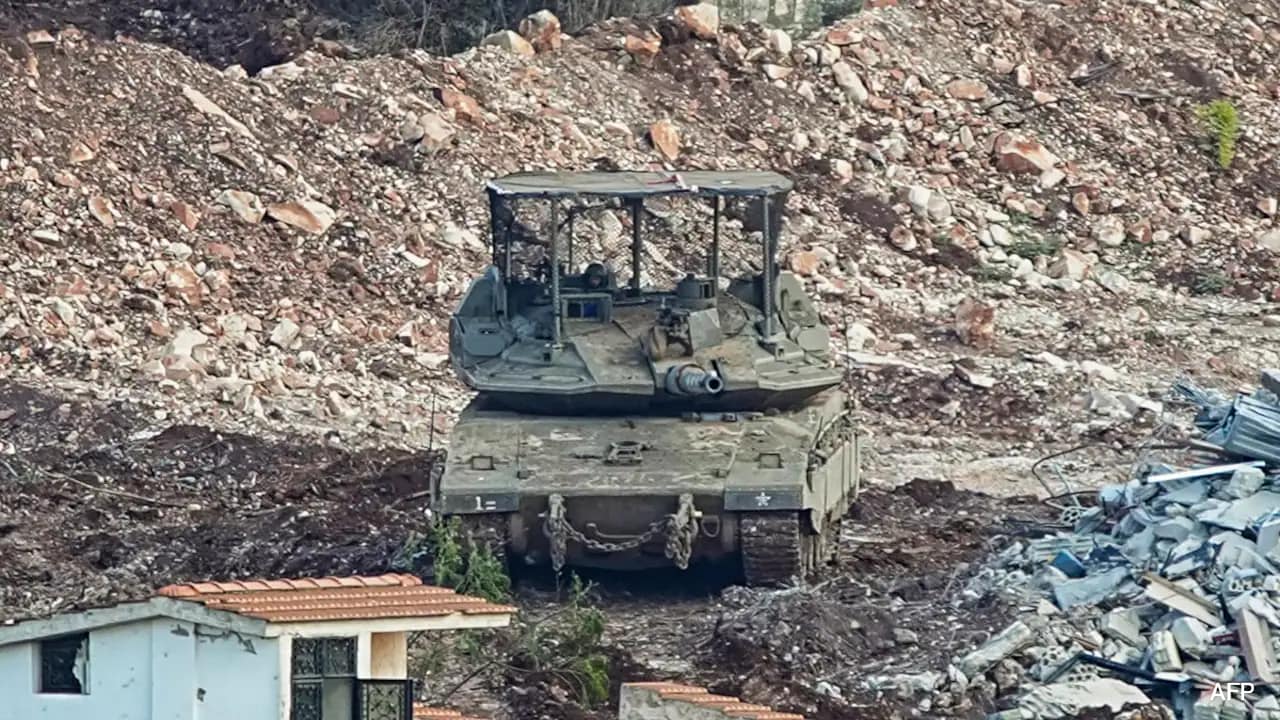
Military operations in central Gaza represent a distinct tactical phase designed to sever geographical continuity, dismantle entrenched subterranean infrastructure, and isolate command nodes from northern and southern sectors. When an armed force transitions from aerial bombardment or peripheral containment to a concentrated ground maneuver in a densely populated corridor—such as the Netzarim axis or the central refugee camps of Nuseirat, Bureij, and Maghazi—the primary objective is rarely simple territorial occupation. Instead, the maneuver functions as an operational wedge. By establishing physical control over lateral transit routes, an advancing military disrupts the logistical bloodstream of an asymmetric defender, forcing dispersed units to fight without centralized resupply, intelligence sharing, or coordinated reinforcement.
Understanding this operational shift requires stripping away surface-level reporting and examining the underlying mechanics of urban warfare, spatial control, and asymmetric attrition. Standard news coverage typically frames ground incursions in binary terms: territory gained versus casualties sustained. That framing obscures the actual strategic variables driving military decision-making in central Gaza.
The Spatial Architecture of Central Gaza
Central Gaza—historically defined by the Deir al-Balah governorate and the buffer zones south of Gaza City—serves as the geographic fulcrum of the entire coastal enclave. Unlike the northern sector, which houses the primary administrative centers, or the southern border at Rafah, which controls external smuggling and humanitarian transit, the central sector is the connective tissue.
Three structural features dictate military operations in this zone:
- The North-South Transit Arteries: Two primary roadways—Salah al-Din Road in the east and Al-Rashid Street along the coast—carry the overwhelming majority of vehicular and pedestrian movement. Controlling the intersections where east-west corridors meet these highways allows a conventional force to partition the battlefield into isolated pockets.
- High-Density Urban Enclaves: The built-up areas of Nuseirat, Bureij, and Maghazi feature narrow alleyways, multi-story concrete structures, and contiguous walls. In military doctrine, this is classified as complex urban terrain. It neutralizes long-range line-of-sight advantages, compresses engagement distances to mere meters, and provides infinite concealment for small-unit ambushes.
- Subterranean Logistics Networks: Beneath the surface grid lies a multi-tiered tunnel network engineered for troop movement, munitions storage, and command-and-control. In central Gaza, these tunnels act as the bypass mechanism when surface roads are interdicted. A ground operation that secures surface intersections without neutralizing the corresponding subterranean shafts achieves only temporary, superficial control.
The interaction between these three features creates a specific tactical dilemma. To sever Hamas's operational cohesion, the Israel Defense Forces (IDF) must hold the surface corridors. Yet holding static positions in narrow corridors exposes armored and infantry units to flanking attacks launched from adjacent high-density camps via tunnel exits.
The Three Pillars of Corridor Warfare
When a conventional military executes a ground operation in an asymmetric urban environment, its operational blueprint relies on three interdependent mechanisms: partitioning, clearing, and holding. Failure in any single pillar collapses the broader strategic objective.
1. Partitioning and Spatial Isolation
The initial phase of a central Gaza ground maneuver focuses on establishing physical barriers—often referred to as corridors or buffer zones—that bisect the territory. By driving armored columns from the eastern border fence to the Mediterranean coast, the advancing force splits the operational theater.
This partitioning imposes an immediate tax on the defending force:
- Communication Degradation: Courier networks and hardwired subterranean lines are severed, forcing defenders to rely on wireless communications that are vulnerable to electronic interception and triangulation.
- Logistical Fragmentation: Weapons caches, fuel reserves, and medical supplies located in the south can no longer be rotated to units operating in the north, and vice versa.
- Command Decoupling: Mid-level tactical commanders in the central camps are cut off from senior strategic leadership, compelling them to execute pre-delegated contingency plans rather than adapting dynamically to battlefield shifts.
2. Multi-Dimensional Clearing Operations
Once a corridor is established, operations shift to adjacent urban pockets to eliminate launch sites and subterranean access points. Standard reporting often describes these actions as "raids" or "sweeps," which understates the methodical engineering required.
Modern urban clearing relies on combined-arms integration at the squad and platoon level. Infantry units do not enter structures blindly; they operate alongside combat engineers, armored bulldozers, and persistent overhead drone surveillance. The sequence follows a strict risk-mitigation protocol:
- Intelligence Preparation: Unmanned aerial vehicles (UAVs) and signals intelligence map heat signatures, structural anomalies, and known tunnel shafts prior to troop movement.
- Structural Breaching: Combat engineers use explosive charges or heavy armored machinery to create entry points through walls rather than using doors or windows, which defenders routinely booby-trap with improvised explosive devices (IEDs).
- Subterranean Neutralization: When a shaft is identified, specialized engineering units map its trajectory using ground-penetrating radar or robotic sensors before collapsing the section with targeted explosives or specialized foams.
3. The Cost Function of Holding Terrain
The most resource-intensive phase of any ground operation is holding cleared territory. In conventional warfare, taking high ground secures an area. In asymmetric urban warfare, holding terrain creates stationary targets.
Every outpost, checkpoint, and logistics hub established inside central Gaza requires continuous perimeter security, supply convoys, and medical evacuation routes. Each supply convoy moving along a cleared corridor represents a predictable pattern that defenders can exploit using anti-tank guided missiles (ATGMs), rocket-propelled grenades (RPGs), or buried explosively formed penetrators (EFPs). Therefore, military planners must constantly calculate whether the strategic value of physical presence outweighs the attritional cost of maintaining static defensive lines.
Asymmetric Adaptation and Defender Mechanics
A rigorous analysis cannot treat the defending force as a passive target. Hamas's military wing operates on a decentralized cellular doctrine explicitly designed to survive conventional ground invasions. Understanding how the defender responds clarifies why ground operations in central Gaza unfold in cyclical waves rather than a single linear advance.
When armored columns enter a central district, defending units rarely attempt to hold a fixed front line; doing so would invite decisive destruction by superior artillery and air support. Instead, defenders execute a defense-in-depth strategy characterized by three behaviors:
- Tactical Submersion: Fighters withdraw into deep tunnel networks during the initial heavy bombardment and armored advance, conserving personnel and munitions while allowing the conventional force to expend precision-guided munitions on empty structures.
- Emergent Ambush: Once the advancing force transitions from rapid movement to static holding or routine patrolling, small fireteams of two to four fighters emerge from concealed shafts behind or adjacent to the forward line. They execute rapid hit-and-run strikes—firing tandem-charge warheads at armored vehicles or sniping exposed personnel—and retreat underground within seconds.
- Infrastructure Booby-Trapping: Multi-story buildings overlooking major intersections are rigged with remote-detonated explosives. Rather than defending a building with personnel, the defender turns the structure itself into a weapon, triggering collapses when infantry squads enter to establish observation posts.
This dynamic explains a recurring phenomenon in central Gaza: areas declared "cleared" during one phase of operations frequently experience renewed clashes weeks or months later. Unless the entire subterranean lattice is permanently destroyed or sealed, defenders can infiltrate back into cleared sectors from adjacent un-cleared zones.
The Civilian Friction Variable
In central Gaza, military geometry collides directly with extreme population density. Hundreds of thousands of displaced civilians inhabit the urban centers and temporary encampments surrounding Deir al-Balah and Nuseirat. From a purely operational standpoint, civilian presence introduces severe friction into every phase of military execution.
First, civilian density restricts firepower. Rules of engagement, international humanitarian law, and strategic necessity dictate that an advancing military cannot utilize unrestricted area-denial artillery in zones packed with non-combatants without incurring massive civilian casualties and severe diplomatic blowback. This forces ground troops to rely on close-quarters infantry maneuvers, which increases exposure and slows the operational tempo.
Second, humanitarian corridors and military logistics must share the exact same limited road network. Coordinating the movement of aid convoys, medical evacuations, and civilian displacements alongside armored patrols creates deconfliction bottlenecks. Every pause in military operations to allow civilian transit simultaneously grants defending fighters a window to reposition, replenish supplies, and lay new explosive traps.
Third, the blending of combatants with the civilian population degrades intelligence clarity. Without uniforms or fixed military bases, distinguishing between a displaced resident moving through an alley and an unarmed spotter relaying troop coordinates via a mobile phone becomes nearly impossible at the tactical level. This ambiguity increases cognitive load on soldiers and elevates the probability of miscalculation.
Distinguishing Known Facts from Analytical Hypotheses
When evaluating reports of ground operations in central Gaza, analysts must separate verifiable operational mechanics from speculative strategic outcomes.
Established Operational Facts:
- Establishing physical control over east-west corridors successfully interrupts surface transit and large-scale vehicular logistics between northern and southern Gaza.
- Combined-arms engineering operations can systematically locate and destroy near-surface tunnel infrastructure within a defined perimeter.
- High-density urban terrain negates many technological advantages of a modern military, forcing reliance on infantry-heavy clearing tactics that carry higher attritional risks.
Educated Strategic Hypotheses:
- Hypothesis on Command Degradation: While severing central corridors disrupts tactical coordination, it remains unverified whether this isolation permanently degrades the defender's overall operational capacity, given their reliance on pre-delegated cellular autonomy.
- Hypothesis on Deterrence vs. Radicalization: Operational doctrine assumes that dismantling physical infrastructure and eliminating fighters degrades the enemy's will and capability to fight. An alternative hypothesis suggests that prolonged ground operations in densely populated central camps generate a continuous recruitment pipeline, offsetting tactical attrition over a multi-year horizon.
- Hypothesis on Holding Sustainability: Sustaining a permanent military buffer zone through central Gaza may prove economically and manpower-prohibitive over time, potentially forcing a shift from continuous territorial occupation to intermittent, intelligence-driven raid operations.
Limitations of Ground Maneuver Strategy
No military strategy operates without structural constraints. Relying on ground incursions in central Gaza to achieve decisive strategic outcomes faces three hard limitations:
- The Diminishing Returns of Infrastructure Destruction: Destroying surface buildings removes elevated sniper positions, yet the resulting rubble creates an equally complex defensive environment. Rubble piles obstruct wheeled and tracked vehicles, channel advancing troops into predictable kill zones, and conceal tunnel entrances beneath tons of concrete debris.
- Manpower and Equipment Fatigue: High-intensity urban warfare degrades armored vehicles, drones, and infantry units at an accelerated rate. Dust, concrete particulates, and continuous operational tempo require heavy maintenance cycles and troop rotations, capping the duration an army can sustain peak offensive pressure.
- The Political-Military Disconnect: Tactical success on the ground—measured in destroyed tunnels, seized weapons, and eliminated combatants—does not automatically translate into a stable post-conflict governance structure. If a ground operation removes the existing administrative authority without establishing a viable replacement, the resulting power vacuum inevitably allows the original insurgent network to reconstitute its control over local distribution and security.
The Strategic Imperative for Corridor Operations
To prevent a central Gaza ground operation from degenerating into an endless cycle of costly attrition, military planners must transition from broad territorial clearing to precision corridor management. The optimal operational play is not attempting to occupy and police every alleyway within the central refugee camps, which maximizes troop exposure while yielding diminishing intelligence returns.
Instead, the strategic focus must remain locked on controlling the critical transit nodes and systematically mapping and severing the deep subterranean arteries crossing beneath those specific corridors. By maintaining a hardened, sensor-monitored buffer zone that restricts north-south movement—while executing rapid, intelligence-led surgical raids into adjacent urban pockets only when high-value targets or active launch sites are confirmed—an advancing force preserves combat power, minimizes static vulnerability, and maintains the operational initiative without absorbing the unsustainable costs of permanent urban occupation.