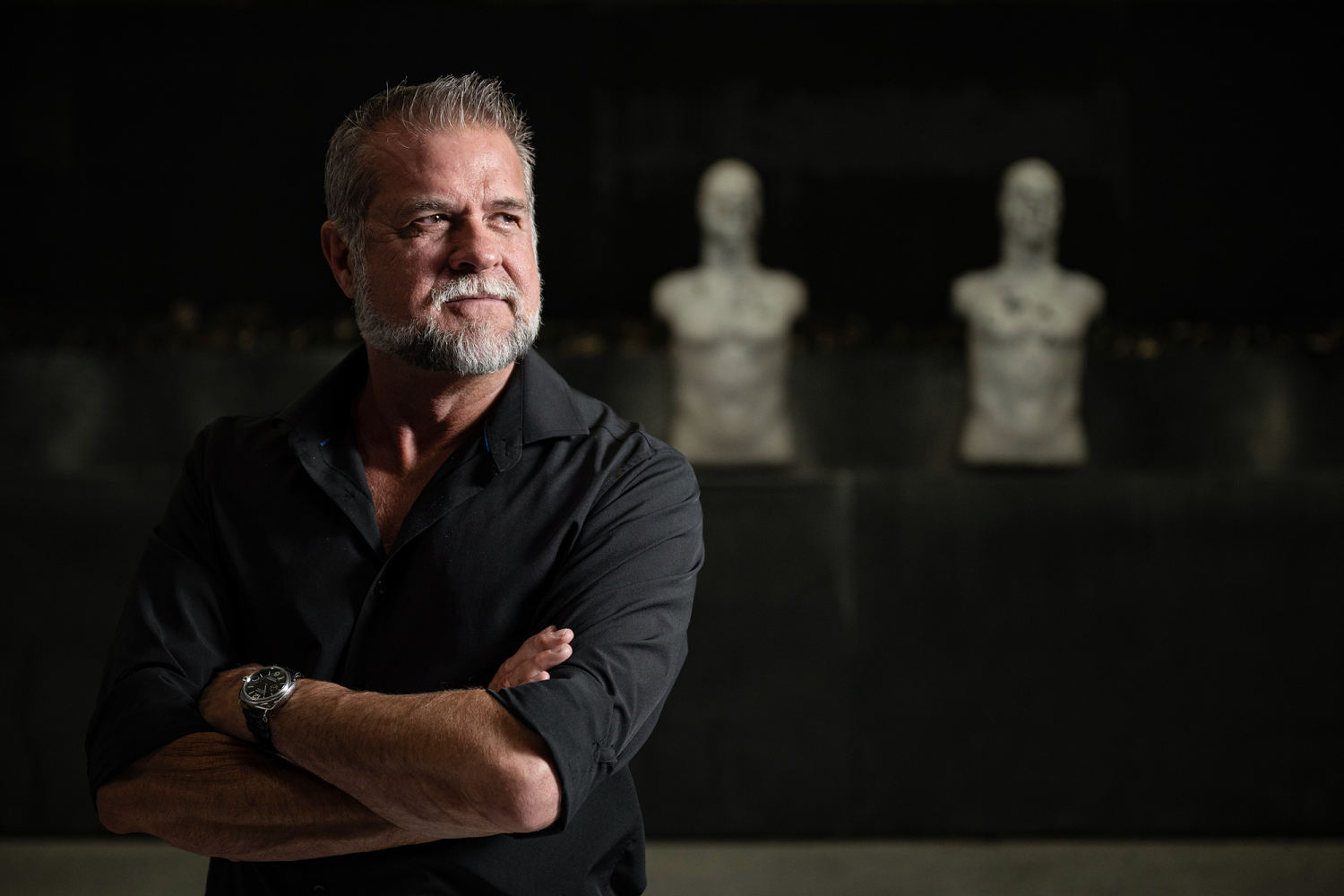
The air inside the election watch party did not smell like traditional politics. There was no scent of high-end catering or the crisp, anxious sweat of lifelong bureaucrats pacing on marble floors. Instead, it carried the faint, unmistakable aroma of stale coffee, worn leather, and the heavy breathing of people who spent their lives working in places most citizens pretend do not exist.
When the final precinct numbers flashed across the screens, a low roar shook the room.
Victor Marx had won.
To the national media looking at Colorado, it was a data point. A line item in a spreadsheet of primary election results. A ministry founder had secured the Republican nomination for governor, upsetting the established political order. But to the people standing in that room, the victory felt entirely different. It felt like a collision between two worlds that rarely speak the same language.
Political campaigns are usually built on a foundation of carefully curated resumes. Law degrees. Terms in the state legislature. Board memberships. Marx brought none of that. His background is a catalog of human suffering and intervention. As the founder of All Things Possible Ministries, his resume was written in the dark corners of the globe: rescuing orphans from war zones, working with victims of severe trauma, and counseling juvenile offenders.
This background creates a massive, unpredictable variable in a gubernatorial race.
Standard political analysis struggles to measure a candidate whose primary credential is raw, frontline empathy. For decades, Colorado voters have chosen leaders from a predictable mold. Leaders who speak in the measured tones of policy white papers and economic forecasts. Marx represents a radical departure from that lineage. He speaks with the blunt intensity of a man who has looked into the eyes of broken human beings and promised them help.
Consider the dynamic of a typical primary. Candidates usually spend millions of dollars telling voters who they are, using focus-grouped taglines and glossy mailers to construct an identity. Marx did not need to invent a persona. His life was already documented in raw video footage from missions in the Middle East and inner-city outreach programs. The voters who propelled him to victory were not responding to a policy platform; they were responding to a perceived authenticity that is vanishingly rare in modern public life.
But the real challenge lies elsewhere.
Winning a primary is an exercise in mobilizing the faithful. Winning a general election in a politically complex state like Colorado is a completely different beast. The state is a tapestry of shifting demographics—sprawling suburban counties filled with moderate independents, deeply conservative rural valleys, and progressive urban centers.
The question hanging over the upcoming election is no longer whether Marx can inspire a crowd. He can. The question is whether a leader forged in the crucible of international humanitarian relief can navigate the grueling, compromise-heavy machinery of state government.
Budget allocations are not rescue missions. Passing legislation requires a different kind of endurance than pulling children out of harm's way. It demands a willingness to sit in windowless rooms with political adversaries, horse-trading line items over highway funding, water rights, and education tax credits.
Critics waste no time pointing out this gap in experience. They argue that the emotional intensity required for ministry work does not translate to the cool-headed management of a multibillion-dollar state budget. They wonder aloud how a man used to calling the shots in a private organization will handle the relentless scrutiny and checks and balances of a hostile legislature.
Yet, his supporters view this lack of conventional political baggage as his greatest asset.
They look at the current state of American politics and see a system that is fundamentally broken, populated by career politicians who are experts at winning elections but miserable at solving problems. To them, Marx is not an amateur; he is an interventionist. They believe that a man who has confronted warlords and navigated international crises possesses a deeper, more resilient kind of strength than anyone who has merely climbed the ranks of a political party.
The campaign trail ahead will test both theories.
Every speech will be dissected. Every past statement scrutinized. The transition from faith-based leader to secular executive is a tightrope walk over a canyon of public skepticism. Marx will have to convince moderate voters that his deeply held faith is a motivation for universal service, not a blueprint for exclusive governance. He will need to show that his compassion extends to the mundane, everyday struggles of working-class Coloradans facing rising housing costs and economic uncertainty.
The regular rhythm of the political calendar moves forward, unconcerned with the grand narratives of outsiders. Debates will be scheduled. TV ads will flood the airwaves. The machinery of both major parties will grind into motion, attempting to define Victor Marx before he can define himself to the broader electorate.
Outside the venue, the Colorado night was quiet, the Rocky Mountains silhouetted against a sky untouched by the noise of the campaign. The celebration inside eventually quieted down, the crowds dispersing into the darkness, leaving behind empty chairs and discarded signs. The primary was over, a historical asterisk now locked into the record books.
The true test was just beginning, waiting out there in the vast, undecided expanse of the state.