The mainstream media is having another collective meltdown over a JPEG.
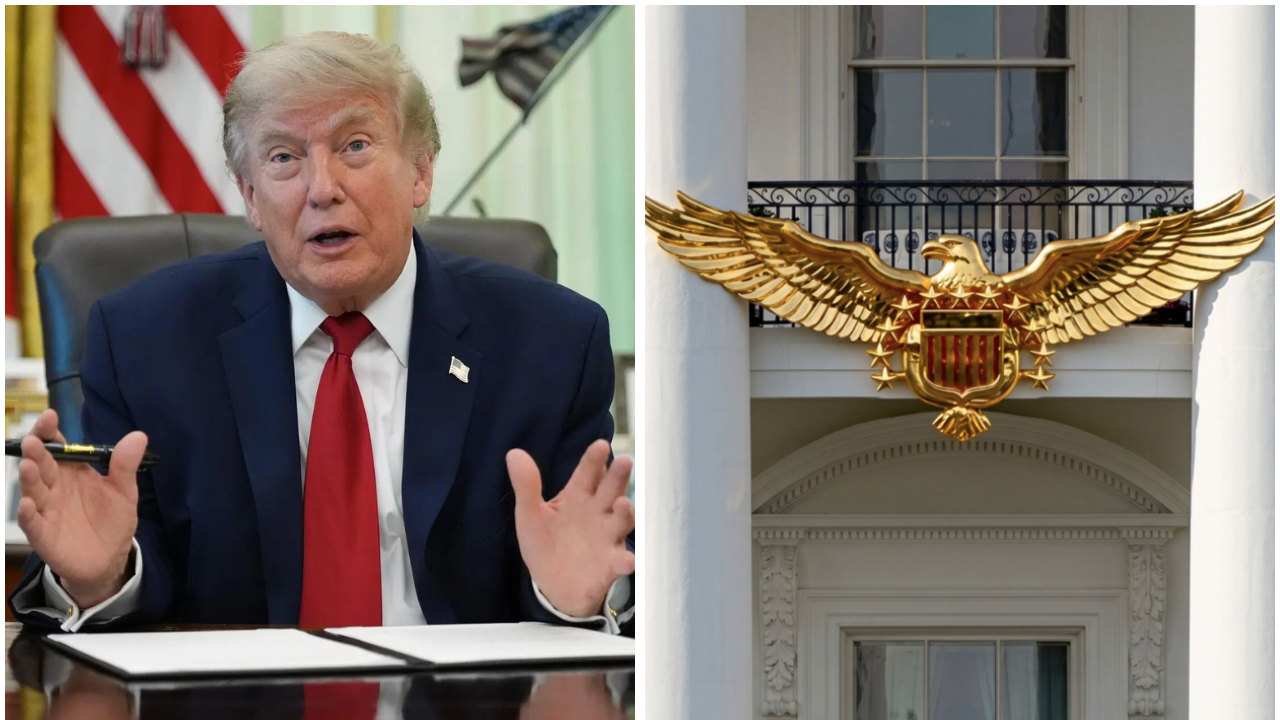
When Donald Trump shared a hyper-stylized, AI-generated image of a colossal bald eagle to mark the upcoming 250th anniversary of the United States, the commentary class rolled out the standard playbooks. The legacy outlets treated it as a joke, mockingly calling it a "golden gift" or analyzing the aesthetic flaws of generative tools. Tech journalists focused on the artifacts in the feathers. Political analysts decried the "debasement" of national iconography.
They are all staring at the finger while missing the moon.
The lazy consensus across the internet is that political AI images are meant to deceive, or that they fail because they look aggressively fake. This perspective is fundamentally wrong. It applies a 20th-century standard of photographic truth to a completely different medium: hyper-symbolic digital tribalism.
Trump’s giant AI eagle isn't a failure of aesthetics. It is a masterclass in modern attention economics.
The Aesthetic Trap of the Professional Class
For decades, political communication was governed by high-production gatekeepers. Campaigns spent millions on lighting, consulting, and staging to capture the perfect, authentic-looking photograph. The goal was realism.
AI completely scrambles this mechanism. The standard critique of the Trump eagle—and similar AI-generated political imagery—is that it looks uncanny, exaggerated, and obviously synthetic. Critics point to the unnatural sheen, the impossible proportions, and the dreamlike saturation as proof that the content is low-grade or foolish.
This critique misses the mechanics of how digital communities operate.
The blatant artificiality of the image is not a bug; it is the primary feature. When an image looks obviously generated by AI, it signals something specific to the viewer. It signals speed, defiance of traditional media standards, and a direct pipeline to the raw emotional core of a political movement. It operates as a visual meme, not a historical document.
I have spent years analyzing digital media pipelines and watching corporate brands tank millions of dollars trying to manufacture "authentic" viral moments through traditional PR firms. They fail because they try too hard to look real. Meanwhile, a poorly cropped, highly saturated AI image can capture the attention of millions in seconds.
The value is no longer in the craftsmanship of the image. The value is in the friction it generates.
The Economy of Outrage and the Irony Loop
To understand why this image succeeds, you have to look at the mechanics of the response.
- The Post: A highly provocative, visually loud AI image is shared.
- The Reaction: Critics share the image to mock its absurdity, its lack of realism, or its bizarre scale.
- The Amplification: By sharing the image to criticize it, opponents inadvertently push it into every algorithmic feed on earth.
- The Consolidation: The core base views the media’s outrage as confirmation that the image hit a nerve, reinforcing their loyalty.
Imagine a scenario where a political campaign releases a beautifully shot, historically accurate photograph of a bald eagle in the wild. It receives a few thousand likes, some polite nods, and disappears into the digital ether within two hours. It creates zero friction.
By contrast, the giant AI eagle creates a perpetual irony loop. The critic thinks they are winning by pointing out that an eagle cannot physically grow to the size of a skyscraper. The creator wins because the critic just spent three paragraphs talking about their brand.
This is the brutal reality of the attention economy: visibility trumps validity every single time.
Dismantling the Premier Premise of "Misinformation"
Go to any major search engine or look at public forums, and you will find people asking variations of the same anxious questions: How will AI images impact the election? How do we stop the spread of fake political images?
These questions are built on a flawed premise. They assume that the average person looking at a giant eagle hovering over a cityscape believes it is a real photograph taken by a real photographer.
It is a profound misunderstanding of audience psychology to assume the public is being hoodwinked by these images. The audience knows it is fake. They do not care.
In modern political discourse, images no longer function as evidence; they function as flags. When a supporter shares an AI image of a politician looking like a cinematic superhero or standing alongside a mythical creature, they are not declaring a factual truth. They are declaring an allegiance. They are saying, "This image represents how I feel, not what is."
When fact-checkers swoop in to solemnly report that a giant eagle did not actually descend upon Washington D.C., they do not look like defenders of truth. They look like pedants who do not understand a joke. This dynamic actively erodes trust in traditional media far faster than the AI image itself.
The Real Risk Nobody Admits
The true danger of AI in politics is not that people will believe the fake images. The danger is the reverse: the liar's dividend.
When the public becomes completely accustomed to a flood of surreal, hyper-saturated AI imagery, the baseline for what constitutes a "real photo" vanishes entirely. This gives political actors a permanent escape hatch. In a world where anything can be easily generated by an AI prompt, any real, damaging, or authentic piece of visual evidence can simply be dismissed as a deepfake.
- Traditional Media's Focus: "Look at this fake image they want you to believe!"
- The Actual Danger: "Look at this real image they can now claim is fake."
By focusing the conversation on the silliness of a giant eagle, critics are ignoring the structural rot beneath the surface. We are training the public to view all visual media as inherently untrustworthy.
Stop Trying to Fix the Output
The corporate tech sector is currently wasting billions of dollars attempting to solve this through technical watermarking and detection algorithms. Companies are rushing to implement cryptographic tracking to prove where an image originated.
This approach is doomed to fail. You cannot solve a cultural shift with a software patch.
As long as the algorithms that govern our digital lives reward high-friction, polarizing content, these images will dominate the landscape. The incentive structure favors the loud, the strange, and the immediate. An AI image can be concepted, generated, and deployed in under sixty seconds, allowing political actors to respond to breaking news cycles in real-time with tailored visual narratives. Traditional photography simply cannot compete with that velocity.
The legacy media's insistence on treating these moments as simple gaffes or signs of aesthetic decline is a coping mechanism. It allows them to pretend the old rules of media still apply. They don't. The aesthetic hierarchy has been completely leveled.
Stop analyzing the feathers on the eagle. Start analyzing the system that made you look at it.