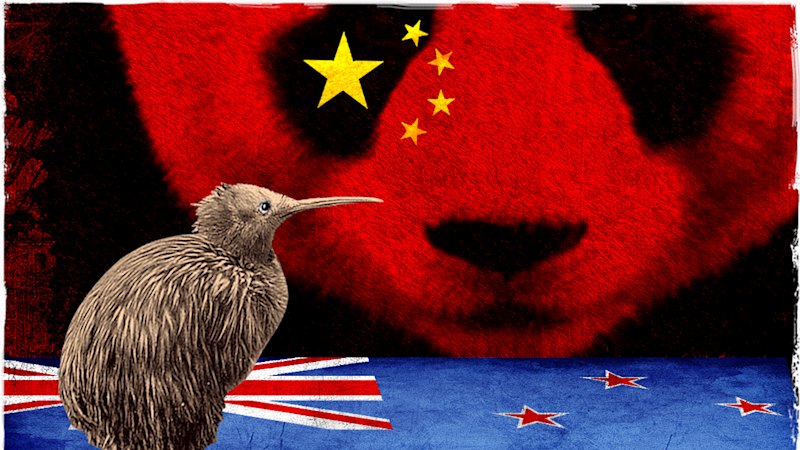
Australia and New Zealand currently exist in two vastly different political realities regarding their handling of sensitive geopolitical challenges, specifically concerning their relationship with Beijing. While Wellington has increasingly adopted a blunt, transparent approach, Canberra operates under a shroud of strategic ambiguity. This divergence is not accidental. It is the result of decades of contrasting economic dependencies and diverging national security calculations.
For years, the consensus in international relations circles held that small nations in the Pacific would inevitably align their rhetoric to suit the needs of dominant regional powers. New Zealand has shattered that assumption. By openly identifying state-sponsored interference and challenging trade coercion, Wellington has moved away from the quiet diplomacy that once defined its foreign policy. Australia, meanwhile, remains trapped in a posture of reactive silence.
The Economic Trap Defined
The primary driver of Canberra’s hesitation is a massive trade imbalance that dwarfs New Zealand’s exposure. Australia built an economic engine fueled by the export of iron ore, coal, and liquefied natural gas. For a decade, that engine ran almost exclusively on demand from the world’s second-largest economy.
When Canberra attempted to assert its sovereignty through inquiries into the origins of global health crises, the retaliation was swift. Trade barriers hit wine, barley, and timber sectors with surgical precision. The Australian government learned a bitter lesson. It discovered that economic integration functions as a form of non-kinetic warfare.
New Zealand faces a different equation. Its export profile relies heavily on dairy and primary produce—goods that are more difficult to substitute and easier to redirect to alternative markets. This lower level of concentrated exposure grants Wellington the breathing room to speak with more candor. It is not that New Zealand lacks a backbone; it is that its physical assets are simply less vulnerable to the specific type of economic punishment Australia endured.
The Intelligence Dilemma
The difference in rhetoric also stems from how these two nations manage their intelligence apparatus. Australia sits deep within the Five Eyes intelligence-sharing framework, frequently acting as the tip of the spear for Western strategic interests in the Indo-Pacific. This creates a feedback loop where Canberra feels compelled to maintain a rigid, disciplined line to align with its primary security partners.
Wellington has historically played a more nuanced hand. New Zealand intelligence agencies often prioritize regional stability and soft power over hard-nosed confrontation. There is an unspoken understanding among regional analysts that New Zealand serves a specific role within the intelligence community—one that allows for a degree of separation. While Washington often applies pressure on Wellington to tighten its security posture, New Zealand continues to prioritize its status as a bridge-builder, even when that stance irritates its closest allies.
The Myth of Diplomatic Maturity
Observers often mistake Canberra’s silence for sophistication and Wellington’s volume for recklessness. In reality, both strategies are born of necessity. Australia is trying to manage a slow-motion decoupling of its economy from a singular source of revenue, a process that requires extreme caution to avoid domestic instability. Every public statement from a cabinet minister is vetted through the lens of potential market disruption.
New Zealand, by contrast, operates from a position of relative invisibility. Because it is a smaller player with fewer naval assets and a less significant role in global defense, it can afford to be more idealistic. This is the luxury of the secondary state. Wellington can lean into human rights rhetoric and speak plainly about security concerns without the immediate fear that it will trigger a national recession.
Domestic Politics and The Visibility Gap
Voters in both nations respond to these signals in predictable ways. In Australia, the political class avoids the topic because it threatens the prosperity of key industrial states. The public conversation is sanitized, framed in the language of trade facilitation rather than ideological confrontation. If a voter asks about security risks, they are handed a briefing on supply chain resilience. It is a sterile, defensive posture.
In New Zealand, the discussion is front and center. The political environment allows for a wider range of voices to challenge the status quo without being labeled as extremists or economic saboteurs. This creates a healthier public discourse but also exposes the government to higher levels of international scrutiny.
The High Cost of Strategic Silence
Canberra’s refusal to address the elephant in the room has created a vacuum. When governments refuse to speak clearly, the private sector is forced to guess, and investors move their capital to safer, more predictable environments. The cost of this silence is not just diplomatic—it is financial. Australia is paying a premium for its ambiguity.
There is a growing realization that the era of quiet hedging is drawing to a close. As regional tensions rise, the ability to remain neutral becomes less of an asset and more of a liability. Australia is currently trapped between its need for reliable trade and its requirement for long-term security. The longer Canberra avoids naming the challenges it faces, the more its room to maneuver shrinks.
Moving Beyond the Binary
The current focus on whether a nation is "quiet" or "loud" misses the broader shift in how smaller powers are asserting themselves. The strategy for the future will not be found in following either the Australian or the New Zealand model. It will be found in a synthesis of the two.
Nations must develop the ability to secure their supply chains while maintaining the moral clarity to call out coercion. This is the missing piece of the puzzle. It requires a sophisticated integration of trade policy and national security, where economic diversification is treated as the primary defensive tool.
The silence from Canberra is not a sign of weakness, but it is certainly a sign of exhaustion. The government is tired of fighting battles that it cannot win through rhetoric alone. However, the lack of transparency is starting to fray public trust. If the electorate senses that their leaders are prioritizing the demands of foreign entities over national transparency, the political fallout will be severe.
Wellington’s approach carries its own risks. By speaking up, New Zealand invites scrutiny that it may not be prepared to handle. If the current trajectory of regional friction continues, the cost of being the "honest broker" may become prohibitively expensive.
The real challenge for both nations is not to choose between silence and speech. It is to build a foundation where they can do both. Until they develop the economic infrastructure to support their foreign policy ambitions, they will remain subject to the whims of larger actors. True independence is not found in a press release, nor is it found in a trade deal. It is found in the difficult, unglamorous work of diversifying trade and securing domestic industrial capabilities. The nations that succeed will be the ones that stop reacting to the agendas of others and start setting their own. There is no middle ground left.