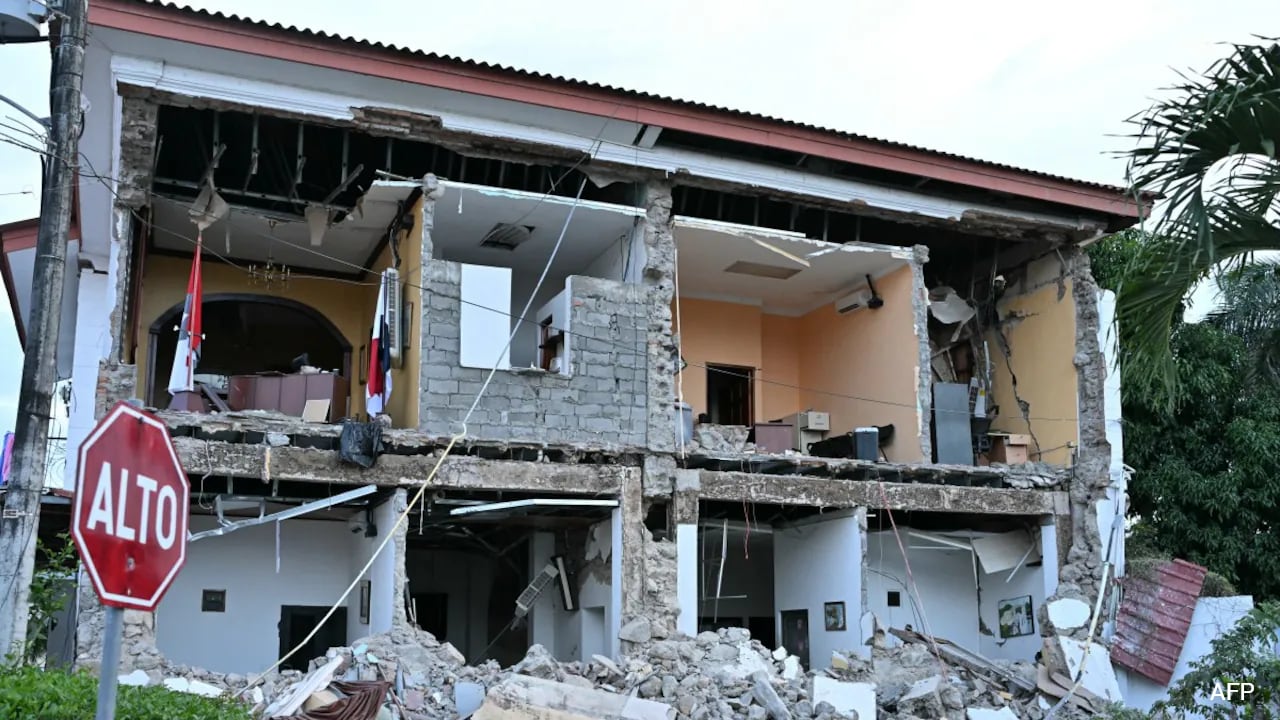
When a sovereign state issues a national disaster declaration following a seismic event, the immediate operational imperative shifts from routine governance to triage economics and infrastructure salvage. The declaration issued by the presidency of Panama following a high-magnitude earthquake is not merely an administrative checkbox. It is an emergency legislative instrument designed to bypass procedural procurement bottlenecks, unlock contingency credit facilities, and centralize command-and-control architectures across municipal and federal agencies. Analyzing this disaster response requires deconstructing how physical shocks propagate through dense supply chains, commercial shipping corridors, and fragile regional energy grids.
The Three Structural Vectors of Seismic Shock in Central America
Geological volatility in the Isthmus of Panama introduces systemic risks that extend far beyond direct structural damage to residential real estate. The impact profile of a major earthquake operates across three distinct vectors.
The first vector is maritime choke-point vulnerability. Panama anchors global commerce primarily through transshipment logistics and interoceanic transit. While the lock chambers of the Panama Canal are engineered to withstand substantial ground acceleration through monolithic concrete mass and hydraulic dampening designs, the ancillary infrastructure—such as electrical sub-stations, control houses, slope stability along the Culebra Cut, and water supply reservoirs—remains susceptible to displacement. A localized seismic shock disrupts not the concrete channel itself, but the telemetry, lockage scheduling systems, and regional water tables required to maintain draft levels. When transit capacity drops even marginally, global container shipping indices register immediate latency spikes.
The second vector is energy grid compartmentalization. Modern disaster management relies on uninterruptible power supply for hospital complexes, water treatment facilities, and emergency dispatch centers. Earthquakes frequently sever medium-voltage distribution lines through soil liquefaction and ground rupture. In a developing tropical economy, the redundancy of backup generation is often decentralized and under-maintained. Consequently, a seismic event triggers an immediate cascading failure where loss of grid power halts municipal water pumping stations, creating secondary public health crises within hours of the primary shock.
The third vector is supply chain liquidity and retail distribution disruption. Urban centers like Panama City depend on centralized warehousing and JIT distribution models. When a major disaster is declared, physical access roads, bridges, and highway overpasses undergo mandatory structural inspection protocols. These inspection delays freeze surface freight. Within forty-eight hours, urban retail nodes face inventory depletion, forcing state intervention to secure basic provisions and ration fuel reserves for emergency fleets.
The Cost Function of Emergency Declarations
Issuing a major disaster designation fundamentally alters the fiscal constraints of a national government. Under normal operating conditions, public expenditure requires legislative authorization, competitive bidding procedures, and multi-tiered auditing compliance. These safeguards, while essential for financial probity, introduce lethal delays during acute crises where resource mobilization velocity dictates casualty rates and economic recovery curves.
[Seismic Event]
      │
      ▼
[Immediate Grid & Transport Disruption]
      │
      ▼
[Executive Disaster Declaration Activated]
      ├──> Suspension of Standard Procurement Timelines
      ├──> Activation of Contingency Credit Lines (IMF / Multilateral)
      └──> Centralization of Emergency Logistics Command
By invoking emergency powers, the executive branch compresses procurement lead times from months to hours. This unlocks direct-award contracts for heavy debris removal equipment, structural engineering assessment teams, and emergency medical supplies. However, this administrative acceleration introduces its own cost function: moral hazard and procurement inflation. Without competitive bidding, suppliers possess localized pricing power, leading to elevated unit costs for essential goods. The fiscal efficiency of disaster response is thus inversely proportional to the speed of initial deployment.
Simultaneously, the declaration triggers clauses within international catastrophe bonds, sovereign insurance pools, and contingent credit lines established with multilateral development banks such as the Inter-American Development Bank. These financial instruments are engineered to provide immediate liquidity without forcing the state to liquidate long-term treasury reserves or slash public sector capital budgets. Yet, drawing on these facilities expands the national debt-to-GDP ratio, constraining post-recovery fiscal policy for subsequent fiscal quarters.
Logistics Bottlenecks and Civil Engineering Realities
Field operations following a seismic designation encounter severe friction points rooted in civil engineering constraints and bureaucratic inertia. The primary operational bottleneck is not the availability of international aid, but the "last-mile" distribution matrix.
When regional bridges are flagged for structural compromise, supply lines fracture. Heavy transport vehicles carrying portable water purification units, temporary shelter modules, and heavy extraction machinery cannot cross compromised spans. Engineers must deploy modular Bailey bridges or execute rapid shoring operations before heavy logistics can penetrate isolated interior provinces. This creates a temporal gap where urban centers receive prioritized relief while rural communities experience prolonged isolation.
Furthermore, communication infrastructure degradation hampers damage assessment accuracy. Cellular towers rely on backup battery arrays that typically exhaust their capacity within four to eight hours of commercial power loss. Without redundant satellite uplinks or mobile command nodes, emergency response headquarters operate with incomplete situational awareness. Decisions regarding resource allocation are made based on probabilistic extrapolations rather than empirical damage telemetry, leading to misallocated assets and logistical waste.
Strategic Operational Outlook
The efficacy of Panama's disaster response will ultimately be measured by the velocity of infrastructure restoration rather than the rhetorical force of the presidential declaration. Recovery trajectory depends on three operational variables: the speed at which intermodal shipping corridors resume full throughput capacity, the rigor of structural triage applied to commercial and residential assets before re-entry, and the containment of secondary fiscal inflation resulting from emergency procurement practices. Systems that successfully integrate private-sector logistics networks with state-directed command structures consistently compress recovery timelines and mitigate long-term structural decay.