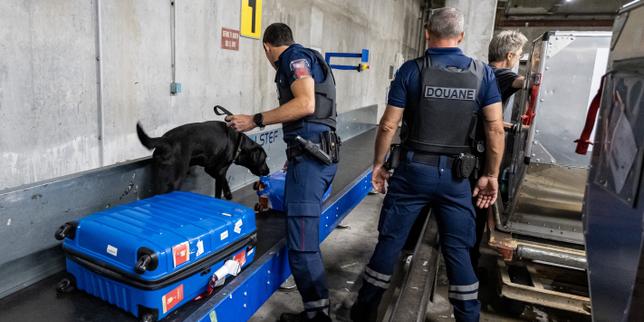
Governments love crying wolf when their own systemic failures catch up with them. Across European capitals, Tokyo, and London, police departments and customs agencies are throwing collective tantrums. Their headline complaint is simple: thousands of kilos of high-grade cannabis are flying out of Bangkok inside suitcases, shipping containers, and postal parcels, overwhelming border controls and turning airports into sieve-like transit points for illicit green gold.
The mainstream press obediently parrots the talking points. They paint Thailand’s liberalized green economy as a chaotic free-for-all that destabilizes international law and order. They mourn the supposed saturation of police services forced to intercept luggage carried by naive tourists and professional couriers. For a different look, consider: this related article.
It is a masterclass in bureaucratic deflection.
The entire narrative is built on a foundational lie. Thailand did not invent international drug trafficking by decriminalizing a plant. Western prohibition created a massive, unyielding vacuum of demand, paired with astronomical domestic black market prices, while refusing to modernize its own medieval drug codes. When you outlaw a commodity that millions of people want, while simultaneously permitting cheap, abundant, legal production in Southeast Asia, economic arbitrage is not an anomaly. It is a mathematical certainty. Further analysis on this matter has been provided by NPR.
The Myth of the Saturated Police Force
Let us address the weeping police commissioners claiming their services are stretched thin. When customs officials at Heathrow, Birmingham, or Suvarnabhumi Airport parade rows of seized suitcases filled with vacuum-sealed buds, they want you to view it as a war being won or a system at breaking point.
It is neither. It is statistical theater.
Border enforcement agencies operate on risk-profiling models and intelligence sharing. When Europol or national border forces flag a sudden spike in seizures—such as the massive multi-tonne interceptions reported across European hubs—they treat it like an existential threat. Yet, basic customs math tells a different story. Global drug flows operate at industrial volumes. A few hundred kilograms seized at an airport terminal represent a rounding error in the global supply chain.
Police forces are not saturated because of a sudden wave of Thai botanical ingenuity. They are stretched because they refuse to automate or reallocate resources intelligently, preferring instead to weaponize routine customs interceptions into budget-expansion requests. Every seized suitcase is a photo opportunity for a press release designed to secure more funding for anti-narcotics units that have spent fifty years failing to stem the flow of every other controlled substance on Earth.
To understand why this happens, look at the price differential. A gram of quality flower that costs a couple of dollars in a dispensary along Sukhumvit Road can command triple or quadruple that amount on the streets of London or Berlin. Prohibition creates artificial scarcity margins. When profit margins hit astronomical highs, human beings will carry suitcases through airport terminals, strap packages to their bodies, or enlist compromised airport employees. Blaming Bangkok for this dynamic is like blaming a bakery for leaving its front door unlocked while a starving crowd stands outside in the snow.
Economics 101 Always Wins Over Border Morality
Prohibitionists always make the same fundamental error. They assume that drawing a line on a map or passing a harsh penal code repeals the laws of supply and demand.
When Thailand removed cannabis from its narcotics list, it uncorked a localized production boom that met an aggressive, hyper-ventilating global market. Growers adapted quickly. Greenhouses sprouted across provinces, refining strains, optimizing yields, and driving down production costs. Meanwhile, countries like the United Kingdom, France, and Japan maintained archaic drug classifications that treat cannabis with the same legal hysteria reserved for synthetic opiates.
This regulatory mismatch guarantees smuggling. It is the exact same economic force that powered alcohol rum-running during American prohibition or modern prescription pill diversion. When legal frameworks are completely detached from market realities, the black market steps in to fill the gap.
The authorities wring their hands over foreign nationals—from Britain, India, China, and Russia—acting as mules or syndicates recruiting holidaymakers with promises of free flights in exchange for carrying heavy bags. Media reports breathlessly warn tourists that local dispensary purchases do not protect them from international trafficking laws.
Of course they do not. Everyone with a functioning brain cell knows that crossing an international border with a controlled substance is a felony. But treating the mule as the mastermind is lazy analysis. The mules are symptoms of a broken distribution model. As long as Western consumers want affordable, high-grade flower and Western governments refuse to legalize or realistically tax domestic production to meet that demand, air couriers will line up at check-in desks.
The Structural Incompetence of International Border Security
Consider the mechanics of how these networks operate, as detailed in recent Europol and customs briefings. Syndicates rely on last-minute ticket purchases, corrupt baggage handlers, and transit hubs with lax domestic transfer protocols.
When Belgian and French authorities bust a network routing drugs through Brussels Airport, or when British police charge dozens of individuals over multi-million-pound suitcase drops, the press treats it as a sophisticated transnational conspiracy requiring emergency multi-agency task forces.
Let us be entirely honest about what is actually happening. Modern commercial aviation is built for speed and volume, not deep-packet forensic examination of every piece of checked luggage. Airports move tens of millions of bags a day. Security infrastructure focuses primarily on explosives and high-threat mechanical hazards, not botanical contraband.
When criminal syndicates exploit these structural throughput realities, it exposes the obsolescence of traditional border controls. Police services designed in the mid-twentieth century cannot police a twenty-first-century globalized economy where supply chains are decentralized and communication is encrypted. Instead of admitting that border interdiction against small-batch organic contraband is a fool's errand with a tiny interception rate, agencies lean into panic narratives. They want the public to believe that a few dozen arrested tourists represent an unprecedented invasion.
Furthermore, the quality of the product being smuggled is frequently misunderstood. The media talks about elite medical cannabis, but a significant portion of the seized volume includes commercial-grade outdoor or greenhouse product that failed to clear domestic surplus hurdles in Thailand's saturated local market. When domestic prices plummet due to overproduction, cultivators and brokers look outward. If the domestic market cannot absorb the harvest, export channels—legal or illegal—become an economic necessity for struggling producers.
The Hypocrisy of Selective Outrage
The most glaring flaw in the current moral panic is the sheer hypocrisy of the destination countries.
Take the United Kingdom or various European Union states. Their domestic markets are flooded with locally grown or imported cannabis products anyway, much of it controlled by gray-market operators, domestic organized crime, or medical syndicates operating under convoluted licensing regimes. Medical cannabis prescriptions have surged across Europe, and decriminalization debates dominate local politics.
Yet, when shipments originate from Thailand, politicians and police chiefs throw on their Victorian-era moralizing capes. They demand that Bangkok crack down harder on its own agricultural sector, institute draconian export controls, and police departing passengers with totalitarian fervor.
Why? Because it shifts the blame. It allows Western governments to point a finger at Southeast Asia and say, "Look, our drug problems are entirely imported by foreign cartels and reckless Asian policies." It avoids the uncomfortable internal reckoning required to admit that prohibition has failed completely, that drug laws are economically illiterate, and that the war on drugs is an expensive, self-perpetuating jobs program for law enforcement.
If European and Asian nations truly wanted to crush the so-called Thai cannabis trafficking crisis, the solution is astonishingly simple and entirely within their control: reform their own drug laws, legalize and regulate adult-use markets, and undercut the black market price differential entirely. As long as a high-margin arbitrage gap exists, no amount of airport baggage scanning or tourist arrests will stop the flow.
What Actually Works
If you want to stop illegal drug export, stop making the product artificially scarce and expensive abroad. Economics always wins in the end. History teaches us that supply follows demand like water finding its level.
Instead, we get endless cycles of political theater. Prime ministers hold emergency committee meetings. Customs departments issue stern warnings in multiple languages. Tabloids splash mugshots of terrified twenty-somethings who thought a free holiday to Phuket sounded like a good career move.
The entire circus is a distraction from institutional inertia. The authorities know that prohibition is indefensible on scientific, economic, and social grounds. But admitting that means dismantling decades of bureaucratic infrastructure, defunding bloated police budgets, and acknowledging that millions of ordinary citizens refuse to treat a harmless plant as a moral failing.
Stop blaming Thailand for supplying a global market that your own obsolete laws created. The cannabis isn't the threat. The willful blindness of your border agencies is.


