Every local voter guide treats a municipal fire tax like an emotional loyalty test. Either you check "yes" to save lives, or you check "no" and secretly root for house fires. That framing is lazy, manipulative, and flat-out wrong.
If you have read the standard civic explainers on Pasadena Measure PFD, you have already absorbed the sanitized consensus. They lay out the ballot language. They repeat the city’s talking points about aging apparatus, rising emergency call volumes, and wildfire threats creeping down from the San Gabriel Mountains. They frame a permanent special parcel tax as a clean, responsible, neighborly investment in public safety.
They miss the entire financial reality of municipal budgeting.
After twenty years dissecting California municipal finance, watching city councils play shell games with general funds, and auditing public safety pension obligations, I have seen this exact playbook run from the Bay Area to the Inland Empire. Measure PFD is not a referendum on whether you love firefighters. It is a referendum on whether Pasadena’s political establishment gets to bypass its own budgeting failures by slapping a permanent, inflation-indexed lien onto your property tax bill.
The General Fund Shell Game Nobody Explains
To understand why Measure PFD exists, you have to understand how California cities actually spend money—not how they claim to spend it in glossy mailers.
A municipal General Fund is a single pot of discretionary revenue fed by property taxes, sales taxes, utility users taxes, and transient occupancy taxes. In a well-run charter city like Pasadena, core services—police, fire, libraries, parks—compete for slices of that pot based on priorities set by elected officials.
Here is the trick. When fixed costs inside that pot explode, city managers face an ugly choice. They can make hard cuts to pet projects, renegotiate unsustainable labor contracts, or streamline administrative bloat. Or they can walk into a council meeting, declare an infrastructure or staffing crisis in the most sympathetic department on the payroll, and ask voters for a dedicated parcel tax.
Money is fungible. Every dollar a special parcel tax sends to the Pasadena Fire Department frees up a general fund dollar that the City Council would have otherwise been forced to allocate to fire protection anyway.
Imagine a scenario where you give your teenager twenty dollars specifically for school lunches, so they take the twenty dollars they were already spending on lunch and buy concert tickets instead. Did your money buy lunch? Technically, yes. Did it actually subsidize concert tickets? Completely.
When voter guides tell you that Measure PFD funds fire engines, paramedic equipment, and station upgrades, they are telling you the legal accounting truth while hiding the economic reality. Without strict, airtight maintenance-of-effort requirements that tie general fund fire spending to a rising baseline—not a stagnant floor—a dedicated tax simply backfills the budget so politicians never have to say no to anything else.
Why Parcel Taxes Are the Most Regressive Tool in the Shed
Most voters hear "property-related tax" and assume the burden falls heaviest on wealthy estate owners in Linda Vista or Madison Heights. That assumption relies on a fundamental misunderstanding of how California tax law works.
Under Proposition 13, traditional ad valorem property taxes are tied to a property's assessed value. A sprawling mansion bought last year pays vastly more than a modest two-bedroom bungalow bought in 1998.
A special parcel tax throws fairness out the window. Because California’s Constitution—specifically the rules cemented by Proposition 13 and Proposition 218—prohibits local governments from levying new value-based property taxes without jumping through nearly impossible hoops, cities default to parcel taxes. These levies charge based on flat rates, lot square footage, or building square footage, completely divorced from property value or the owner's ability to pay.
Look at what that does on the ground in Pasadena:
- The Fixed-Income Trap: A retired widow living in a 1,400-square-foot home in Bungalow Heaven pays the exact same per-square-foot rate as a tech executive living in a newly renovated home of the same size that is worth three times as much.
- The Tenant Pass-Through: Renters often vote overwhelmingly for parcel taxes because they think landlords eat the cost. Basic real estate economics says otherwise. Multifamily property owners treat parcel taxes as an operating expense, baking them directly into lease renewals and base rents across Pasadena’s already brutal rental market.
- The Commercial Distortion: Retail storefronts and small local businesses operating out of large footprint buildings get hammered with massive annual tax bills regardless of whether they turned a profit or lost money that year.
As the California Legislative Analyst’s Office has repeatedly noted in its analyses of local tax measures, parcel taxes lack the progressivity of income taxes and even the value-sensitivity of standard property taxes. They are a blunt instrument designed for administrative convenience, not economic equity.
The Structural Elephant in the Firehouse
Let’s address the actual cost drivers. When you ask why Pasadena’s fire budget is strained, the official narrative points to call volume and equipment prices. Yes, fire apparatus costs have spiked due to supply chain bottlenecks and specialized manufacturing. Yes, emergency medical responses make up the vast majority of modern fire department calls.
What the voter guides conveniently bury is the compounding weight of unfunded pension liabilities and retiree healthcare costs administered through CalPERS.
Over the past decade, California municipalities have watched their required employer contribution rates to CalPERS climb relentlessly. Why? Because for years, pension boards relied on overly optimistic investment return assumptions while cities granted retroactive benefit enhancements during boom times. When market returns fell short, the bill landed squarely on local general funds.
| Financial Reality | The Official Measure PFD Narrative | The Unvarnished Fiscal Truth |
|---|---|---|
| Primary Cost Driver | Aging fire engines, wildfire threats, and rising EMS call volume. | Escalating CalPERS pension obligations, overtime backfills, and General Fund crowding. |
| Tax Mechanism | A modest per-square-foot fee to protect local neighborhoods. | A regressive parcel tax detached from property value and ability to pay. |
| Duration | Ongoing support for continuous public safety needs. | Permanent taxation with no sunset clause, removing future voter leverage. |
| Accountability | Independent citizen oversight committee and annual audits. | Oversight committees only verify where checks were written, not whether total spending is efficient. |
Look at that fourth row. Citizen oversight committees are the political equivalent of a decorative padlock on a screen door. I have reviewed dozens of municipal oversight reports across Southern California. These committees are almost always handpicked by the very council members who put the tax on the ballot. Their legal mandate is strictly limited to confirming that the money went into the designated fund—not evaluating whether the city wasted the money, inflated overtime budgets, or diverted baseline general fund dollars elsewhere.
Dismantling the Common Voter Myths
If you search online for answers about Measure PFD, you will run into the same recycled questions designed to nudge undecided voters toward "yes." Let’s strip the spin off the most common ones.
Does voting no mean cutting firefighter jobs?
No. That is a classic municipal scare tactic known in public administration circles as the "Washington Monument Syndrome"—threatening to shut down the most visible, beloved public asset first whenever budgets get tight. Pasadena is not a distressed rural county on the brink of insolvency. It possesses a massive, diverse tax base anchored by major institutions, retail corridors, and high-value real estate. If Measure PFD fails, the City Council does not lay off paramedics; it is forced to prioritize fire safety over lower-priority administrative spending, consultant contracts, and non-essential capital projects.
Don't we need this specifically because of wildfire danger?
Wildfire preparedness is a genuine, lethal threat for communities bordering the San Gabriel foothills. Nobody serious disputes that. However, throwing unrestricted operational parcel tax dollars at a municipal fire department does not automatically clear brush in the Wildland-Urban Interface, harden private roofs, or modernize regional mutual-aid dispatch. Wildfire mitigation requires targeted capital grants, strict defensible-space enforcement, and regional coordination—not an open-ended operational tax that can be absorbed by standard payroll inflation within five years.
Isn't an inflation escalator necessary so the tax keeps up with costs?
Built-in inflation escalators—usually tied to the Consumer Price Index—are a gift to politicians and a curse to taxpayers. When a tax automatically increases every single year without a vote, elected officials never have to justify their performance to the public again. Worse, tying local taxes to regional CPI means your tax bill surges precisely when inflation is already crushing your grocery, utility, and insurance bills.
The Contrarian Case: Where the Critics Get It Wrong
To be intellectually honest, the anti-tax crowd gets plenty wrong, too. Hardline fiscal hawks often argue that municipal fire departments are bloated relics that should be gutted or privatized. That view is detached from reality.
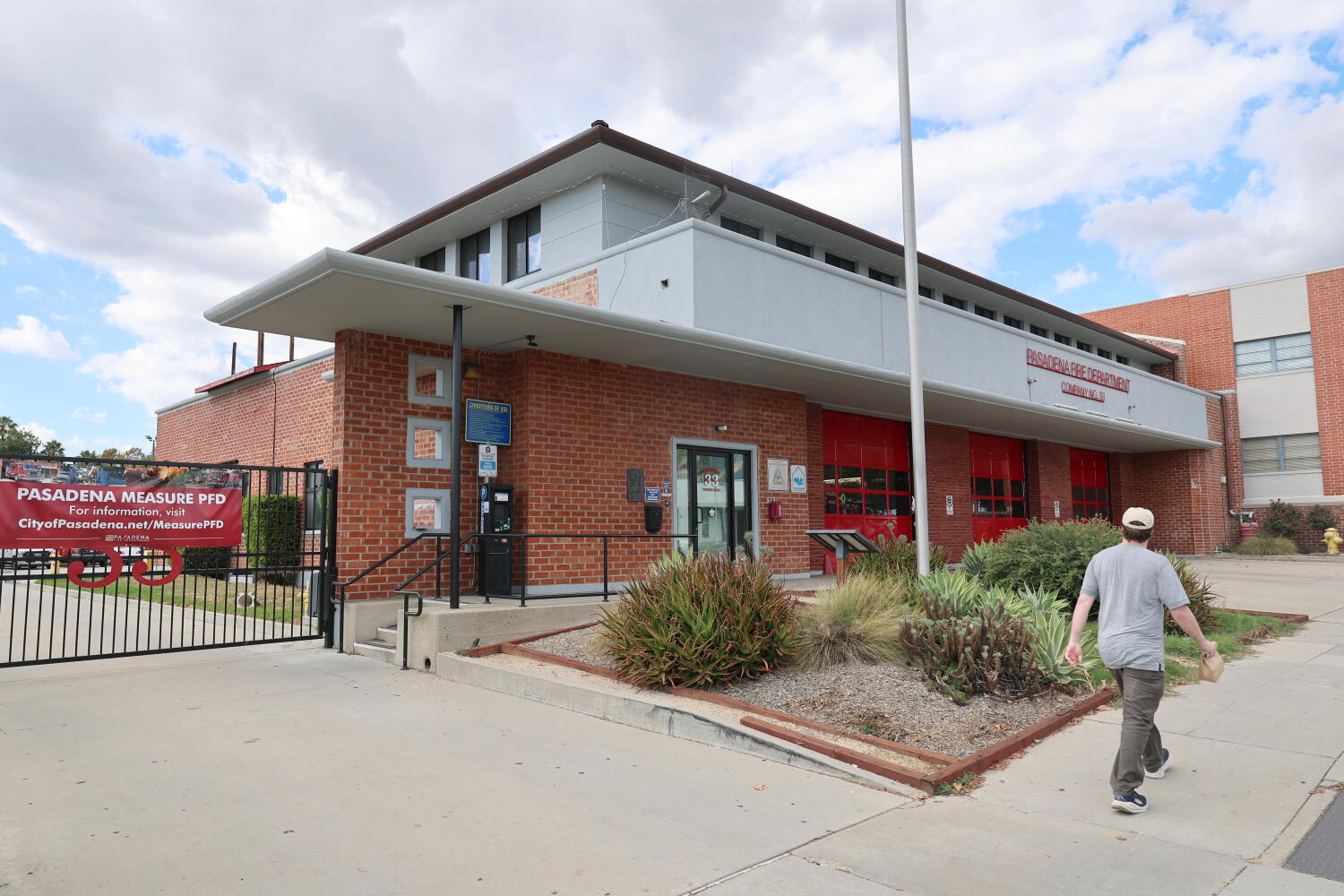
Pasadena’s geography—dense historic neighborhoods, major freeway corridors, high-rise commercial districts, and steep hillside terrain—demands a highly trained, rapid-response municipal fire and paramedic force. You cannot outsource emergency medical response or structural firefighting to the lowest bidder without catastrophic consequences. Furthermore, aging fire stations with outdated seismic retrofits and inadequate decontamination zones for carcinogens pose real, documented health hazards to first responders.
The problem is not the mission of the Pasadena Fire Department. The problem is the lazy governance model that treats taxpayers like an ATM every time existing revenue streams get tight.
What Real Fiscal Accountability Looks Like
If Pasadena’s leadership actually wanted to earn taxpayer trust instead of banking on voter guilt, they would have written a radically different measure—or fixed the budget without one. Here is what genuine public safety funding looks like when politicians aren't hiding behind emergency sirens:
- Mandatory Sunset Clauses: Every local parcel tax should expire automatically after seven to ten years. If the city proves it spent the money wisely and the need persists, voters will happily renew it. Permanent taxes breed permanent complacency.
- Strict Maintenance-of-Effort Floors: The ballot language should legally prohibit the city from reducing the percentage of General Fund revenue dedicated to the fire department below its five-year historical average. Without this, a parcel tax is just a slush fund subsidy.
- Capital-Only Restrictions: If fire stations need seismic upgrades and new engines need to be purchased, issue a transparent, fixed-term general obligation bond specifically for hard capital assets. Never use a permanent parcel tax to pay ongoing salaries and pension liabilities.
- Zero-Based Departmental Audits: Before asking residents for a single extra dime, conduct a public, third-party operational audit of citywide administrative overhead, overtime scheduling practices, and non-core departmental budgets.
Passing Measure PFD does not solve Pasadena’s structural fiscal pressures; it merely postpones the reckoning while permanently raising the cost of living for homeowners, renters, and small businesses. Until voters start rejecting blank-check parcel taxes and demanding actual budget discipline from City Hall, every election cycle will bring another emotional crisis and another permanent lien on your front door.