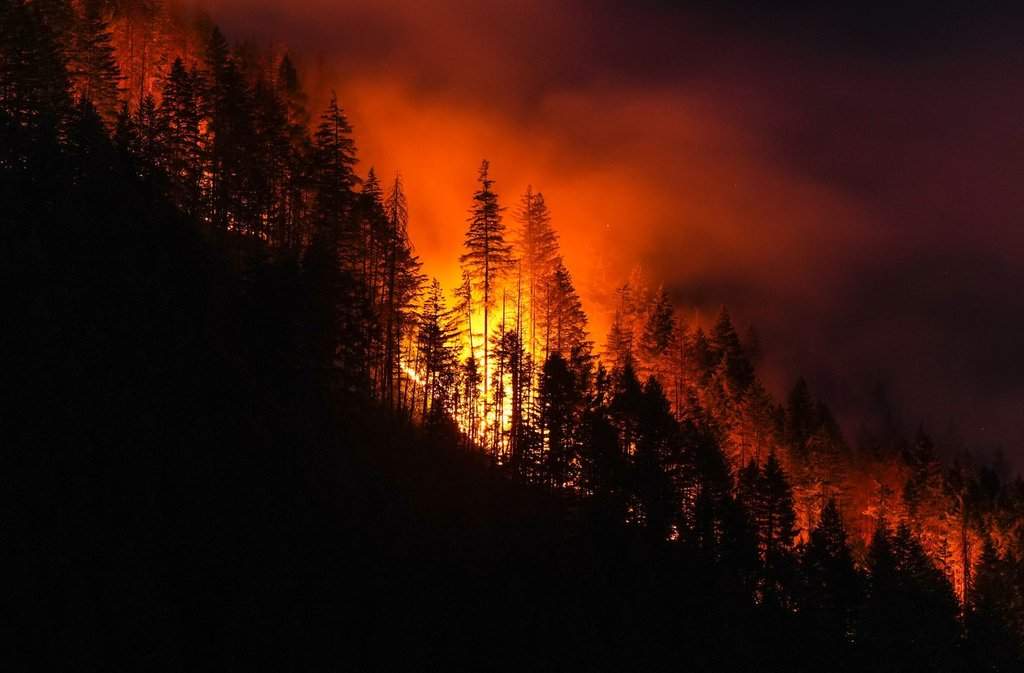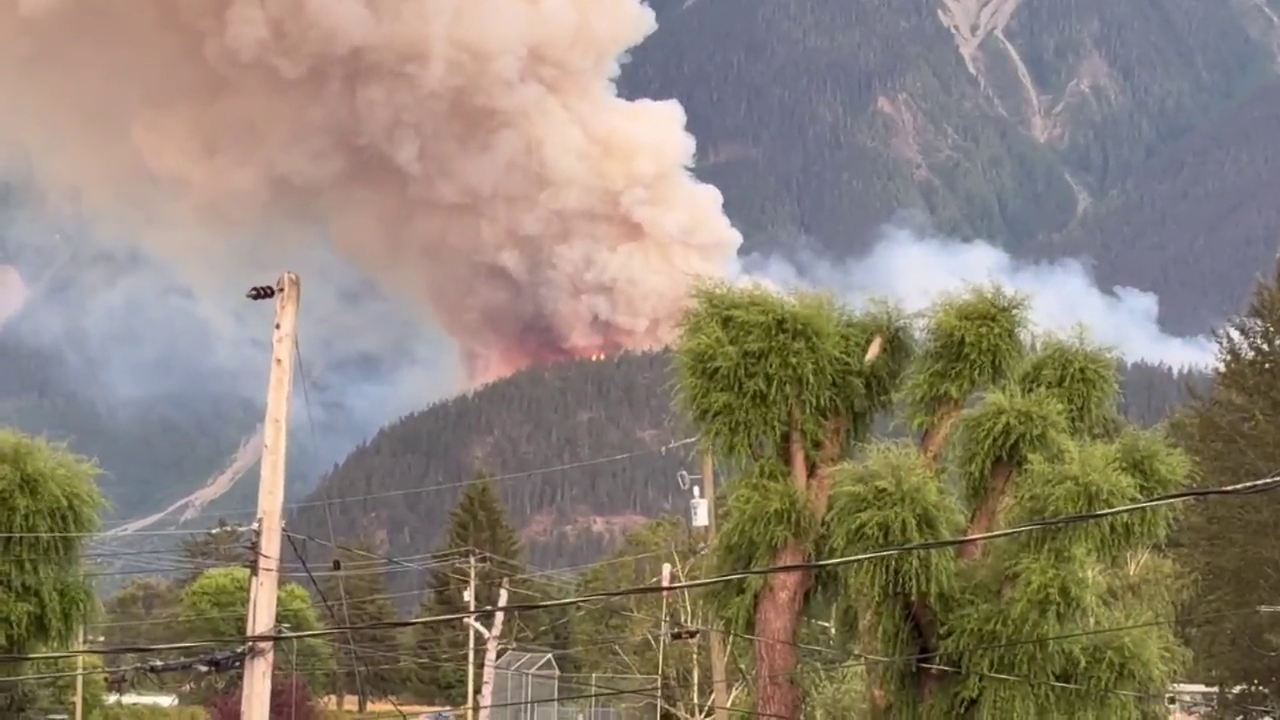
On the evening of July 15, 2026, the Signal Hill wildfire ignited just south of the Village of Pemberton. Within hours, a plume of dense, copper-colored smoke rose over the valley, prompting emergency officials to place parts of the municipality and the Squamish-Lillooet Regional District under a sudden evacuation alert. One Mile Lake Park was shut down entirely under an immediate evacuation order.
This is not just another seasonal blaze. It is a stark warning of a structural crisis that British Columbia’s mountain communities can no longer afford to ignore.
A Fire on the Ridge
The Signal Hill fire started in heavy timber approximately five kilometers south of Highway 99. Fueled by dry valley winds and dense forest floors, the fire quickly escalated to Rank 2 and Rank 3 behavior. This means firefighters faced a combination of low-vigor ground fire and vigorous candle-like torching of individual trees.
For the residents of Pemberton, the sight of smoke clinging to the peaks of the Coast Mountains is an all-too-familiar hazard. The immediate response was swift. The BC Wildfire Service dispatched ground crews, supported by helicopters and a fleet of air tankers. Water skimmers began roaring across nearby Green Lake near Whistler, scooping up thousands of liters of water to drop on the advancing line.
Yet, as emergency crews worked through the night to build containment lines, the underlying vulnerability of the region became impossible to ignore. The fire itself was relatively small—initially estimated at 10 hectares—but its location near critical infrastructure and a sole transportation corridor turned a routine fire into a high-stakes regional emergency.
The Anatomy of a Valley Bottleneck
To understand why a 10-hectare fire can throw an entire region into a panic, one must understand the unique geography of the Pemberton Valley. Hemmed in by towering mountain ranges, the community sits in a deep, flat-bottomed trough.
This topography creates a dangerous wind-tunnel effect. During hot summer days, air heats up rapidly on the valley floor and rushes up the slopes, creating updrafts that can carry embers kilometers ahead of a fire front. At night, the process reverses. Cold air drains down from the glaciers, pushing winds back down the valley.
This diurnal wind shift makes fire behavior in Pemberton highly unpredictable. For crews on the ground, a flank that was completely safe at 4 p.m. can suddenly become the active head of the fire by midnight.
Furthermore, Pemberton relies almost entirely on Highway 99 for vehicle access. It is a spectacular mountain road, but it is also a fragile lifeline. A major fire flanking the highway does not just threaten homes; it threatens to cut off the only realistic evacuation route for thousands of residents and tourists.
If Highway 99 closes, the only remaining options are forest service roads that lead high into the backcountry, routes that are completely impassable for standard passenger vehicles.
Human Ignition in a Tinderbox
Officials suspect the Signal Hill wildfire was human-caused. While investigators have not yet pinpointed the exact source of ignition, the reality of human-caused fires in the Whistler-Pemberton corridor is a growing source of frustration for local authorities.
As summer temperatures rise, the surrounding forests become incredibly dry. Decades of aggressive fire suppression have also left a legacy of heavy fuel loads on the forest floor. When a spark lands in these conditions, it does not smolder; it explodes.
In a region that draws hundreds of thousands of recreational visitors every summer, the margin for error is razor-thin. A single discarded cigarette, a poorly extinguished campfire, or even a hot exhaust pipe parking over dry grass can trigger an evacuation alert.
Local wildfire strategies have historically focused on rapid suppression—putting fires out as quickly as possible. But this approach has built up a massive deficit of natural, low-intensity burns that would normally clear out underbrush. We are left with forests that are structurally primed for catastrophic canopy fires.
Where Wilderness Meets the Asphalt
The evacuation alert highlights the growing problem of the Wildland-Urban Interface, the zone where human developments directly touch undeveloped wildlands. In Pemberton, this boundary is incredibly messy. Houses are nestled directly into the coniferous forests, and parks like One Mile Lake sit right alongside the town center.
Managing this interface requires a shift from emergency response to active forest management. The province has funded fuel-mitigation projects, which involve thinning dense stands of trees, removing lower branches, and clearing forest debris near homes.
But these projects are expensive, labor-intensive, and slow to implement. They also face pushback from residents who value the dense forest canopy for privacy and aesthetics.
Until communities accept that the surrounding forests must be managed more aggressively—including the use of planned, prescribed burns to reduce fuel—the risk of sudden evacuations will continue to rise.
The Reality of Mountain Prep
While fire crews work the line, the burden of survival falls on the residents. An evacuation alert is a psychological test. It forces families to decide what is truly irreplaceable.
Emergency planners urge residents to prepare a grab-and-go kit. Inside should be government-issued identification, essential medications, financial documents, and supplies for pets.
In a mountain valley, there is no room for complacency. When an evacuation order is finally issued, there may only be minutes to act. The gridlock that can occur on narrow mountain roads during an emergency is a nightmare scenario for local search and rescue teams.
Pemberton has avoided a catastrophic urban firestorm so far, but the margin of safety is shrinking with every passing dry season. The Signal Hill fire is a reminder that in the mountain west, the threat is no longer distant. It is right at the edge of town.