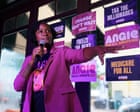
National Democrats didn't lose Florida in November 2026 because the state is permanently red. They lost because they refused to fund the race until it was already over.
Look at the numbers from November 3, 2026. Across the country, voters delivered a massive blue wave that reshaped Congress and flipped seats in states Republicans thought were safe. Even Florida Governor Ron DeSantis called the national midterm outcome "the political equivalent of a meteor strike" while boasting that Florida managed to "hold the line". Yet that line barely held. Democratic Senate nominee Angie Nixon lost to Republican incumbent Ashley Moody by less than three percentage points, and Democratic gubernatorial nominee David Jolly fell short by just 1.3 points. According to Nixon and political analysts at outlets like The Guardian and Salon, those razor-thin margins prove Florida was winnable—if only the national party had shown up with real money. Recently making news lately: Anatomy of an Autumn Cold Snap Across the United Kingdom.
Why National Democrats Abandoned Florida Early
When Angie Nixon pulled off an upset victory in Florida's August 2026 U.S. Senate primary, party leaders in Washington treated it like an inconvenience rather than an opening. Nixon, a progressive state lawmaker and democratic socialist, ran on bold economic populism instead of standard consultant-approved talking points.
The Democratic Senatorial Campaign Committee (DSCC) essentially wrote off the state in advance. Instead of pouring resources into the third most populous state in the country, national strategists funneled cash into traditional battlegrounds. That strategy netted big wins elsewhere, including massive gains in the U.S. House and surprising upsets in states like Iowa. Still, leaving nearly 24 million Floridians on the table had predictable consequences. Additional information on this are explored by The Guardian.
Running a statewide campaign in Florida is brutally expensive. You aren't buying ads in one or two media markets. You have to cover ten distinct media markets stretching from Pensacola down to Miami, competing for airtime in one of the priciest television environments in America. Without heavy backing from Washington, Nixon's campaign couldn't match Republican spending.
"I would say we were out-fundraised and Florida's a very big state," Nixon told The Guardian after the election. It's a blunt assessment, and the math backs her up. When you get outspent on television in a state of 24 million people, your opponent gets to define you before voters ever hear your actual platform.
The Advertising Gap and Tax Attacks
If you've ever worked on a statewide campaign, you know there is nothing worse than watching attack ads run unanswered for weeks. That is exactly what happened to Nixon in September and October 2026.
Republican groups hammered Nixon with ads claiming she wanted to raise taxes on working families. Nixon noted in her post-election interviews that many traditional GOP attacks didn't stick, yet the tax messaging landed because voters weren't hearing an alternative story. By the time her campaign scraped together enough money to air ads explaining her economic agenda, millions of voters had already formed an opinion.
Here is what critics of the DSCC's approach point out:
- Late money costs more. Buying ad time in October costs significantly more per rating point than reserving inventory in August, meaning late-arriving funds buy far less reach.
- Unanswered attacks harden quickly. Once a voter hears a message five times without rebuttal, changing their mind requires three times the ad frequency.
- Down-ballot races suffer. When top-of-ticket candidates lack TV saturation, local turnout drops in precincts that rely on statewide enthusiasm to bring occasional voters to the polls.
Of course, national party defenders argue they had to make tough triage choices with finite resources. Investing heavily in states where Democrats actually flipped seats helped secure majorities and block President Donald Trump's legislative agenda. From a pure spreadsheet perspective, spending $30 million in Florida to maybe win looked riskier than spending $10 million each in three smaller states where polls showed tighter initial margins.
That argument falls apart when you look at the final scoreboard. Losing a Senate seat by under three points and a governor's mansion by 1.3 points isn't a blowout. It is a margin of error.
How Florida Voting Laws Changed the Math
Money wasn't the only obstacle standing between Angie Nixon and the U.S. Senate. Any honest look at the 2026 Florida midterms has to account for structural changes to how Floridians cast their ballots.
Over successive legislative sessions, Governor Ron DeSantis and the Republican-controlled legislature overhauled Florida's election rules, tightening restrictions around vote-by-mail ballots and voter registration drives. For years, Democrats relied heavily on mail-in voting to bank early turnout before Election Day. Under the updated rules, voters had to re-request mail ballots much more frequently rather than staying on permanent mail-in lists.
Nixon pointed directly to these changes when explaining why turnout fell short in key Democratic precincts. "They made it hard for that to happen and so we saw a huge drop," she explained to The Guardian. "Thousands upon thousands of folks who would normally get VBMs did not get them because they didn't know about the new law."
When you combine stricter mail-ballot rules with a massive voter registration gap, Democrats start every election cycle climbing uphill. You can't simply rely on national anti-Trump sentiment to carry you across the finish line if tens of thousands of reliable voters discover in October that their mail ballot isn't coming.
Asked whether she believes she would have defeated Ashley Moody on a level playing field with adequate funding and fair ballot access, Nixon didn't hesitate. "Oh, absolutely, yes," she said. "I do."
Did Progressive Politics Hurt or Help Angie Nixon
A common argument among moderate pundits after any close loss in a Southern state is that a progressive nominee is simply too far left for general election voters. In Nixon's case, the data tells a much more complicated story.
Nixon ran on concrete, kitchen-table policies aimed squarely at working-class Floridians struggling with housing costs, insurance spikes, and stagnant wages. Her platform included pushing for Medicare for All, raising the minimum wage, enacting compassionate immigration reform, and holding Donald Trump and his allies accountable. Rather than getting bogged down in culture-war debates, she focused on economic fairness.
Look at how she performed compared to traditional moderate Democrats in recent Florida cycles. In 2022, Republican Senator Marco Rubio crushed Val Demings by more than 16 percentage points. Four years later, running with a fraction of Demings's war chest, Nixon narrowed that gap to under three points against Ashley Moody.
Part of that surge came from enthusiasm among Black voters and younger working-class residents who rarely feel inspired by cautious, consultant-driven campaigns. Political observers noted a significant uptick in Black turnout across several Southern states in 2026, and Nixon's grassroots organizing tapped directly into communities that often feel ignored until two weeks before Election Day.
She also rejected rigid ideological boxes during her campaign. "I'm not interested in labels," Nixon said. "I'm interested in working with whoever wants to work to advance the agenda for working families." That message resonated with independent voters who were frustrated with rising living costs in Florida and skeptical of both party establishments.
What Florida Democrats Must Fix Before 2028
Writing off Florida as a lost cause is lazy politics. A state where statewide races are decided by one to three percentage points is a battleground by every objective measure. Still, wishing for national donors to wake up won't win elections in 2028.
State organizers and grassroots leaders face three urgent tasks if they want to turn these near-misses into actual wins:
- Rebuild year-round voter registration. Republicans spent years systematically registering new voters in Florida while Democrats treated registration as a seasonal project. Closing that registration gap requires permanent field offices in counties like Duval, Orange, Hillsborough, and Miami-Dade—not pop-up storefronts opened in August.
- Educate voters on mail-ballot renewals early. Waiting until autumn to remind voters to re-enroll for vote-by-mail ballots guarantees lower turnout. County parties and community groups need automated text, phone, and door-to-door campaigns running in off-years so voters stay enrolled.
- Invest in local Spanish-language and community media. National TV buys are expensive, yet targeted digital outreach, local radio, and trusted community messengers cost a fraction of broadcast television and counter misinformation before it hardens.
Nixon hasn't confirmed whether she will run again in 2028, though she hinted during her concession speech that her movement is far from finished. Whether she is on the ballot or leading from the outside, the 2026 midterm results proved one thing beyond doubt. Florida's red wall isn't invincible—it only looked that way because national Democrats refused to swing the hammer.
For further perspective on how state leaders viewed the race before votes were cast, you can watch Angie Nixon Discusses Flipping Florida, which captures her campaign's grassroots strategy heading into the November election.