The headlines usually focus on Gaza, but a quieter, systematic transformation is reshaping the occupied West Bank. While international attention remains fixated elsewhere, human rights monitors and local communities report an escalating campaign aimed at dismantling the foundational elements of Palestinian daily life.
When organizations like B'Tselem release extensive documentation pointing toward deliberate measures to eliminate viable living conditions for Palestinians, it forces a hard look at the reality on the ground. This isn't just about sporadic clashes or political deadlock. It's about a structural project that alters geography, restricts movement, and squeezes communities until survival becomes untenable. You might also find this connected coverage interesting: What the Investigation Into the Tragic Bali Deaths Reveals About Expat Life Realities.
The Architecture of Restriction
If you want to understand how daily existence is being choked off, look at the physical barriers. Movement across the West Bank has transformed into a gauntlet of military checkpoints, earth mounds, and hundreds of locked iron gates controlling access to towns and villages.
You can't commute to work, get to a hospital, or send kids to school without running into arbitrary closures that change day by day, sometimes hour by hour. Unemployment numbers have surged past thirty percent in recent years, up drastically from pre-conflict baselines. Schools face regular closures, local commerce is paralyzed, and families find themselves isolated within their own municipal boundaries. As extensively documented in recent reports by NBC News, the implications are worth noting.
The strategy relies on fragmentation. By breaking the territory into disconnected enclaves, regional authorities make collective economic and social life nearly impossible to maintain.
Displacement by Design and the Outpost Strategy
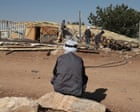
The expansion of unauthorized Israeli outposts tells a clear story. Small groups of settlers establish new points on hillsides near Palestinian agricultural hamlets and Bedouin communities. From there, a predictable cycle begins.
Intimidation, destruction of property, and restricted access to water wells push herders and farmers off their ancestral lands. Entire communities—dozens of villages and herding groups—have packed up and abandoned homes they occupied for generations.
International law views these settlements as illegal, yet the expansion accelerates. The objective, analysts note, is the creation of permanent, contiguous facts on the ground that block any possibility of a future Palestinian state.
The Three Grim Choices
For the millions of Palestinians living under this military administration, the pressure points toward a bleak set of options. Human rights reports frame the reality starkly: live under permanent structural subordination while giving up national aspirations, pack up and leave the territory entirely, or stay and face violent suppression.
Dignity is often the first casualty. When a father has to carry his child around a roadblock just to reach basic services, or when shepherds watch their grazing lands get cordoned off by razor wire, the pressure to abandon the land grows heavier.
The international community issues regular statements of condemnation, but the administrative and physical shifts continue unabated. Unless the underlying dynamics of land confiscation, settlement growth, and movement controls shift dramatically, the future of Palestinian communities in the West Bank remains in severe jeopardy.