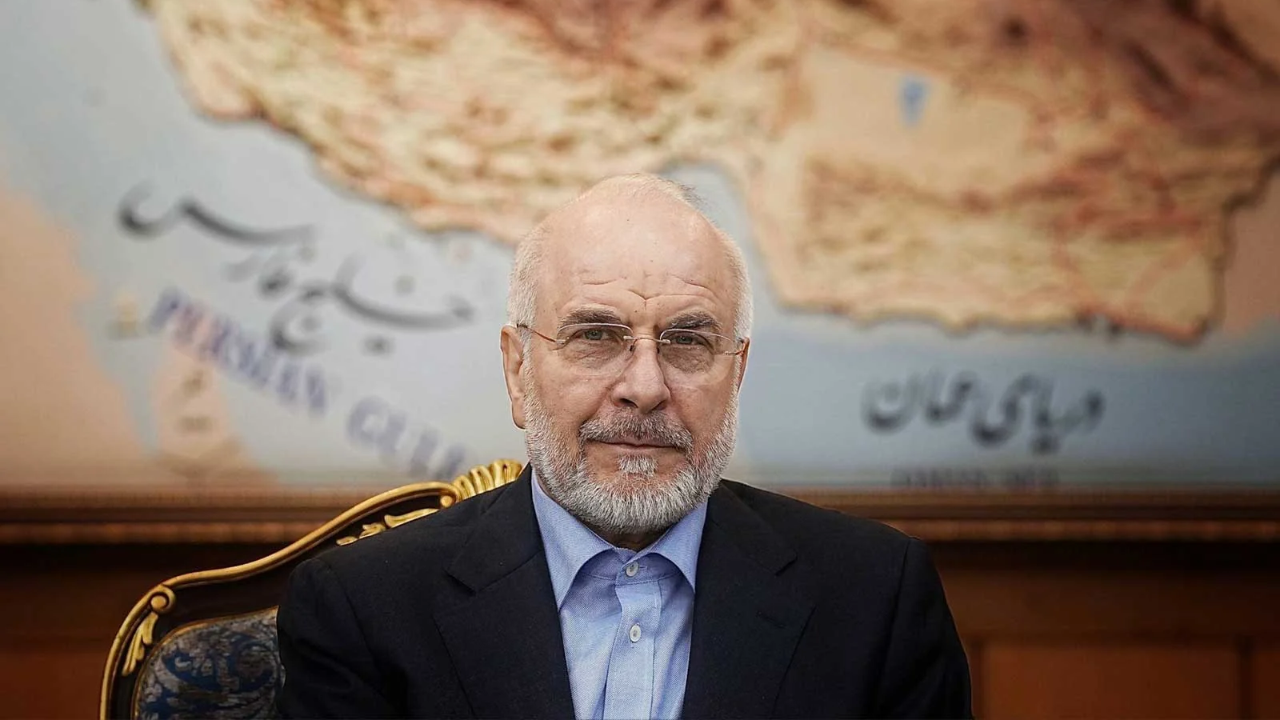
Diplomacy rarely dies in a massive explosion. Usually, it bleeds out slowly in a cold room while diplomats argue over punctuation marks and sanctions waivers. That exact suffocating limbo—often called a "neither war nor peace" situation—is precisely what Iranian Parliament Speaker Mohammad Bagher Ghalibaf has repeatedly warned Tehran will no longer tolerate.
If you follow Middle East geopolitics, you've heard the tough talk before. Western commentators love to dismiss statements from Tehran's leadership as mere domestic theater designed to appease hardliners. They're wrong. When Ghalibaf or other senior figures draw a line against an indefinite stalemate and lay out strict conditions for a deal with Washington, they're reacting to an economic and strategic reality that has pushed Iran's leadership into a corner.
Understanding why Tehran rejects this purgatory requires looking past the daily cable news shouting matches. You have to look at the mechanics of sanctions relief, the ghosts of past broken agreements, and what "neither war nor peace" actually costs an economy on the ground.
Why "Neither War Nor Peace" Is a Slow Death for Tehran
To an outsider, avoiding an all-out shooting war while keeping negotiations alive sounds like a win. For Washington, maintaining a state of managed tension—where sanctions stay locked in place, oil exports face constant interdiction, and diplomacy drags on without resolution—is actually a comfortable equilibrium. It keeps a lid on regional escalation without forcing a US president to spend political capital selling a controversial new treaty to Congress.
For Iran, that exact same status quo is poison.
A "neither war nor peace" environment freezes foreign investment completely. No European bank, Asian energy giant, or regional shipping conglomerate will touch Iranian markets when they don't know if next Tuesday brings a diplomatic breakthrough or a fresh round of secondary sanctions from the US Treasury Department. Uncertainty is worse than bad news. Businesses can price in bad news; they can't price in limbo.
When Ghalibaf speaks from the podium of the Majlis—Iran's parliament—and flatly rejects this gray zone, he's speaking directly to an internal crisis. Iran's rial has suffered historic devaluations over the past decade, inflation routinely eats away at middle-class savings, and domestic infrastructure desperately needs foreign capital and technology. You can't fix an aging electrical grid or modernize oil refineries with interim memoranda of understanding. Tehran needs hard cash, unfettered banking channels, and guaranteed oil sales. If a deal with the United States doesn't deliver tangible economic breathing room right away, Iran's leadership views the talks themselves as a trap designed to bleed them dry without firing a shot.
The Core Conditions Iran Demands for Any US Deal
Whenever Iranian officials lay out their terms for returning to a comprehensive agreement, Western analysts tend to focus entirely on centrifuge counts and uranium enrichment percentages. That's only half the equation. From Tehran's perspective, the technical nuclear limits are the easy part—they already agreed to strict caps and intrusive International Atomic Energy Agency (IAEA) inspections under the 2015 Joint Comprehensive Plan of Action (JCPOA).
The real sticking points are political and financial. Based on consistent public statements from Ghalibaf, the Supreme National Security Council, and Iran's Foreign Ministry, Tehran's baseline conditions boil down to three non-negotiable demands.
Verifiable and Immediate Sanctions Relief
Iran refuses to sign onto another agreement where sanctions are lifted only on paper. Under the original 2015 deal, the Obama administration lifted nuclear-related sanctions, yet major European banks still refused to process Iranian transactions because they feared running afoul of remaining US non-nuclear sanctions.
Tehran learned its lesson. Any new framework must include concrete mechanisms that allow Iran to actually sell its crude oil at market rates and repatriate the revenues through international banking systems without facing immediate blocking actions. Words on a treaty mean nothing if a tanker can't get maritime insurance.
Ironclad Guarantees Against Future US Withdrawals
You can't understand Iran's negotiating posture without accounting for May 2018, when the Trump administration unilaterally exited the JCPOA and reimposed "maximum pressure" sanctions despite IAEA reports confirming Iranian compliance. That single decision destroyed the credibility of American signatures in Tehran.
Ghalibaf and other hardline-pragmatist figures constantly hammer this point. Why would Iran dismantle advanced centrifuges or ship enriched uranium stockpiles out of the country if a future US administration can tear up the agreement on day one in office? While no US president can legally bind a successor to an executive agreement without Senate ratification—which is politically impossible in Washington—Tehran demands built-in economic penalties or automatic snapback protections that make walking away prohibitively expensive for Washington.
Closure of IAEA Safeguards Probes
Before any deal crosses the finish line, Iran insists that the IAEA close its long-running investigations into uranium traces found at undeclared sites in Iran years ago. Tehran views these probes as politically motivated leverage points that Western powers will keep open indefinitely to justify future sanctions, even after a nuclear deal is signed. To Iran, leaving those files open guarantees that the "neither war nor peace" pressure campaign continues under a different name.
The Domestic Tightrope Mohammad Bagher Ghalibaf Walks
It helps to understand who is delivering this message. Mohammad Bagher Ghalibaf isn't a fringe firebrand screaming from the sidelines. He's a former Islamic Revolutionary Guard Corps (IRGC) air force commander, a former Tehran mayor, a multi-time presidential candidate, and the long-serving Speaker of Parliament. He sits right at the intersection of Iran's security establishment and its political governance.
When someone with Ghalibaf's pedigree sets conditions for a US deal, he's signaling consensus among the power centers that actually matter in Tehran—namely the office of the Supreme Leader and the IRGC leadership.
In Iranian politics, parliamentary speakers often serve as the pressure valve between public frustration and state policy. Citizens are angry about the cost of living, yet hardline factions in parliament pass laws—like the 2020 Strategic Action Plan to Counter Sanctions—that legally mandate the government to expand nuclear enrichment if sanctions aren't lifted. Ghalibaf has to manage those hardline lawmakers while keeping the door cracked open just enough for Iranian diplomats in Muscat, Doha, or Vienna to cut a deal if Washington blinks.
By framing the choice strictly as "real deal or no limbo," Ghalibaf protects himself politically on both flanks. If Washington accepts Iran's terms, he takes credit for forcing American concessions through strength. If talks collapse, he looks prescient for refusing to let Iran get strung along in endless, fruitless negotiations.
Why Washington and Tehran Keep Talking Past Each Other
Watching US-Iran diplomacy feels like watching two people play chess on completely different boards.
Washington wants a "longer and stronger" agreement. American policymakers across both Democratic and Republican administrations want to permanently block Iran's pathway to a nuclear weapon, curb its ballistic missile program, and stop its support for regional armed groups like Hezbollah, Hamas, and the Houthis in Yemen. From the US perspective, you don't hand over tens of billions of dollars in sanctions relief unless Iran changes its regional behavior.
Tehran flatly refuses to put its missile program or its regional alliances on the negotiating table. In Iranian strategic doctrine, ballistic missiles and the "Axis of Resistance" are the only things deterring a direct US or Israeli military strike on Iranian soil. Giving up conventional deterrence in exchange for temporary economic relief strikes Iranian military planners as suicidal. They point directly to Muammar Gaddafi in Libya, who gave up his nuclear program in 2003 only to be overthrown and killed during a NATO intervention eight years later.
So both sides remain locked in an asymmetric standoff:
- Washington's calculus relies on economic attrition, betting that sustained financial pain will eventually force Tehran to make sweeping geopolitical concessions.
- Tehran's calculus relies on nuclear threshold leverage, advancing its enrichment capabilities closer to weapons-grade levels to raise the cost of inaction and force Washington to settle for a narrower nuclear-only deal.
Neither strategy has produced a breakthrough, which is precisely how both countries ended up trapped in the exact "neither war nor peace" twilight zone Ghalibaf is railing against.
What Actually Happens When Limbo Breaks Down
Politicians love binary choices, yet international relations rarely cooperate. If Iran truly refuses to accept an indefinite stalemate, the alternatives aren't just a handshake in Geneva or bombers over Natanz. Reality offers a messy spectrum of escalation that investors, policymakers, and regional observers have to watch closely.
First, expect calibrated nuclear brinkmanship rather than an immediate sprint for a bomb. Iran already enriches uranium up to 60 percent purity—a short technical step away from the 90 percent weapons-grade threshold—and operates advanced IR-6 centrifuges that spin far faster than anything allowed under the 2015 accord. Rejecting limbo usually translates into cutting back IAEA camera access, expanding enrichment cascades at underground facilities like Fordow, or shortening the "breakout time" needed to produce enough fissile material for a single weapon. Each step is designed to trigger alarm bells in Washington and European capitals without crossing the red line that triggers immediate military strikes.
Second, watch how Iran leverages regional friction and energy transit routes. Tehran knows global markets hate oil price spikes, especially during election cycles or periods of global inflation. While Iran doesn't need to close the Strait of Hormuz—an extreme move that would devastate its own oil exports too—heightened maritime tensions in the Persian Gulf or Red Sea quickly remind Western capitals that containing Iran without a diplomatic agreement carries heavy global economic costs.
Third, pay attention to Iran's pivot toward non-Western blocs. Tehran isn't sitting around waiting for the US Treasury to change its mind. Over the past few years, Iran has joined the Shanghai Cooperation Organization (SCO) and BRICS, deepened military-industrial ties with Moscow, and signed long-term economic cooperation agreements with Beijing. While neither Russia nor China will rescue Iran's economy single-handedly, selling discounted crude to independent Chinese "teapot" refiners has given Tehran enough financial oxygen to survive US sanctions without caving to Washington's maximalist demands.
How to Read Diplomatic Signals From Tehran Without Getting Played
If you're tracking Middle East policy, energy markets, or geopolitical risk, taking every fiery speech from an Iranian official at face value will mislead you fast. Conversely, ignoring them completely leaves you blind to real shifts in Tehran's red lines.
Filter the noise by watching actions over rhetoric:
- Track IAEA quarterly reports, not press conferences. When Tehran actually decides to abandon diplomatic restraint, it shows up in the IAEA Board of Governors reports through disconnected surveillance cameras, unannounced centrifuge installations, or sudden spikes in 60 percent enriched uranium stockpiles.
- Watch the rial exchange rate in Tehran's open market. Currency traders in Tehran react faster to real behind-the-scenes diplomatic progress in Oman or Qatar than any Western think tank. When secret prisoner swaps or frozen asset releases are genuinely close, the rial strengthens before the news hits Reuters.
- Separate parliamentary posturing from Supreme National Security Council decisions. Ghalibaf sets the political framing, yet actual negotiating mandates come from the Supreme National Security Council and the Supreme Leader's office. Pay closer attention when diplomatic language shifts among figures directly tied to nuclear negotiating teams.
- Monitor regional backchannels in Muscat and Doha. Whenever Washington and Tehran claim publicly that talks are dead, Omani and Qatari mediators are almost always carrying messages back and forth behind closed doors. True diplomatic collapse happens when those backchannels go silent.
Tehran's rejection of a "neither war nor peace" stalemate isn't an empty slogan. It reflects a regime acutely aware that time works against its economy while working in favor of its nuclear knowledge base. Until Washington and Tehran find a way to bridge the gap between American demands for permanent guarantees and Iranian demands for immediate, verifiable economic relief, expect the rhetoric from leaders like Ghalibaf to stay sharp—and the margin for miscalculation in the Persian Gulf to keep shrinking.


