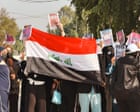
Walk onto a university campus in Baghdad or Basra right now, and you won't find quiet lecture halls. You'll find students standing in courtyards with handwritten signs, refusing to back down.
The spark? A sudden administrative push to remove male professors from teaching female students at Iraqi universities.
Most international coverage treats this as a simple binary clash between religious conservatism and modern education. That reading misses the entire point. When you look closely at the Iraq university protests over male professors, you quickly realize this isn't just about classroom seating charts or gender segregation rules. It's a fight over academic quality, political control, and whether young Iraqi women will get the same qualifications as their male peers.
Let's break down what's actually happening on the ground, why students are risking their academic standing to protest for weeks, and what's at stake for Iraq's higher education system.
Why the Iraq University Protests Over Male Professors Started
Universities in Iraq have operated on a largely coeducational model for decades. Even through the worst years of conflict after 2003, public institutions like the University of Baghdad, Mustansiriyah University, and the University of Basra maintained mixed classrooms and mixed faculties. Male professors taught women. Female professors taught men. Nobody blinked.
Then came the policy shifts. Driven by conservative political blocs holding sway in the Ministry of Higher Education and Scientific Research, specific departments began quietly—and sometimes abruptly—reassigning male instructors away from female-only cohorts or enforcing strict gender separation in lecture halls.
Students noticed immediately. And they didn't stay quiet.
In many departments, particularly in specialized STEM fields, engineering, and advanced humanities, senior faculty members are disproportionately male. Removing them from teaching female students doesn't just change who stands at the whiteboard. It instantly strips female students of access to the most experienced researchers, thesis advisors, and department heads on campus.
Imagine spending three years preparing for your final dissertation, only to be told two months before your defense that your advisor can no longer legally supervise you because he's a man. That's not a hypothetical scenario. That's the exact reality that pushed students from frustration into organized sit-ins.
The Academic Reality Nobody Mentions
When politicians debate gender segregation in universities, they talk about morality and social norms. They rarely talk about faculty ratios.
Iraq's higher education system already suffers from a massive brain drain. Decades of sanctions, war, and economic instability drove thousands of seasoned academics out of the country. The professors who stayed—and the younger ones who earned doctorates abroad before returning—are stretched thin.
If you suddenly ban male professors from teaching women, you create an immediate logistical nightmare:
- Severe faculty shortages. There simply aren't enough female PhD holders in every specialized subfield to replace every male lecturer overnight.
- Lowered instructional standards. Universities are forced to either cancel advanced electives for women or assign underqualified junior staff to cover complex subjects.
- Research bottlenecks. Graduate students lose access to lab directors and principal investigators who control grant funding and international publishing connections.
Students understand this math better than the bureaucrats writing the memos. When female students protest the removal of their male professors, they aren't necessarily defending individual men. They're defending the value of their own degrees. They know employers in Baghdad, Erbil, and across the Gulf won't care about the cultural reasoning behind a watered-down curriculum. Employers care about competence.
How Campus Protests Escalated Into Weeks of Demonstrations
Student activism in Iraq carries serious weight. Anyone who remembers the Tishreen protest movement that began in October 2019 knows that Iraqi university students aren't passive observers. They organize fast, communicate through encrypted messaging apps, and know how to hold physical space.
The current wave of demonstrations followed a familiar pattern. It started with localized complaints inside specific colleges—petitions circulated among classmates, meetings with deans that went nowhere, and formal letters ignored by ministry officials.
When administrative channels failed, students moved outside.
They staged sit-ins outside administration buildings. They boycotted classes taught by replacement instructors. Male students joined female classmates on the picket lines, recognizing that politicizing faculty assignments threatens the integrity of the entire university system.
What kept these protests alive for weeks wasn't outside funding or foreign interference, despite what state-aligned commentators often claim on television. It was sheer stubbornness. Students showed up day after day in the heat because backing down meant accepting a permanent two-tier education system.
The Political Tug-of-War Behind University Policies
You can't separate Iraqi public universities from Iraqi politics. It's impossible.
Since the post-2003 political order took shape, government ministries have been divided among competing political parties through a sectarian and partisan quota system known as muhasasa. The Ministry of Higher Education isn't an independent academic body. It's a political prize.
When conservative factions gain influence over university administrations, campus policies shift to reflect their ideological priorities. Sometimes those shifts target student dress codes. Sometimes they restrict campus cultural events, music, or mixed-gender student clubs. Removing male professors from teaching women fits squarely into this broader pattern of incremental social control.
Here's the catch, though. Iraq isn't a monolith.
Public opinion on gender roles varies wildly between cities, neighborhoods, and families. Many conservative parents actually prefer mixed public universities because they trust the institutional oversight and value the academic prestige of established state schools. By forcing rigid segregation policies onto campuses without broad consensus, administrators alienated the very families they claimed to be protecting.
Common Misconceptions About Iraqi Higher Education
If you only read headlines, it's easy to walk away with a distorted picture of what daily life looks like at an Iraqi university. Let's clear up a few myths that constantly muddy the waters.
Myth 1 All Iraqi universities are strictly segregated
False. Coeducation has been the standard across Iraq's major public universities since the mid-20th century. In fact, Iraq was historically one of the most progressive countries in the Middle East regarding women's access to higher education and professional careers in medicine, law, and engineering.
Myth 2 Only female students are protesting
Not true. Walk through any of the campus rallies and you'll see male students standing shoulder-to-shoulder with their female peers. For many young men, this is a matter of basic fairness and academic solidarity. They know that if the administration can arbitrarily remove professors today, it can arbitrarily alter grading standards or curriculum requirements tomorrow.
Myth 3 The protests are anti-religion
Students protesting these policies come from diverse religious and social backgrounds. Many of the women holding protest signs wear the hijab or abaya. Their objection isn't to Islamic values—it's to administrative incompetence and political overreach disguised as moral guardianship.
What Happens When Universities Politicize Faculty Assignments
I've watched higher education systems across the region wrestle with political interference for years, and the long-term damage always follows the same script.
First, top talent leaves. A professor who spent ten years earning a doctorate in mechanical engineering or comparative literature doesn't want to spend their career navigating arbitrary gender rules. If they get an offer from a university in Jordan, the UAE, or Europe, they take it.
Second, international accreditation suffers. Global university rankings and academic partnerships rely on institutional autonomy and merit-based faculty placement. When ministries dictate who can teach whom based on gender rather than credentials, foreign universities hesitate to sign exchange agreements or recognize degree equivalencies.
Third, trust collapses inside the classroom. Education depends on a basic social contract between teacher and student. When students see their professors treated as political pawns—moved around like chess pieces to satisfy party bosses—respect for university leadership evaporates.
How to Follow and Support Academic Freedom in Iraq
If you're tracking this story from abroad—whether you're an academic, a journalist, or someone who cares about educational access—don't rely solely on brief wire reports that strip away local context.
Pay attention to statements coming directly from Iraqi student unions, independent faculty syndicates, and local civil society groups like the Iraqi Observatory for Human Rights. Look at which specific colleges are affected, because policies often vary drastically from one department to the next depending on who holds the dean's office.
If you work in higher education or international research, maintain active partnerships with Iraqi scholars and institutions. Isolation only strengthens the hand of hardliners who want to close campuses off from the wider academic world. Supporting joint research, virtual guest lectures, and scholarship pathways gives Iraqi students and faculty concrete leverage when they push back against restrictive local mandates.
The students standing in those courtyards aren't asking for special treatment. They're asking to be taught by the best professors available, regardless of gender, so their degrees actually mean something when they graduate. That's a standard worth defending anywhere.