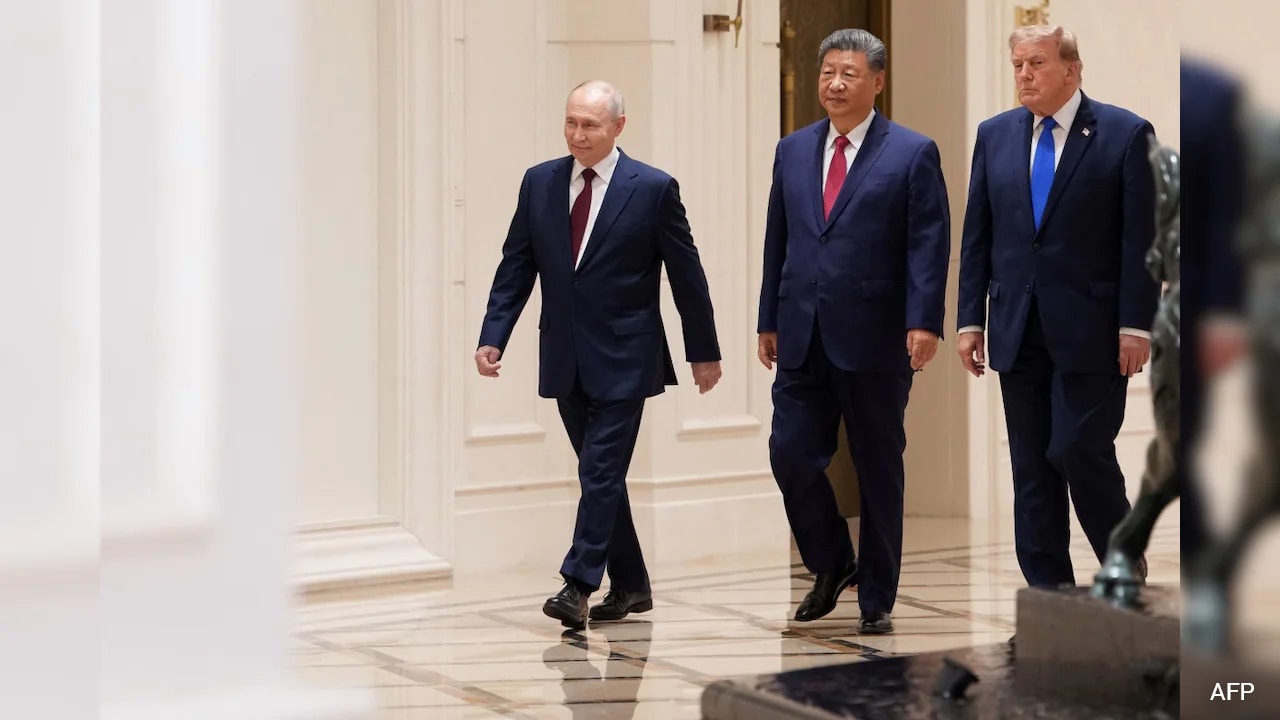
Calling Vladimir Putin "my friend" while standing inside a Chinese state villa isn't a slip of the tongue. It's a calculated bet that personal flattery can replace decades of institutional statecraft.
On November 19, 2026, President Donald Trump sat down with Chinese President Xi Jinping and Russian President Vladimir Putin at Kylin Villa in Shenzhen, China. Held alongside the Asia-Pacific Economic Cooperation summit, that 90-minute session marked the first trilateral meeting between the leaders of the world's three primary nuclear powers. Before the talks even started, Trump pointed to Putin and called him "my friend". For a different perspective, check out: this related article.
The backlash hit fast. Within 24 hours, lawmakers in Washington and European leaders blasted the remarks as dangerous appeasement. Yet when Trump returned to the White House on November 20, he doubled down. He told reporters he has "fantastic relationships" with both Putin and Xi, arguing that personal rapport keeps America safe.
Most commentary misses the real story here. Critics treat Trump's rhetoric like naive admirer talk, while supporters cheer it as instant peacemaking. Both sides are looking at the wrong scoreboard. Further analysis on this trend has been published by Reuters.
Inside the Shenzhen Summit Backlash
To understand why the Shenzhen meeting triggered an international firestorm, you have to look at what happened in the room—and what didn't.
Trump described the gathering as "one of the most momentous international summits in many years," claiming there was "great electricity" among the three leaders. He noted that denuclearization was a primary topic on the table, though he openly admitted he wasn't sure if nuclear disarmament "can ever happen".
No treaties were signed. No ceasefire in Ukraine materialized. No breakthroughs on Iran or trade emerged from those 90 minutes.
What did happen was a massive visual win for Moscow and Beijing. For years, Western allies worked to isolate Putin diplomatically over Russia's invasion of Ukraine, which is now nearing its fifth year. Standing shoulder-to-shoulder with the American president in Shenzhen handed Putin the exact legitimacy he's been chasing.
European allies reacted with immediate alarm. Polish Prime Minister Donald Tusk issued a blunt public rebuke, stating flatly that Putin "is not our friend and will never be". Even figures from Europe's political right broke ranks. Richard Tice, deputy leader of Reform UK, told Sky News that calling Putin a friend was "wrong at every level" and "a grave mistake," calling the Russian leader "a murderous dictator".
In Washington, House Democratic Whip Katherine Clark called Trump "an embarrassment on the world stage" on X, pointing out that the meeting produced zero concrete movement on Ukraine, Iran, or artificial intelligence safety.
The Intelligence Chief's Tightrope Walk
By Sunday, November 22, the administration had to manage the fallout across morning news shows. Director of National Intelligence Jay Clayton appeared on ABC's This Week and CNN to defend the president's phrasing.
Clayton walked a tightrope. When pressed on whether he personally viewed Putin as a friend, Clayton said "not at all," acknowledging that Putin is certainly not America's friend in Ukraine. Still, Clayton insisted he trusted Trump "completely", arguing that using disarming, friendly language inside a closed room of nuclear rivals is a deliberate tool to lower tensions and prevent catastrophic conflict.
Even Trump drew a subtle line during his November 20 White House press conference. When asked if Putin was a friend to the United States, Trump admitted, "I can't speak to America". In his mind, the friendship is strictly personal—leader to leader.
Why Personal Rapport Fails Against Systemic Rivalry
I've watched administrations of both parties try the "personal chemistry" playbook over the past two decades. George W. Bush famously looked into Putin's eyes in 2001 and claimed he got a sense of his soul. Barack Obama tried a formal "reset" button with Moscow. Joe Biden spent hours in Geneva and Woodside banking on face-to-face pragmatism with Putin and Xi.
Every single one ran into the same wall.
Personal warmth doesn't erase structural national interests. In authoritarian systems like Russia and China, power is centralized in one man, which makes leader-to-leader diplomacy tempting. Supporters of Trump's approach—including commentators in outlets like the Washington Examiner—argue that offering personal respect lowers the domestic political cost for Putin and Xi to make concessions. If a strongman doesn't feel humiliated in public, the theory goes, he has room to compromise in private.
Here's why that theory breaks down in practice.
First, Xi and Putin don't view flattery as goodwill. They view it as leverage they didn't have to pay for. When an American president gives away diplomatic legitimacy before a single concession is secured, Moscow and Beijing pocket the photo-op and keep their core demands intact.
Second, public rhetoric reshapes alliance credibility. NATO and Indo-Pacific partners like Japan, South Korea, and Poland base their security calculations on American predictability. When Polish leaders hear an American president call the man invading their neighbor his "friend," Warsaw starts hedging its bets. Allies spend more time worrying about Washington's reliability than coordinating pressure on Moscow.
Third, look at China's immediate follow-through after Shenzhen. Less than a week after Trump praised his "fantastic" relationship with Xi, Beijing warned of "necessary measures" over new U.S. tariffs and slammed Washington for suppressing Chinese tech firms. Meanwhile, Chinese and Japanese vessels traded accusations near disputed islands. Warm handshakes at Kylin Villa didn't pause a single geopolitical friction point.
How to Read Great-Power Summits Without Getting Fooled
When headlines explode over diplomatic insults or over-the-top praise, most people react to the theater instead of the substance. If you want to accurately judge whether a high-stakes summit like Shenzhen actually makes the world safer, ignore the press conference adjectives and check four concrete indicators instead.
- Watch the concession sequence. Real diplomacy follows a clear order—concessions happen before or alongside symbolic rewards. When a leader grants maximum prestige up front with zero signed commitments in return, the other side has zero incentive to give ground later.
- Track allied reactions within 48 hours. Statements from frontline allies like Poland, the Baltic states, Japan, or Taiwan tell you far more than White House readouts. Sharp pushback from democratic partners signals that deterrence is weakening, not strengthening.
- Separate arms-control talk from verification mechanisms. Mentioning denuclearization sounds great on television. Unless negotiators announce working groups, inspection protocols, or binding caps, talk about nuclear reduction is pure air.
- Monitor trade and military actions over the next 14 days. Watch tariff announcements, naval patrols, and sanctions enforcement in the two weeks following a summit. Actions on the ground reveal the true relationship far better than words spoken for cameras.
Trump's defenders are right about one thing—talking to nuclear adversaries is better than blind escalation. You can't negotiate an end to the war in Ukraine or prevent an accidental clash in the South China Sea by refusing to enter the room.
Talking isn't the problem. Confusing personal chemistry with national security is. Until those "fantastic relationships" produce verifiable signatures on paper, America's allies will keep treating the warmth in Shenzhen as a warning sign rather than a breakthrough.
For a closer look at the footage and political reaction surrounding the Shenzhen remarks, watch Trump defends his "fantastic" ties with Xi and Putin following summit criticism, which captures the exact press briefing exchanges that triggered the international backlash.