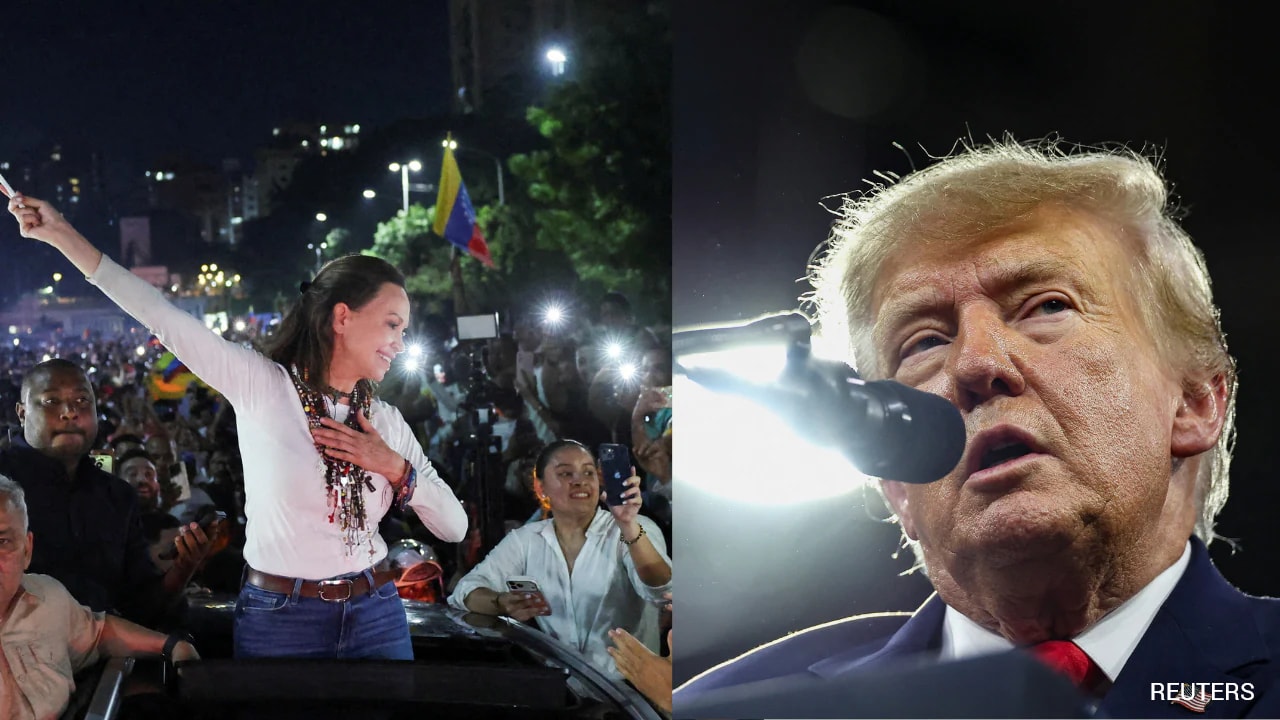
Most international observers assumed the Venezuelan crisis would drag on through endless, dead-end negotiations for another decade. They were wrong. When US forces captured Nicolás Maduro and María Corina Machado declared that the operation had opened a "floodgate to freedom," the political math in Caracas shifted overnight.
Yet if you only read the surface-level headlines, you're missing what actually happened behind closed doors and what comes next on the ground. People outside Latin America tend to view this as a simple binary event—dictator out, democracy in. Reality is much messier. Having followed Venezuelan opposition politics and regional security dynamics closely for years, I can tell you that removing the figurehead of a deeply entrenched system doesn't automatically dismantle the machinery underneath.
The Real Meaning Behind Machado's Statement
When María Corina Machado used the phrase "floodgate to freedom" following the US operation to capture Maduro, she wasn't just offering a soundbite for cable news. She was sending a deliberate signal to two very different audiences: the millions of Venezuelans inside the country waiting for a cue to mobilize, and the mid-level military commanders holding the keys to the barracks.
Think about the psychology of authoritarian survival. For years, the Chavista apparatus relied on an aura of invincibility. Following the disputed July 2024 presidential election—where the opposition published precinct-level tally sheets showing a decisive victory for Edmundo González while the regime's National Electoral Council declared Maduro the winner without producing a shred of verifiable data—cynicism threatened to paralyze the public. People started believing nobody was coming to enforce the mandate they had risked their lives to cast.
Trump's decision to greenlight a direct capture operation shattered that illusion instantly. Machado recognized that fear is a dam. Once the top brass saw that the United States was willing to execute a physical extraction rather than issue another round of easily dodged financial sanctions, the dam cracked.
Why Sanctions Failed Where Direct Action Succeeded
To understand why this moment matters so much, you have to look at why previous strategies hit a brick wall. Between 2017 and 2024, Washington leaned heavily on economic pressure, oil sector restrictions, and diplomatic isolation.
Did those measures hurt the regime's cash flow? Yes. Did they force Maduro out of Miraflores Palace? Not even close.
Instead, broad sanctions gave Caracas a convenient scapegoat for decades of economic mismanagement, hyperinflation, and the collapse of the state oil company, PDVSA. Meanwhile, the inner circle adapted by routing gold, oil, and illicit funds through opaque networks involving Russia, Iran, and regional intermediaries. Even the 2023 Barbados Agreement—which promised free and fair elections in exchange for temporary sanctions relief—was systematically dismantled by the regime once it got what it wanted.
Trump's approach flipped the script entirely. Rather than squeezing the broader economy and hoping elite defections would eventually materialize, the administration targeted the head of the network directly. You don't negotiate with someone facing federal narco-terrorism indictments in the Southern District of New York by offering them another summit. You serve the warrant.
The Messy Reality Inside Venezuela Right Now
Here is where Western commentators usually get tripped up. Capturing Maduro removes the central symbol of the regime, but it doesn't magically evaporate the armed collectives, the intelligence agencies like SEBIN and DGCIM, or the generals who built personal fortunes off state contracts and border smuggling.
A floodgate opening means a surge of momentum, not an instant, tidy transition. Look at the immediate friction points that Machado and Edmundo González face as they work to translate this breakthrough into actual governance:
- The Armed Forces Dilemma: Venezuela's National Bolivarian Armed Forces (FANB) have thousands of generals—far more than the US military—many of whom are deeply implicated in corruption or human rights abuses documented by the United Nations Fact-Finding Mission. Convincing the rank-and-file soldiers and junior officers to stand down is one thing. Getting the senior command to surrender power without a violent standoff requires careful guarantees and credible accountability mechanisms.
- Institutional Rot: You can't run a country when the Supreme Tribunal of Justice, the Attorney General's office, and the electoral board have spent twenty years functioning as partisan branches of the ruling party. Rebuilding basic legal legitimacy will take years of grinding administrative work.
- Economic triage: Over seven million Venezuelans fled the country during the crisis, creating the largest displacement in the Western Hemisphere's modern history. Stabilizing the bolívar, restoring reliable electricity outside Caracas, and getting clean water back into public hospitals won't happen just because Maduro is in US custody.
Honestly, anyone promising a smooth, overnight transformation is selling fantasy. The hardest part of any democratic transition begins the morning after the strongman falls.
What People Get Wrong About Trump's Latin America Playbook
Critics immediately framed the capture as a throwback to twentieth-century interventionism, warning that it would alienate the entire region and unite Latin American leaders against Washington. That analysis ignores how drastically regional sentiment has shifted over the past few years.
Governments in neighboring Colombia, Brazil, and across the Caribbean have borne the brunt of Venezuela's collapse. They've absorbed millions of refugees, strained their public healthcare and school systems, and watched transnational criminal groups like Tren de Aragua expand across their borders. Privately, plenty of regional leaders were exhausted by Maduro's broken promises and bad-faith diplomacy, even if diplomatic protocol kept them from saying so at microphones.
Trump's move also sent an unmistakable message to other adversaries operating in the hemisphere. For years, Moscow, Tehran, and Beijing treated Caracas as a low-cost foothold right on America's doorstep, setting up intelligence outposts, drone assembly lines, and debt-for-oil deals. Demonstrating that Washington can and will project decisive power in its own backyard changes the risk calculation for every foreign actor propping up authoritarian enclaves in the Americas.
Machado's Crucial Role in Keeping the Coalition Together
It's worth remembering why María Corina Machado holds the moral authority she does right now. Long before Trump returned to the White House, she did the unglamorous, dangerous work of unifying a fractured opposition that had spent years arguing over strategy.
When the regime banned her from running for office in 2023, she didn't sulk or call for an election boycott—the exact mistake that had handed Maduro easy wins in the past. Instead, she pivoted behind Edmundo González, built a massive grassroots network of citizen poll watchers, and proved to the world that the regime had lost the popular vote by a landslide. When security forces hunted down her campaign staff and forced her into hiding, she stayed inside Venezuela rather than taking a comfortable exile in Madrid or Miami.
That credibility is the glue holding the transition together. Without a trusted domestic leader commanding genuine popular legitimacy on the ground, any external action against Maduro would have risked collapsing into chaos or civil conflict. Trump provided the decisive external shock; Machado provides the internal legitimacy. Neither could have achieved this breakthrough alone.
How to Track What Actually Matters Next
If you want to understand whether Venezuela's transition is genuinely succeeding over the coming months, stop watching cable news pundits argue about US foreign policy doctrine and start tracking concrete indicators on the ground.
- Political Prisoner Releases: Watch the gates of El Helicoide and Ramo Verde. Full, unconditional releases of hundreds of military and civilian political prisoners—not slow, conditional dribbles—will prove whether the security apparatus has truly lost its grip.
- PDVSA and Oil Sector Restructuring: Pay attention to how quickly international energy companies and service providers move to assess Venezuela's battered infrastructure in the Orinoco Belt and Lake Maracaibo. Capital doesn't lie; when engineers and rigs start moving back in, investors believe the rule of law is returning.
- Border Flow Reversals: Keep an eye on the Simón Bolívar International Bridge at the Colombian border and migration data from the Darién Gap. The clearest proof that Machado's floodgate to freedom is real won't come from a press conference—it will show up when Venezuelan families begin packing their bags to go home.
Follow primary sources directly—such as official statements from Machado's Vente Venezuela movement, verifiable reports from human rights monitors like Foro Penal, and energy market filings—rather than relying on partisan commentary to see how fast the ground is shifting.