Donald Trump thought he saved the US men's national soccer team. He didn't.
When the US president called FIFA President Gianni Infantino to complain about Folarin Balogun's red card against Bosnia and Herzegovina, it looked like a classic political strong-arm move. FIFA cracked. They used a bizarre legal loophole in Article 27 of their disciplinary code to pause Balogun's automatic one-game suspension. He was allowed to play against Belgium in Seattle. For a different look, read: this related article.
The internet exploded. Critics screamed that the integrity of the tournament was dead. Belgium's head coach Rudi Garcia joked that it felt like an April Fools' Day stunt.
But then the actual game happened. Belgium completely steamrolled the USMNT 4-1. All that political intervention, all the screaming about executive overreach, and the team went home anyway. Related analysis regarding this has been published by Bleacher Report.
Now the dust is settling, and the real war has shifted from the grass to the referees. Trump openly attacked the integrity of Brazilian referee Raphael Claus, calling him "a little bit suspect if you check his past." FIFA quickly fired back, digging in its heels to shield its elite referees from political targets.
The entire incident exposes something much darker than a bad call. It shows how easily geopolitics can warp sports officiating, and why the institutions that run the game are terrified of where this goes next.
The Collision That Started an International Incident
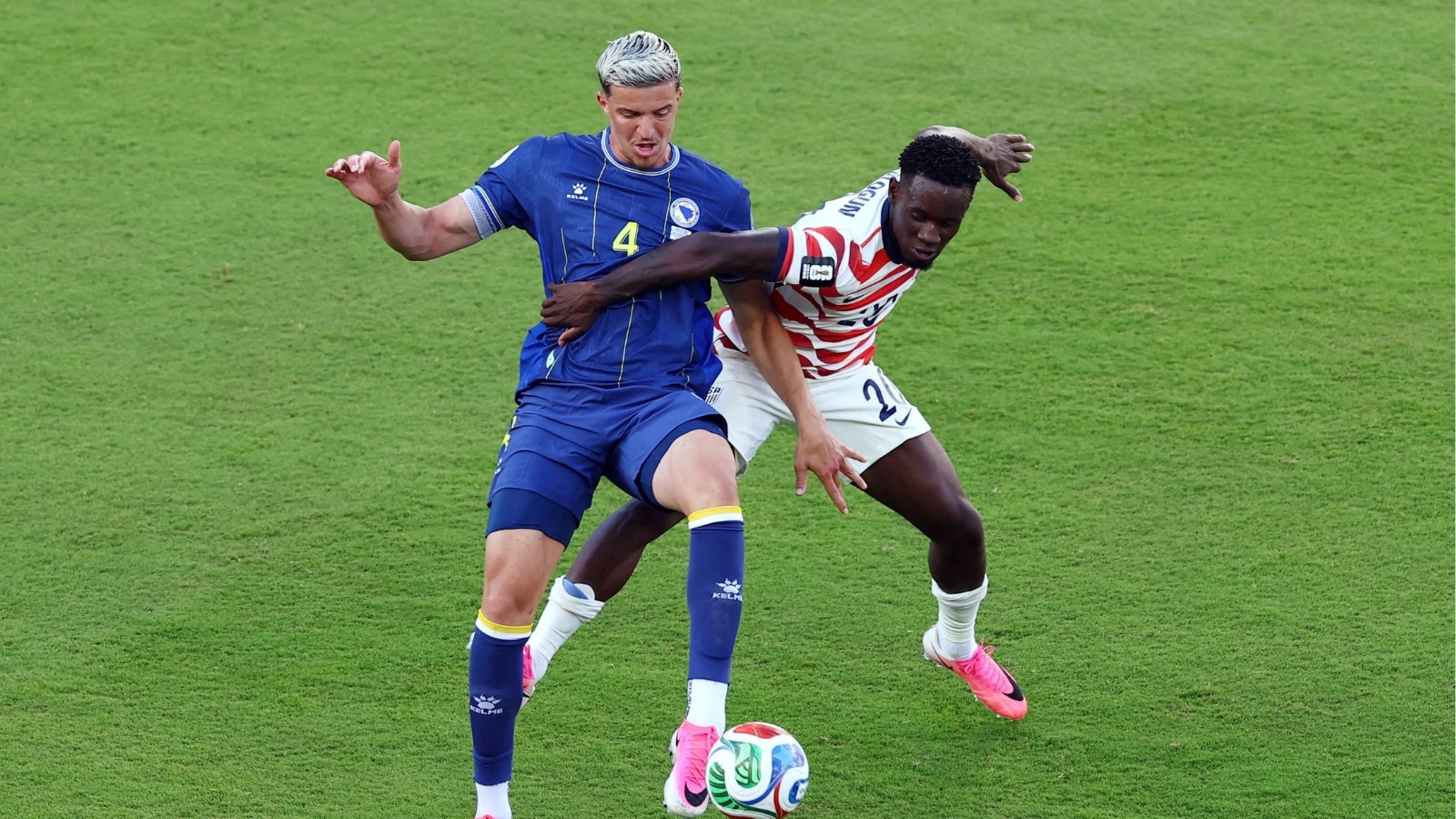
Let's look at what actually happened on the pitch before the politicians got involved. During the round of 32 match against Bosnia and Herzegovina in Santa Clara, Balogun was hunting for a ball in the second half. He collided hard with Bosnian defender Tarik Muharemovic.
It looked ugly. Balogun's cleats raked down Muharemovic's leg and landed directly on his ankle.
Brazilian referee Raphael Claus didn't blow for a red card right away. He let play continue until the Video Assistant Referee (VAR) intervened. Claus went to the monitor, looked at the slow-motion footage, and pulled out the straight red.
Honestly, by the letter of the law, it's a card. If you plant your studs into an opponent's ankle, you risk getting sent off. Balogun later claimed a yellow card would've been fairer, and teammate Christian Pulisic argued there was zero intent. But VAR loves frozen frames, and frozen frames make everything look malicious.
Trump saw it differently. Speaking from the Oval Office, he claimed he saw two great athletes just get entangled. He didn't know what a red card even meant until his advisors explained that Balogun, the leading US scorer with three goals, would be banned from the critical Belgium match.
That's when the phones started ringing.
How FIFA Bent Its Own Rules
Usually, a red card appeal is a dead end. FIFA rarely reverses a referee's field decision because the VAR process is supposed to be the final check.
But U.S. Soccer and the White House FIFA Task Force pushed hard. They argued the slow-motion replay created a false narrative of intent. FIFA didn't actually overturn the card. Instead, they used Article 27 of the FIFA Disciplinary Code to suspend the implementation of the ban for a probationary year.
It was a total cop-out. It allowed Balogun to step onto the field against Belgium while keeping the technical ruling on the books.
The Royal Belgian Football Association was furious. They released a blistering statement saying that when the rules are no longer guaranteed by their guardians, the credibility of the competition is ruined. They have a point. If the US president can get a suspension paused, what stops every other world leader from doing the same when their star player gets sent off?
FIFA Shields Its Elite Crews
Trump's biggest mistake wasn't asking for the review. It was going after Raphael Claus personally.
By calling a highly respected referee "very suspect," Trump crossed a line that forced world football's governing body to react. The Brazilian Football Confederation immediately condemned the remarks, stating there's absolutely nothing in Claus's extensive history to justify suspicion.
FIFA Referees Committee chairman Pierluigi Collina stepped up to defend the official. Claus is a veteran of two World Cups and has managed over 600 professional matches. He is a part of Team One, the absolute peak of elite global refereeing.
Infantino summarized the governing body's fear perfectly. Without referees, there's no football. If refereeing decisions become political bargaining chips, the entire sport collapses under the weight of conspiracy theories.
The Reality of Political Pressure on the Pitch
This isn't just about one match in 2026. This is about a dangerous precedent.
When a superpower hosts the World Cup, the pressure on governing bodies is already suffocating. By cave-in to the White House on Balogun, FIFA showed a weakness that teams won't forget.
If you want to protect the sport from looking like a rigged reality show, the rules have to be completely absolute. Referees make mistakes. VAR makes things look worse than they are. We all know this. But the moment you let politicians negotiate who gets to play, you aren't watching a sport anymore.
If you're managing a sports organization or even coaching a local league, the lesson here is transparent. Set clear boundaries. The field of play must remain entirely separate from the front office, and definitely from outside political interests. If you compromise the rules once for a star player, you lose the locker room, and you lose the trust of the entire league.
FIFA got lucky this time because Belgium's 4-1 dominance made the Balogun reprieve completely irrelevant to the tournament outcome. The US team was eliminated anyway, saving FIFA from a logistical nightmare in the quarterfinals. But next time, the football world might not get so lucky.