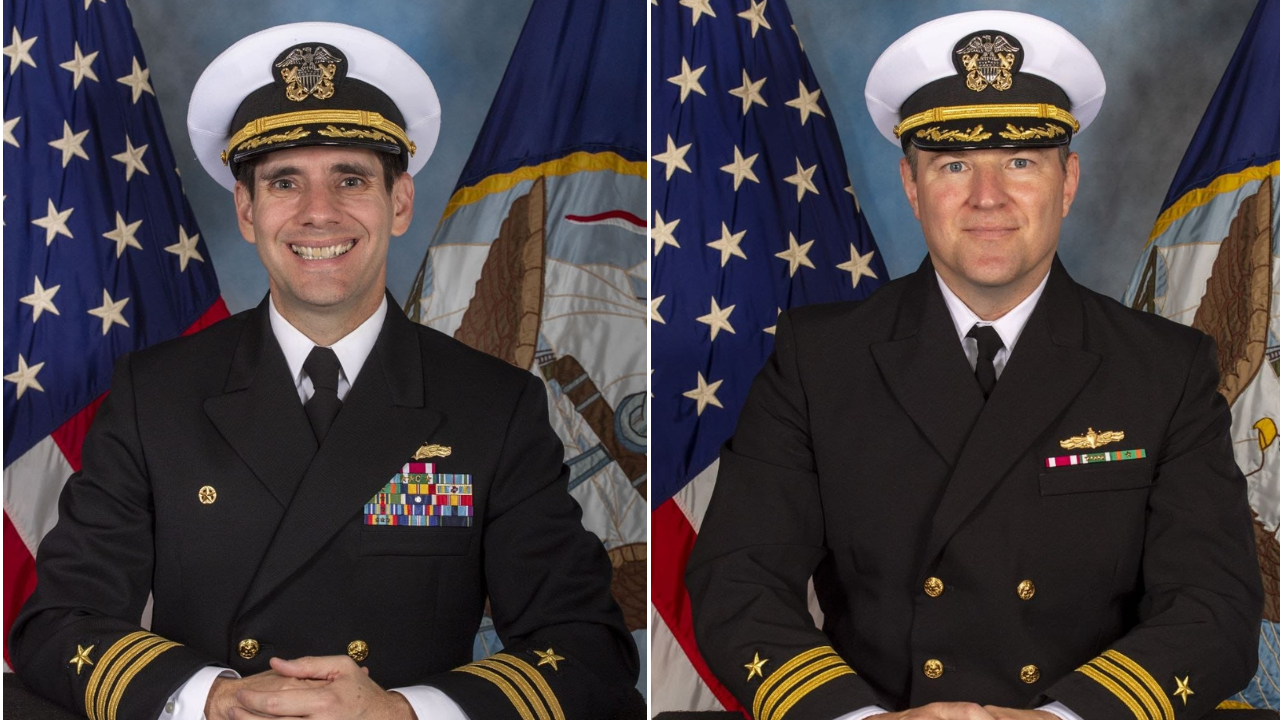
When Tehran issued its blunt warning—"We will find you"—directed straight at United States Navy officers following the Minab school strike, most Western headlines treated it like routine saber-rattling. They shouldn't have.
If you've spent any time tracking military signaling in the Persian Gulf, you know that Iranian rhetoric usually falls into two buckets. There's the broad, theatrical stuff meant for domestic crowds in Tehran, and then there's the cold, hyper-specific messaging aimed at individual commanders. This one sits squarely in the second bucket. Naming the Minab school strike and targeting Navy officers personally changes the calculus from state-level deterrence to individual accountability—at least in how Iran frames its retaliation doctrine.
Let's break down what actually happened, why Minab matters geographically and politically, and what this kind of personal targeting means for naval operations in the Strait of Hormuz right now.
Why the Minab School Strike Hit a Nerve in Tehran
Minab isn't just another dot on a map in southern Iran. Sitting in Hormozgan Province, roughly 40 miles east of Bandar Abbas, it's tucked right behind the strategic chokepoint of the Strait of Hormuz. The town sits near critical Islamic Revolutionary Guard Corps Navy (IRGCN) coastal infrastructure, radar installations, and logistics corridors that feed Iran's maritime defense network.
When a strike hits a civilian structure like a school in a place like Minab, two things happen immediately.
First, the domestic pressure on Tehran explodes. Hormozgan is already a sensitive region with complex local dynamics, and civilian casualties—especially children—create an internal political crisis that the leadership can't ignore. Second, it gives Iranian military planners a moral and legal narrative they can weaponize internationally. Under international humanitarian law, schools are protected civilian objects unless they're actively being used for military purposes. Even when strikes happen near dual-use military zones, the optics of a damaged or destroyed school are devastating.
Honestly, that's why the messaging shifted so fast. Instead of vague threats against "American interests" or "the Great Satan," Iranian officials zeroed in on the chain of command. By addressing US Navy officers directly, Tehran is signaling that it views the strike not as an unfortunate byproduct of regional friction, but as a deliberate operational decision made by specific individuals on ships or in command centers.
The Shift From State Deterrence to Personal Targeting
You can't understand the "We will find you" threat without looking at how Iran's asymmetric doctrine has evolved since 2020.
After the assassination of Qasem Soleimani, Tehran's security apparatus became obsessed with the concept of reciprocal vulnerability. Their logic is simple. If American military leaders and intelligence officers believe they can authorize strikes from thousands of miles away—or from the relative safety of an aircraft carrier strike group—without personal risk, deterrence fails.
So Iran started naming names.
Over the past few years, the IRGC and Iran's judiciary have published lists of US military personnel, drone operators, and naval commanders they hold responsible for strikes in the region. This isn't just propaganda for state television. It serves three practical purposes for Tehran:
- Psychological pressure on deployed personnel. Naval deployments in the Fifth Fleet area of operations are already grueling. Adding the threat of personal tracking—real or perceived—weighs on operational readiness and operational security (OPSEC) back home.
- Legal and diplomatic warfare. Iran routinely files domestic indictments against US officers to build a paper trail it can hand to sympathetic international bodies or use as leverage in future prisoner and asset negotiations.
- Justification for asymmetric retaliation. If an incident occurs months or years later—whether a cyberattack on a personal account, harassment of a former service member abroad, or an attack on a maritime vessel—Tehran has already pre-justified it as targeted justice rather than unprovoked escalation.
Is Iran actually capable of tracking down individual US Navy watch officers in San Diego or Norfolk? Probably not with the precision their propaganda implies. Their external intelligence operations have suffered major setbacks, and US counterintelligence takes force protection seriously. Still, you don't need a massive sleeper cell network to cause real damage in the digital age. Open-source intelligence, leaked defense contractor databases, and social media footprints make identifying military personnel easier than it was twenty years ago.
How US Navy Operations in the Gulf Change Under Direct Threats
Talk to anyone who has stood watch in the Persian Gulf, and they'll tell you the environment is already suffocating. You're operating in tight waters where commercial shipping lanes overlap with fast-attack craft, coastal anti-ship missile batteries, and constant electronic warfare interference.
When Tehran issues a direct warning to Navy officers over an incident like the Minab strike, the immediate impact isn't usually a fleet-on-fleet battle. It's a tightening of the screws across daily operations.
Tighter Rules of Engagement and Command Friction
Every time a high-profile civilian casualty incident happens, the Pentagon's legal and operational review machinery kicks into overdrive. Commanders have to balance self-defense authorities against the strategic risk of handing Iran another propaganda victory. That friction slows down decision-making cycles. Watch officers hesitate for an extra ten seconds before classifying an approaching fast-attack boat as hostile, and in the Strait of Hormuz, ten seconds is a lifetime.
Aggressive OPSEC Lockdowns
Whenever Iran personalizes a threat, US Central Command (CENTCOM) and Naval Forces Central Command (NAVCENT) respond by locking down digital footprints. Command rosters get scrubbed from public websites. Social media guidelines for deployed sailors and their families get strictly enforced. Even routine port calls in Bahrain, the UAE, or Oman undergo fresh threat assessments to ensure off-duty officers aren't exposed to surveillance.
Elevated Harassment at Sea
The IRGC Navy thrives in the gray zone—actions that fall just below the threshold of open warfare. Following warnings like this, US destroyers and cruisers transiting the Strait often see an uptick in unsafe and unprofessional interactions. Fast-inshore attack craft swarm closer to hulls, drones buzz flight decks at night, and radio channels fill with aggressive warnings. It's designed to test discipline and provoke an overreaction that Tehran can film and broadcast.
What Critics and Analysts Get Wrong About Iranian Rhetoric
A lot of armchair commentators make one of two mistakes when reading headlines about Iran threatening US Navy officers.
The first mistake is taking the threat completely at face value—assuming Iranian commandos are waiting outside naval bases in Virginia. That ignores Iran's actual operational constraints. Tehran avoids direct, large-scale conventional war with the United States because it knows it would lose its navy and air force in a matter of days. Its entire military strategy is built around surviving while inflicting manageable, deniable pain.
The second mistake is dismissing it entirely as empty bluster. That's just as dangerous. When Iranian leadership ties its credibility to a specific incident—especially one involving a school in Minab—they box themselves in. Hardliners in parliament and the IRGC demand visible action. If Tehran does nothing, it looks weak to its own base and its regional proxy network.
Usually, the response doesn't happen the next morning. Iran plays a long, patient game. They wait until the news cycle moves on, until carrier strike groups rotate out, and until complacency creeps back in. Then they strike a commercial tanker linked to Western interests, launch a cyber operation against maritime infrastructure, or activate a regional proxy to target an isolated outpost.
Reading Between the Lines of Naval Escalation
If you're following this story to understand where US-Iran tensions are headed, stop looking at the loudest quotes and start watching the operational indicators.
Pay attention to three things over the coming weeks:
- Force posture shifts in the Fifth Fleet. Watch whether the Pentagon extends carrier deployments in the Gulf of Oman or moves guided-missile destroyers closer to the Strait of Hormuz. Hardware movements tell you far more about threat intelligence than press briefings ever will.
- Maritime advisories from MARAD. When the US Maritime Administration issues updated warnings to commercial shipping in the Persian Gulf and Strait of Hormuz, it means intelligence agencies have picked up concrete signs of imminent IRGC naval activity.
- Changes in Iranian judicial or media campaigns. If state media keeps running segments naming specific US naval units or command structures connected to the Minab strike, Tehran is actively keeping the grievance alive to justify a future kinetic or cyber response.
The warning to US Navy officers over the Minab school strike isn't a declaration of all-out war, nor is it harmless noise. It's a calculated move to raise the personal and political cost of US military action near Iran's coast—and a clear signal that Tehran intends to keep the score open until it finds a moment to settle it on its own terms.