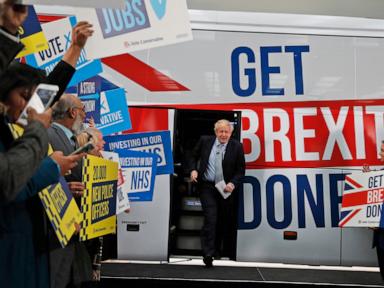
Ten years after the referendum that fractured British politics, the catastrophists and the utopians have both been proven wrong. The United Kingdom did not plunge into an immediate, chaotic recession on the morning of June 24, 2016, nor did it morph into a dynamic, hyper-deregulated Singapore-on-Thames. Instead, the real economic cost of Brexit has manifested as a slow, corrosive bleed that has left the British economy roughly 5% to 8% smaller than it would have been within the European Union. This missing wealth represents over a trillion pounds in lost opportunity, a permanent wound disguised as stagnation.
The debate raging across Westminster is no longer about whether the exit from the single market caused damage, but how to manage a chronic national decline that politicians on all sides spent a decade trying to ignore.
The primary mechanism of this contraction is not a sudden trade embargo, but a profound shift in trade intensity and corporate behavior. For generations of British businesses, European cross-border trade was as friction-free as shipping a pallet from Manchester to Birmingham. Today, even with the Trade and Cooperation Agreement eliminating raw tariffs on most goods, the reintroduction of customs checks, rules of origin declarations, and divergent regulatory standards has choked the supply chain.
The Asymmetry of Regulatory Friction
The structural flaw of the current trading framework lies in its uneven toll on different types of enterprise. Large multinational corporations possess the compliance departments, legal teams, and capital reserves required to absorb the mountain of paperwork now required to ship a container across the English Channel. Small and medium-sized enterprises do not.
+-----------------------------------------------------------------------+
|                       THE COLD HARD DATA AT TEN YEARS                 |
+------------------------------------+----------------------------------+
| Economic Indicator                 | Impact Relative to Non-Brexit    |
+------------------------------------+----------------------------------+
| Gross Domestic Product (GDP)       | 5% to 8% lower                   |
| Total Investment                   | 18% lower                        |
| Goods Exports to the EU            | 16% lower                        |
| Services Exports to the EU         | 7% lower                         |
+------------------------------------+----------------------------------+
When a specialized British engineering firm with fifty employees faces an overnight spike in administrative costs simply to verify that its components meet EU standards, it does not build a bigger compliance team. It stops exporting to Europe entirely. This dynamic has quietly decimated the lower tiers of the British export economy. Exporting is the historical path through which small businesses achieve scale and drive domestic productivity growth. By cutting off that path, the UK has effectively throttled its future corporate champions in their infancy.
Leaving the single market accounted for roughly 10% of the total 12% decline in overall UK-EU exports.
The damage to services is even more revealing. While aggregate figures show British service exports growing due to a global, post-pandemic boom in digital consulting and finance, independent modeling reveals that the UK missed out on an enormous wave of internal European demand. Services exports to the EU are currently 7% lower than a counterfactual scenario where the UK remained an internal member of the bloc. The loss of automatic mutual recognition for professional qualifications means a London-based architect or accountant cannot easily pitch for work in Frankfurt or Paris without navigating twenty-seven individual state bureaucracies.
The Decade-Long Investment Strike
The most severe, long-term consequence of the 2016 vote was not the immediate drop in the value of the pound, but the chill it cast over corporate capital expenditure. Business investment in Britain essentially flatlined the moment the referendum result was announced and remained suppressed for half a decade.
Companies hate uncertainty. Faced with years of bitter political infighting over whether the UK would leave with a deal or crash out entirely, global boardrooms simply frozen their capital allocations for British projects.
This investment strike has left UK business investment a staggering 18% below its peer group counterparts. When a factory delays upgrading its machinery for five consecutive years, or a logistics company postpones purchasing a modern fleet, national productivity stalls. British labor productivity was already lagging behind the United States and Germany before 2016; Brexit took that existing structural weakness and supercharged it. A worker operating older equipment produces less economic value per hour, depressing wages across the board and ultimately reducing the tax revenues available to fund public services like the National Health Service.
The Great Immigration Substitution
One of the central promises of the leave campaign was that ending the free movement of people would reduce net migration and drive up domestic wages. The reality of the last decade has turned that thesis on its head.
While the sudden end of free movement did plunge sectors like hospitality, seasonal agriculture, and logistics into acute labor shortages, the domestic wage boom failed to materialize. Instead, industries adapted by raising prices, shrinking their output, or altering their business models to require fewer workers.
Furthermore, the overall volume of immigration did not fall. The introduction of the post-Brexit points-based system merely shifted the origin points of the labor pool.
- EU Migration: Sharp decline, particularly affecting lower-wage service roles and agricultural sectors.
- Non-EU Migration: Massive surge through work and study visas, driven by recruitment in healthcare and higher education.
- The Economic Reality: Net migration actually hit record highs during the mid-2020s, substituting European workers with international arrivals.
This demographic pivot has preserved headline GDP growth by expanding the absolute number of consumers in the economy, but its effect on GDP per head is negligible. Britain did not become a high-productivity, high-wage economy; it simply swapped one stream of global migration for another while failing to invest in the domestic skills training required to break the cycle.
The Illusion of Autonomy
Proponents of the exit argued that regulatory divergence would allow Britain to shed bureaucratic fat and spark innovation in emerging sectors. Ten years of empirical reality have exposed this as a mirage.
In practice, when a country sits right next door to an economic superpower like the European Union, it cannot easily diverge. British manufacturers selling into both domestic and continental markets discover that building two separate production lines—one for UK standards and one for EU regulations—is a commercial absurdity. They default to the higher standard, which remains the one set by Brussels. The UK has consequently become a passive rule-taker rather than an active rule-maker, forced to align with European mandates to maintain market access, but without a seat at the table to shape those mandates.
The highly touted independent trade deals with distant nations have failed to move the needle. Comprehensive agreements signed with nations like Australia and Japan are officially projected to add a mere fraction of a percent to British GDP over a fifteen-year horizon. The basic gravity of international trade dictates that a close, massive neighbor matters infinitely more than a small, wealthy market on the other side of the planet.
The Political Trap of the Customs Union
With a center-left government now holding power in London, the political conversation has drifted toward repair. Senior politicians regularly frame a potential return to a customs union with Europe as the ultimate prize for reviving growth.
This policy prescription ignores the fundamental mechanics of modern trade. Recent economic analysis reveals that rejoining a customs union alone would do very little to recover the lost ground.
A customs union would eliminate the need for complex rules-of-origin paperwork, but it would leave the massive wall of regulatory checks completely untouched. It would offer zero relief to the battered services sector, which comprises some 80% of the modern British economy. To truly dismantle the barriers currently stifling British growth, the UK would have to take the far more radical step of rejoining the European single market.
That step carries immense political trade-offs that neither major party is willing to touch. Rejoining the single market demands the return of the free movement of people, direct contributions to the European budget, and submission to the jurisdiction of the European Court of Justice. After a decade of exhausting constitutional warfare, the British electorate has little appetite for reopening that wound.
The modern British tragedy is not a sudden, spectacular collapse, but the collective acceptance of a lower trajectory. The country has settled into a quiet, permanent economic underperformance, where structural deficits are normalized and a smaller national pie is treated as the cost of doing business. The real lesson of the last ten years is that a state can easily reclaim its legal sovereignty, but it cannot vote away the relentless laws of economic gravity.