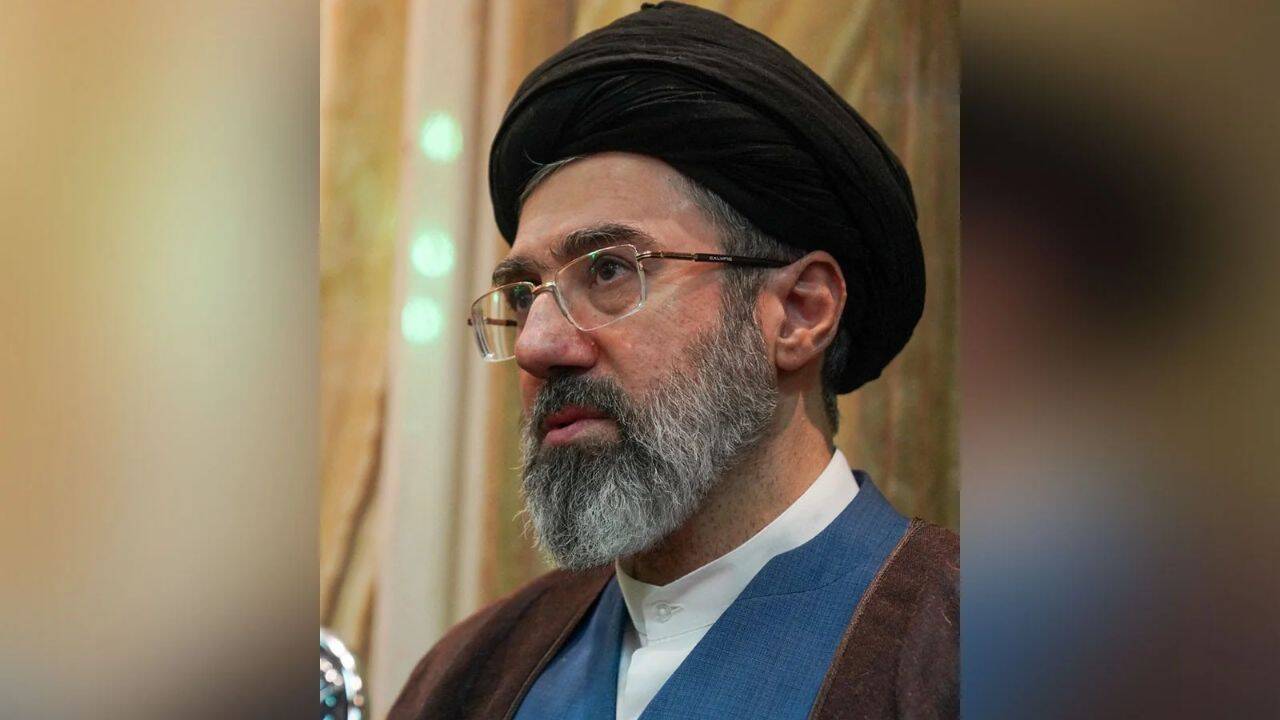
Most headlines about Iranian President Masoud Pezeshkian getting "certain authorities" to negotiate with Washington miss the real story. If you read surface-level wire reports, it sounds like Tehran's civilian government suddenly holds the keys to ending the war.
It doesn't. If you found value in this article, you might want to read: this related article.
When Pezeshkian addressed provincial governors and city mayors on November 2, 2026, he dropped a carefully measured line that sent diplomats scrambling across Doha, Washington, and Jerusalem. He stated that Iran is trying to solve its conflict through dialogue and that Supreme Leader Mojtaba Khamenei had granted the government "certain authorities" in that direction. Notice the phrasing. Not "full authority." Not a blank check. Just certain authorities.
Understanding the gap between what Pezeshkian said and how power actually functions inside the Islamic Republic changes how you read every diplomatic signal coming out of the Persian Gulf right now. For another perspective on this development, see the latest coverage from BBC News.
The Architecture of Iranian Negotiating Power
In Western democracies, an elected president sets foreign policy and dispatches diplomats to cut deals. Iran operates on an entirely different wiring diagram. The elected administration manages daily governance, economic stabilization, and public messaging, while strategic war-and-peace decisions sit locked inside the Supreme Leader's office and the security apparatus.
Mojtaba Khamenei, who has remained completely out of public view since assuming office and communicates exclusively through written directives and private channels, holds the final veto over every concession. Foreign Minister Abbas Araghchi has publicly explained that the leader's absence from speeches and cameras stems from security protocols, insisting that Khamenei remains fully briefed and makes the core decisions.
So why hand Pezeshkian limited negotiating powers now?
Three overlapping pressures explain the timing:
- Domestic economic exhaustion: Pezeshkian framed his November 2 remarks around protecting people's livelihoods and escaping a paralyzing "neither war, nor peace" limbo. With inflation biting and oil transit disrupted, the civilian administration takes the public heat for empty shelves and currency swings.
- Plausible deniability for the Supreme Leader: Granting bounded authority lets Pezeshkian's team test Washington's appetite for a truce via Qatari mediators without tying Mojtaba Khamenei's personal prestige to an unpopular compromise. If talks collapse, the cabinet absorbs the blame.
- Factional choreography: Tehran's political establishment rarely speaks with one voice during high-stakes diplomacy. Giving the president room to talk peace while military commanders threaten retaliation keeps Washington guessing about which faction holds the upper hand.
Honestly, this isn't a sign that Iran's hardliners have surrendered control. It's a classic division of labor.
Who Actually Controls the Doha Backchannel
If you want to know who really steers Iran's negotiating position, watch who receives the mail from Washington.
Ahead of the early November indirect talks in Doha, U.S. Vice President JD Vance sent a diplomatic letter to Tehran. He didn't address it to President Pezeshkian. He didn't address it to Foreign Minister Araghchi either. Vance sent it directly to Mohsen Rezaei, Secretary of Iran's Supreme National Security Council (SNSC).
That single detail tells you everything about where real leverage lives.
Rezaei, a longtime Revolutionary Guards commander and veteran power broker, confirmed on Iranian state television that he had read Vance's letter and noted that Washington's tone had shifted, even though he had not yet replied. Foreign Ministry spokesman Esmaeil Baghaei later reinforced that hierarchy by stating that Rezaei—not Parliament Speaker Mohammad Bagher Ghalibaf, who has been leading negotiating delegations—would decide whether to respond.
The Security Establishment's Veto
As Sina Toossi, a senior fellow at the Center for International Policy, pointed out in an analysis for Al Jazeera, any durable agreement between Tehran and Washington must carry the explicit backing of Iran's security and military establishment. Without SNSC and Islamic Revolutionary Guard Corps (IRGC) buy-in, an agreement signed by Pezeshkian's diplomats wouldn't survive a week on the ground.
Look at how the roles break down across Tehran's power centers right now:
- Mojtaba Khamenei (Supreme Leader): Sets the red lines from behind closed doors and approves the overarching mandate.
- Mohsen Rezaei & the SNSC: Supervise the entire negotiation process, hold the direct correspondence channel with the White House, and guard Iran's core security demands.
- Mohammad Bagher Ghalibaf (Parliament Speaker): Serves as chief negotiator on key truce frameworks, bringing principlist credentials that help shield deals from domestic parliamentary revolt.
- Masoud Pezeshkian & Abbas Araghchi: Execute the diplomatic outreach in Doha, manage the two-day Strait of Hormuz reopening proposal, and sell the economic necessity of dialogue to the Iranian public.
When Pezeshkian says he received "certain authorities," he is describing tactical breathing room inside a tightly fenced yard. His cabinet can negotiate sequencing, asset releases, and maritime transit mechanisms. They cannot unilaterally trade away Iran's nuclear infrastructure or regional deterrence without Rezaei and Khamenei signing off.
The Seven Conditions and the Two-Day Hormuz Gamble
Wire summaries often treat "peace talks" as an abstract diplomatic exercise. On the water, it's a high-stakes standoff over global energy chokepoints.
Iranian negotiators spent three consecutive days in Doha working with Qatari mediators on a draft truce proposal before departing on November 1—not because talks blew up, according to officials briefed on the meetings, but to consult back home while a draft circulated. At the heart of those exchanges sits a compressed two-day plan outlined by Foreign Minister Araghchi, shortened from an earlier seven-day framework.
Here is how Tehran wants that 48-hour sequence to play out:
- Day One: The United States halts its naval blockade, eases financial restrictions—including Qatar-mediated efforts to unlock roughly $6 billion in frozen Iranian assets—and satisfies Tehran's baseline security requirements.
- Day Two: Iran lifts its shipping restrictions and reopens commercial transit through the Strait of Hormuz along an agreed maritime corridor monitored under Iranian and Omani arrangements.
Sounds tidy on paper. In practice, the sequencing gap between Washington and Tehran remains massive.
Iranian officials, including Rezaei and parliamentary national security leaders, have repeatedly insisted that the United States must accept Iran's seven conditions before the war ends or the strait fully opens. Meanwhile, President Donald Trump and Vice President JD Vance have maintained pressure through both rhetoric and military strikes—including U.S. strikes targeting radar, missile, and mine-laying infrastructure on Qeshm Island—while signaling openness to a deal that permanently neutralizes Iran's nuclear weapons threat.
Why Nuclear Talks Remain Off the Table
One common misconception circulating in market commentary is that Pezeshkian's new mandate revives the old 2015 nuclear deal framework. It doesn't.
Iranian officials explicitly rejected immediate nuclear negotiations even while Qatari mediators shuttled messages in Doha. Hardline lawmakers like Nasser Pejmanfar have gone so far as to urge withdrawal from the Nuclear Non-Proliferation Treaty, arguing membership yielded zero protection. Tehran's current strategy separates an immediate ceasefire and maritime truce from any long-term nuclear bargaining. Rezaei's camp wants sanctions relief and an end to the U.S. blockade first, treating nuclear discussions with the International Atomic Energy Agency as a secondary phase rather than a precondition.
What Most Analysts Misread About Mixed Signals From Tehran
If you track Iranian state media over a single 24-hour cycle, you'll get whiplash. On the same day Pezeshkian preached dialogue to governors, military commanders warned that any fresh American strike would trigger an immediate response "without geographical limits," and anti-American banners went up in Tehran.
Western commentators frequently interpret this contradiction as chaos—proof that Pezeshkian has lost control of the Revolutionary Guards, or that hardliners are sabotaging his diplomacy.
That reading misses how Tehran negotiates under fire.
Iranian leaders learned from decades of sanctions and the recent 2024–2026 military escalations that entering talks looking desperate invites maximalist U.S. demands. Pezeshkian himself paired his announcement about dialogue with a sharp warning: "In war, no one benefits," he said, before immediately adding that enemies cannot force Iran to surrender and that Tehran will stand firm against "lies and excessive demands".
By pairing conciliatory diplomatic outreach in Doha with aggressive military deterrence in the Persian Gulf, Tehran pursues a deliberate dual-track posture:
- Raise the cost of stalling: Every day the Strait of Hormuz stays contested, global energy markets feel the squeeze, giving Washington economic incentives to settle.
- Prevent domestic backlash: After preliminary truce frameworks like the earlier Islamabad Memorandum sparked street protests by principlists outside the Foreign Ministry in Mashhad, Pezeshkian's team cannot afford to look soft.
- Preserve escalation dominance: Keeping drone and missile threats active reminds U.S. planners that a breakdown in Doha carries immediate regional risks across Gulf infrastructure and shipping lanes.
Even intelligence assessments from groups like The Soufan Center note that while Iran's leadership wants to relieve crushing U.S. economic pressure, Tehran calculates that full-scale escalation risks drawing Washington into broader military action it wants to avoid. The result is calibrated brinkmanship—talking through Qatar while keeping fingers near the trigger.
How to Track Whether the Talks Are Actually Working
When you're trying to separate diplomatic theater from genuine progress in U.S.-Iran negotiations, ignore the speeches. Politicians in both capitals have domestic audiences to satisfy. Watch four concrete indicators instead:
- Public statements from Mohsen Rezaei's office: Pezeshkian can express goodwill all week, but movement only becomes real when the SNSC Secretary confirms a formal response to Washington's backchannel messages or softens the demand that all seven conditions be met upfront.
- Qatari shuttle frequency in Doha: When Foreign Minister Araghchi and Qatari mediators extend multi-day rounds without walkouts, technical details—like exact escrow mechanics for frozen funds and maritime transit coordinates—are actively being drafted.
- Incident rates in the Strait of Hormuz: Watch U.S. Central Command reports and commercial tanker tracking rather than state media claims. A 48-to-72-hour drop in drone interceptions, mine alerts, and retaliatory strikes on radar sites usually signals an informal stand-down ahead of a written truce.
- Crude oil volatility: Energy traders price in real shipping risk faster than pundits do. Sharp downward swings in Brent and WTI crude—like the nearly 8% drop seen when initial truce rumors broke—reflect market verification that tanker insurers and naval planners see de-escalation on the horizon.
Treat Pezeshkian's "certain authorities" remark for what it really is: a procedural green light from Mojtaba Khamenei allowing Iran's diplomats to test whether Washington will trade blockade relief for a reopened Strait of Hormuz. Until the security establishment in Tehran and the White House close the gap on who blinks first in that two-day sequence, every diplomatic breakthrough remains provisional.
For a closer look at how the 48-hour Hormuz proposal fits into the broader backchannel talks, check out this coverage on Iran proposes reopening Strait of Hormuz within 48 hours to jump-start peace talks with the US.


