The media ecosystem loves a summit. Put two foreign ministers in a room with a backdrop of polished mahogany and standard-issue flags, and the commentary machine starts humming instantly. Headlines frame these meetings as crucial turning points, hinting that if high-ranking officials just sit down, air their grievances, and exchange leather-bound folders, a breakthrough might be around the corner.
It is a comforting narrative. It is also completely detached from how statecraft, power dynamics, and war actually operate.
High-level diplomatic meetings between adversaries during an active conflict rarely yield sudden peace. They are not where breakthroughs happen; they are where pre-cooked outcomes are formally signed, or where both sides go to execute strategic communication strategies aimed at third-party audiences. Treating these photo-ops as genuine negotiations misunderstands the cold arithmetic of modern geopolitics.
The Illusion of the Room
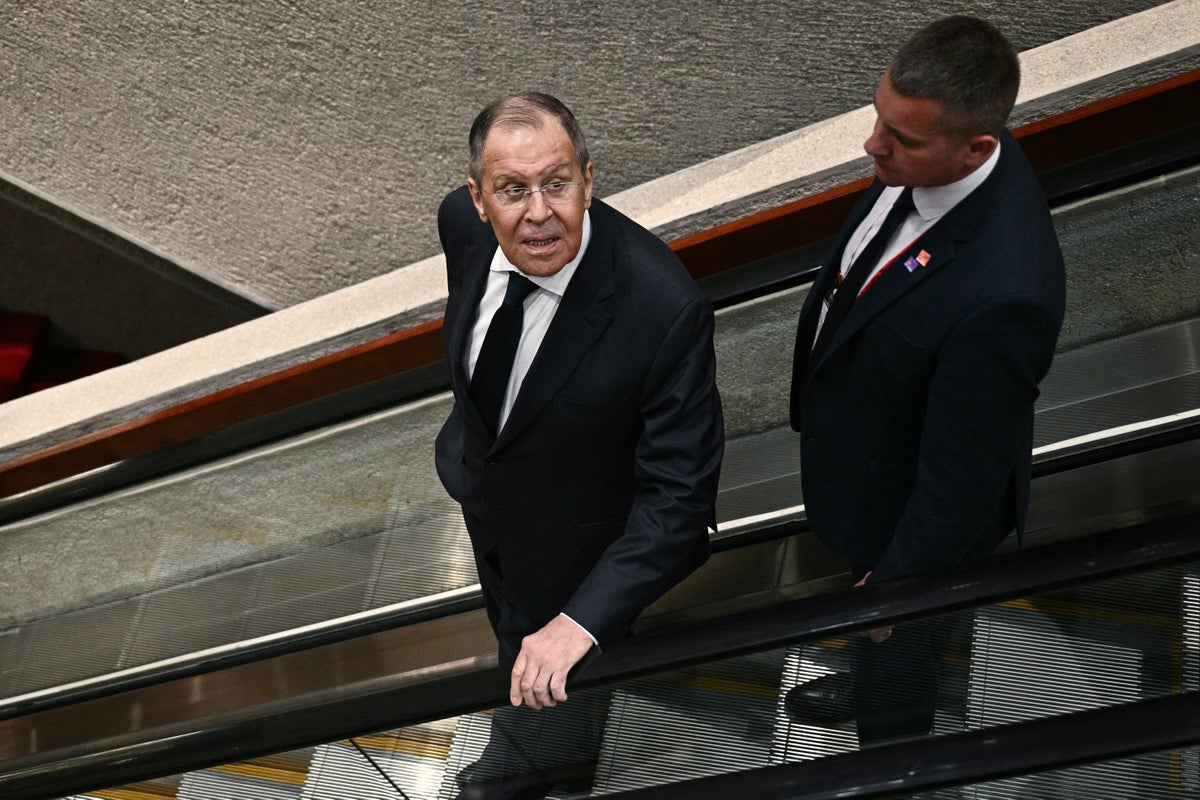
When Marco Rubio sits down with Sergei Lavrov, the public is told that the diplomatic engine is running. Pundits dissect body language, micro-expressions, and official press releases for subtle shifts in tone.
This is theater.
Real diplomacy during high-stakes military conflicts does not happen under the glare of camera flashes. It happens months in advance through lower-level, unannounced channels—working groups, intelligence liaisons, and quiet intermediaries. By the time foreign ministers stand in front of a podium, 95% of the script has already been written. If there is no pre-existing consensus behind the scenes, the meeting itself is merely a exercise in optics.
Imagine a scenario where two corporate CEOs announce a joint press conference to negotiate a multi-billion-dollar merger live on stage without prior due diligence, legal alignment, or financial auditing. Investors would call it reckless publicity. Yet, when political leaders do the equivalent on the international stage, commentators label it "a vital diplomatic effort."
Both sides enter these rooms with fixed mandates, constrained by domestic politics, institutional momentum, and core security doctrines. A foreign minister does not walk into a bilateral meeting with the authority to rewrite national policy on the fly over a cup of coffee. Expecting a sudden shift from a single session is not optimism; it is a fundamental misunderstanding of government bureaucracy.
Why Public Diplomatic Talks Fail During War
Public diplomatic summits during ongoing military actions serve specific tactical purposes that have almost nothing to do with making peace.
1. Managing Domestic Audiences
Governments need to prove to their citizens and political opponents that they are "doing something." For a Western administration, initiating or joining a high-level meeting demonstrates active leadership and project strength. For Moscow, appearing at the table signals that isolation efforts have failed and that it remains an indispensable power. The primary audience for the meeting is not the person sitting across the table; it is the voter or elite constituency watching at home.
2. Signaling to Third Parties
These encounters are designed to influence neutral or unaligned nations. By appearing willing to talk, a country shifts the political burden of continuing the conflict onto its opponent. It is a strategic move to secure leverage with global observers who hold economic or diplomatic weight.
3. Gathering Tactical Intelligence
Direct interaction allows seasoned diplomats to gauge the resolve, internal cohesion, and stress points of the opposing state. Lavrov and Rubio are not trying to convince each other; they are probing for weaknesses in political posture and alliance durability.
The Real Drivers of Leverage
Peace is not declared because two diplomats find common ground over a table. Peace happens when the cost of continuing a conflict vastly outweighs the projected cost of stopping it for both parties involved.
That balance is calculated through hard metrics:
- Logistical Endurance: Industrial capacity, ammunition stockpiles, and supply-chain resilience.
- Economic Sustainability: Inflation tolerance, energy revenue, sanction workarounds, and sovereign debt levels.
- Domestic Political Stability: Public fatigue, manpower reserves, and internal elite consensus.
Until those variables shift significantly on the ground, high-level talks are holding patterns. They are placeholders designed to manage public expectations while the underlying structural forces continue to grind.
I have spent decades watching foreign policy analysts treat diplomatic schedules like operational progress. They celebrate the occurrence of a meeting rather than analyzing whether the structural conditions for peace actually exist. It is an expensive habit that breeds cycles of false hope followed by cynical disillusionment.
The Inconvenient Math of Negotiated Settlements
The conventional commentary routinely asks: "What will it take for both sides to compromise?"
This question is fundamentally flawed because it assumes both parties share a common definition of a rational outcome. When state survival, territorial integrity, and existential national narratives are at stake, standard bargaining logic breaks down.
A compromise that looks perfectly balanced to a third-party observer in Washington or Western Europe may represent an unacceptable, existential threat to the parties directly involved.
Diplomacy cannot create leverage out of thin air. It can only translate existing material realities into formal agreements. If the reality on the ground is unresolved, fluid, or perceived as asymmetric by either side, no amount of charismatic negotiation or high-level summits will produce a durable settlement.
The insistence on viewing every ministerial handshake as a potential breakthrough isn't just naive—it obscures the actual mechanics of how wars end. Wars do not end because people start talking. People start talking seriously only when the battlefield stops giving them a better alternative.
Stop looking at the photo-ops. Watch the industrial output, the troop pipelines, and the economic balance sheets. That is where the war is being measured, and that is where its outcome will be decided long before anyone signs a treaty in front of a camera.