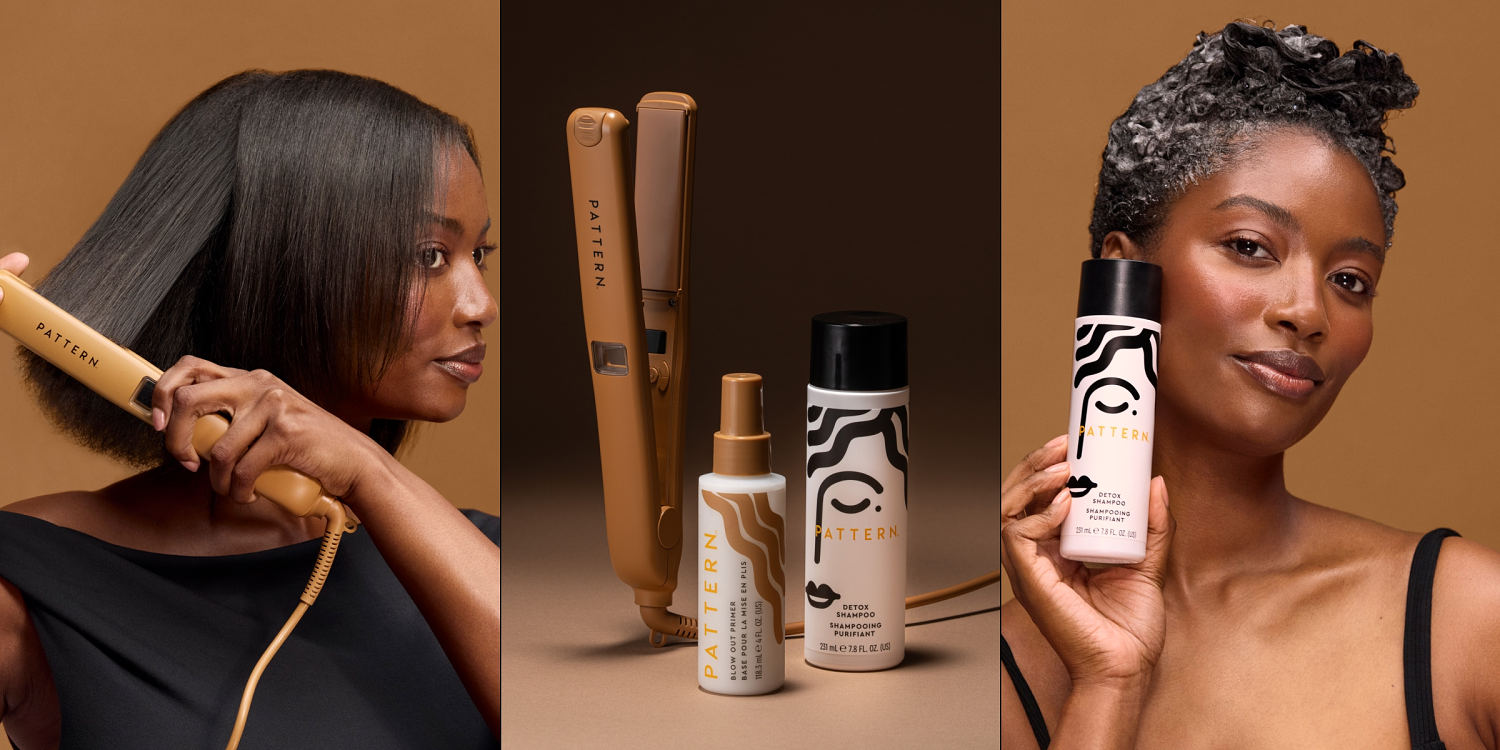
Natural hair styling equipment has historically suffered from a fundamental design flaw: thermal distribution systems calibrated for Type 1 and Type 2 hair structures are applied directly to Type 3 and Type 4 architecture without accounting for tensile strength variations, helix geometry, or cumulative thermal fatigue. When Pattern Beauty expanded its hardware portfolio with the introduction of the Vibrating Flat Iron, operating at 12,000 micro-vibrations per minute alongside a companion Blow Out Primer and Detox Shampoo, the release triggered immediate consumer interest.
However, superficial coverage of this hardware drop misses the underlying engineering problem it attempts to solve. To understand the real utility of these tools, one must analyze the mechanical friction, thermal transfer rates, and lipid barrier protection required when transforming coily textures into a smooth silk press.
The Mechanical Cost Function of Thermal Pass-Through
Standard flat irons rely on static thermal conduction and manual clamping pressure to force curly hair into a temporary linear state. This configuration creates a high-friction environment. As plates pass down a strand of coily hair, microscopic surface irregularities on the cuticle catch against static ceramic or titanium surfaces, resulting in mechanical drag, cuticle fracturing, and localized heat spikes.
The inclusion of micro-vibrations in the Pattern Beauty hardware introduces a distinct mechanical advantage by shifting the physics of the pass.
- Frictional Reduction: Operating at 12,000 vibrations per minute, the ceramic-coated plates break the continuous surface friction between the tool and the hair shaft.
- Tension Distribution: Instead of requiring the user to exert high manual clamping force to compress tight curls, the vibrational energy assists the glide, distributing the mechanical load across the entire length of the pass.
- Thermal Efficiency: By reducing the drag coefficient, each pass requires less time in direct contact with the hair, mitigating the cumulative thermal dosage delivered to the cortex.
The operational bottleneck of traditional flat-ironing is thermal hot-spotting. When a stylist or consumer pauses mid-shaft to overcome resistance, thermal energy accumulates in that single locus, exceeding the keratin denaturation threshold (approximately 215°C to 230°C). By optimizing the glide velocity through oscillation, the vibrating plate design reduces dwell time per millimeter of hair, lowering the probability of irreversible protein degradation.
Chemical Pre-Conditioning and the Lipid Boundary Layer
Hardware performance cannot be evaluated independently of the chemical preparation applied prior to thermal exposure. Coily and tight-textured hair features an asymmetric cross-section that inherently leaves the cortex more vulnerable to moisture loss. The introduction of the Blow Out Primer and the Detox Shampoo acts as a biochemical prerequisite for safe thermal processing.
The Detox Shampoo addresses the residue variable. Post-protective styles, protective gels, and environmental particulate matter accumulate at the root matrix. Standard clarifying agents strip the lipid mantle entirely, increasing hair porosity and creating an erratic surface for heat application. A specialized detox formulation targets mineral and product buildup while maintaining baseline structural hydration.
Following cleansing, the Blow Out Primer creates a sacrificial thermal barrier.
[Raw Coily Hair]
       ↓
[Detox Shampoo: Residue Removal + Moisture Retention]
       ↓
[Blow Out Primer: Hydrophobic Film Deposition]
       ↓
[Vibrating Flat Iron: Low-Friction Thermal Elongation]
       ↓
[Optimized Silk Press: Minimized Protein Denaturation]
This sequence changes the heat transfer equation. The primer coats individual strands in a film that alters the specific heat capacity of the hair fiber. Instead of thermal energy immediately drawing out structural water bound within the cortex, the energy is partially absorbed by the protective polymer matrix, delaying the destructive flash-boiling of internal moisture.
The Structural Limits of Silk Press Engineering
While the integration of oscillatory plates and prep chemistry represents a clear iteration in textured hair care engineering, practitioners must recognize the hard boundaries of this methodology.
The Porosity Variable
Hair with high porosity absorbs thermal energy rapidly, rendering even low-friction tools hazardous if voltage and temperature controls are mismanaged. The vibrating mechanism reduces mechanical tear, but it does not neutralize thermal conductivity.
The Reversibility Threshold
Tight coils (Type 4C) possess a high density of disulfide and hydrogen bonds. Repeated thermal transitions risk permanent alteration of the curl pattern due to thermal creep—a progressive loss of elastic recovery over multiple styling cycles. No topical primer or oscillating plate can completely eliminate this risk if applied above critical temperature ceilings or at excessive frequencies.
Strategic Execution for Texture-Specific Styling
To maximize the utility of this equipment category without compromising structural integrity, operators should execute the following operational sequence:
- Clarify with Precision: Utilize the Detox Shampoo specifically to clear root-level occlusion without disrupting the internal moisture balance of the hair shaft.
- Form a Hydrophobic Shield: Apply the Blow Out Primer evenly to damp hair to establish a thermal buffer and minimize humidity-induced reversion.
- Calibrate Tension: Allow the vibrating plate mechanism of the iron to perform the mechanical work; eliminate heavy manual clamping pressure to prevent structural shearing along the hair bend.
- Regulate Thermal Dwell: Restrict passes to the minimum number required for alignment, capitalizing on the reduced friction coefficient to complete the straightening process in fewer cycles.